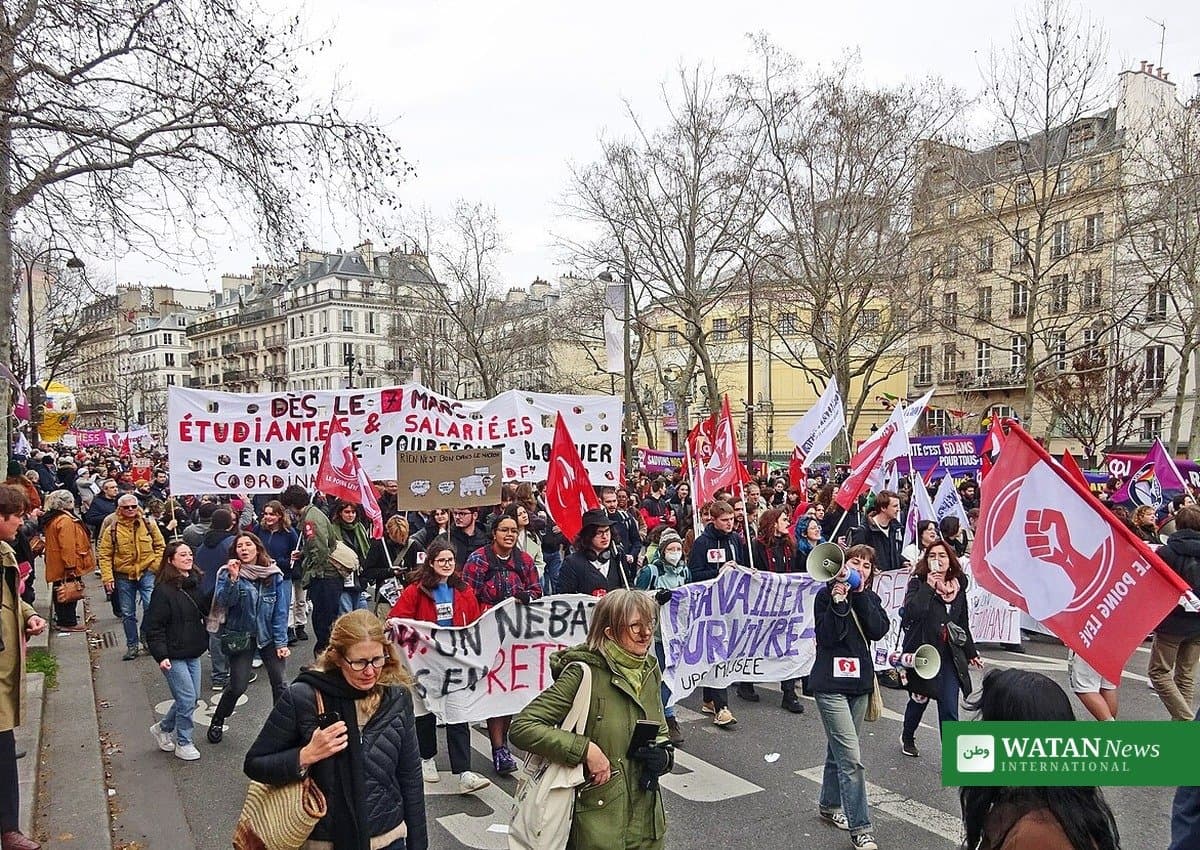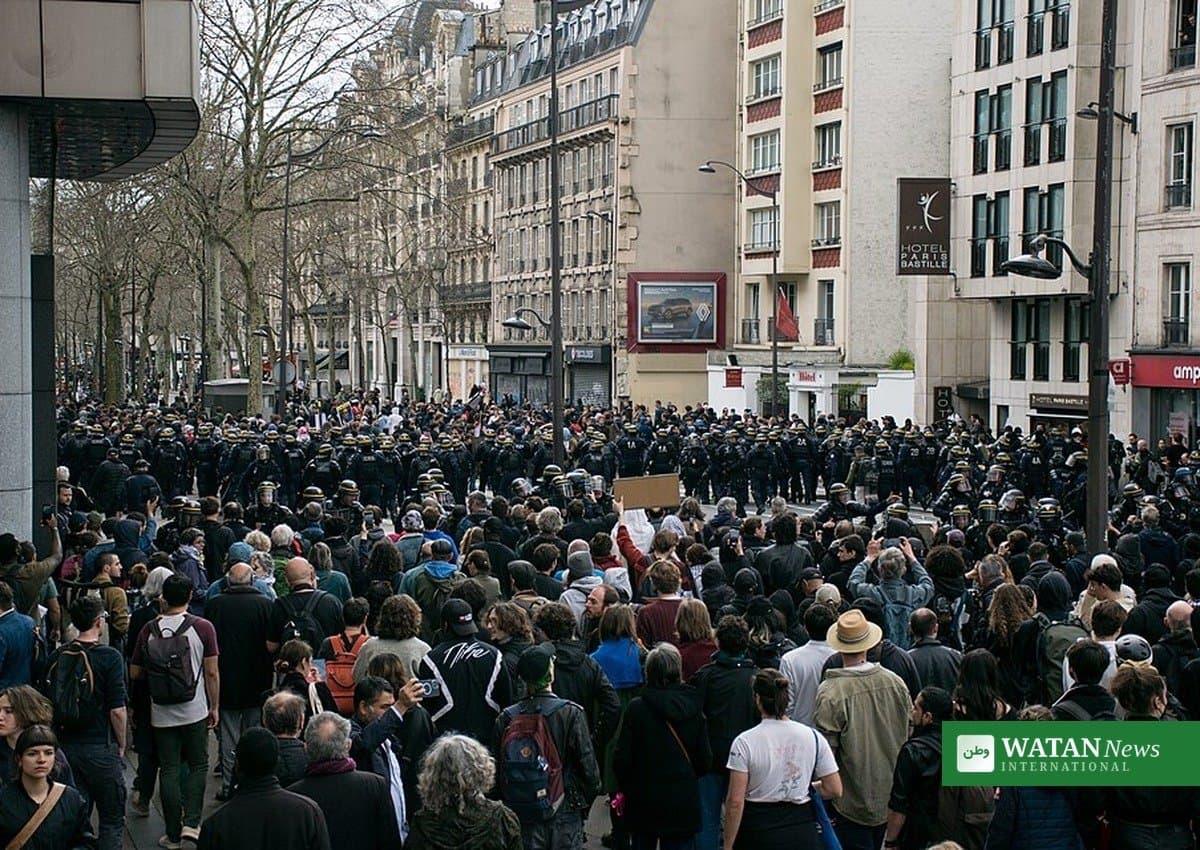
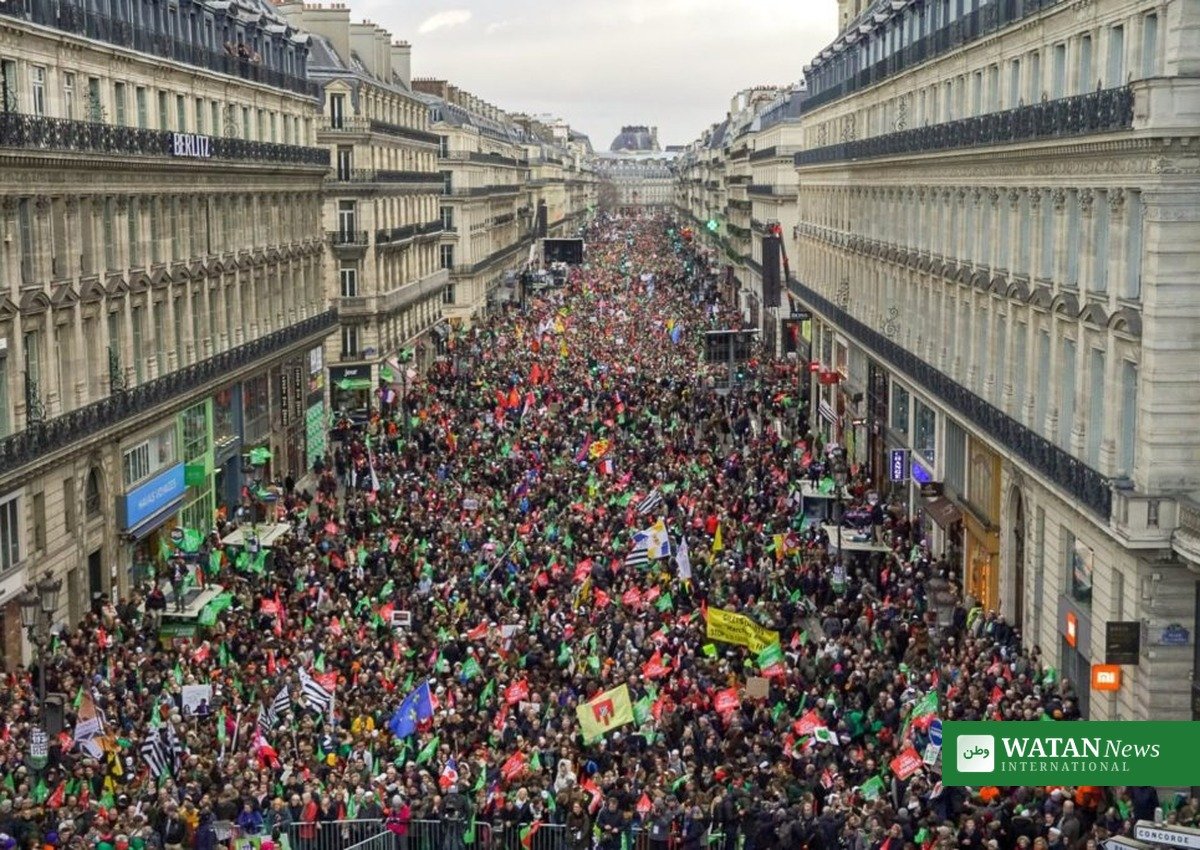
France protests 135 arrests marked the second weekend of nationwide demonstrations on Saturday, as police detained 135 people by early afternoon and crowds turned out smaller than a week earlier under one of the largest security operations in recent French history.
Interior Minister Laurent Nuñez said about 35,000 people had joined protests across France by 1 p.m., down from 60,000 at the same time last Saturday. He said there had been no major incident by midday, but warned that the day would be long, with authorities expecting attempts to disrupt the marches.
FAKTA: France protests on Saturday, October 24
- 135 people arrested nationwide by early afternoon, according to Interior Minister Laurent Nuñez.
- About 35,000 protesters counted by 1 p.m., compared with 60,000 at the same time last Saturday.
- 70,000 police officers and gendarmes deployed nationwide, 10,000 more than on October 17.
- Tear gas used in Lyon, Lille, Nice, Rennes and Dijon; the main Paris march began peacefully.
- The Louvre, the Musée d’Orsay and the Paris Opera closed for the day; more than 20 Paris metro stations shut.
France protests 135 arrests: smaller crowds under a bigger security operation
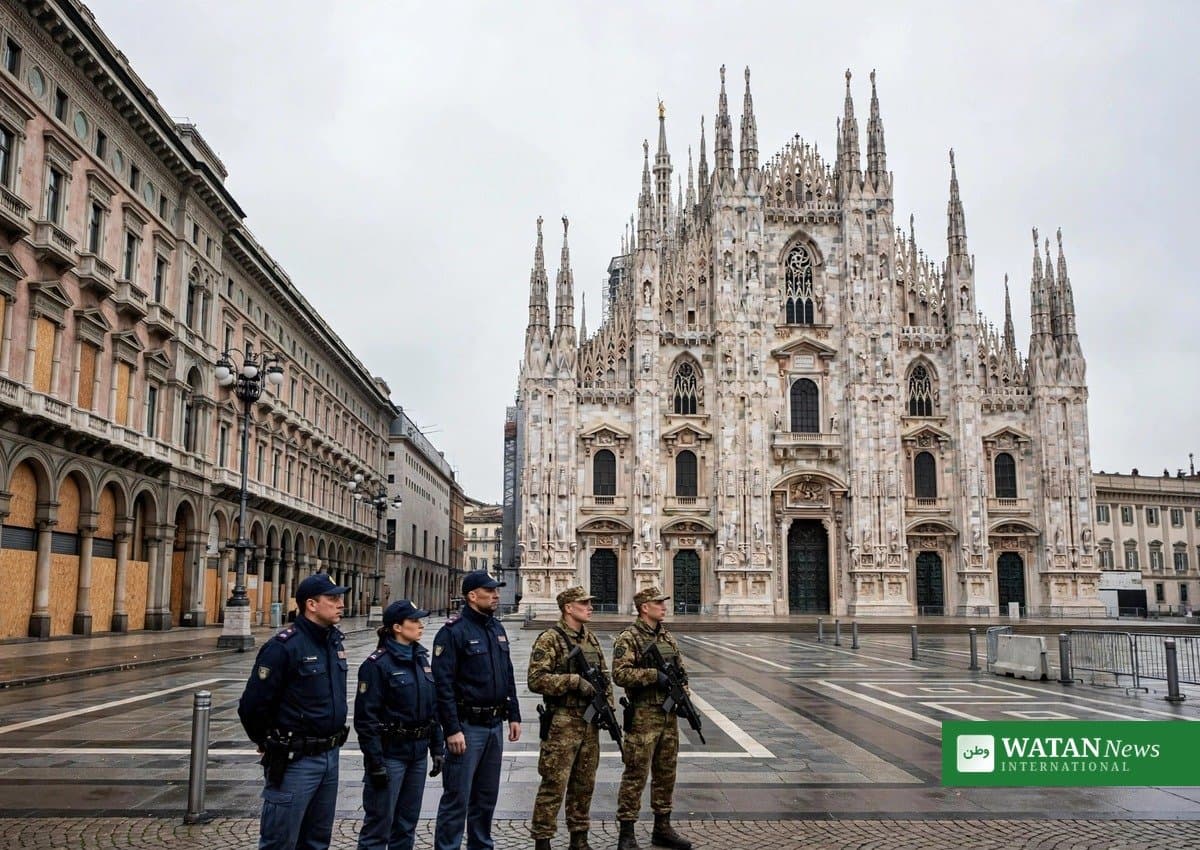
The government deployed 70,000 police officers and gendarmes across the country, backed by armoured vehicles, water cannon and drones, with soldiers guarding sensitive sites so police could respond to unrest. It was 10,000 more officers than last weekend, when protests over the cost of living and deteriorating public services descended into rioting and looting.
Many of the arrests followed pre-emptive searches that uncovered fireworks, ball bearings, slingshots and other items that could be used as weapons, the interior minister said. Authorities also recorded 136 actions in public spaces by early afternoon, compared with 264 at the same time last Saturday. In Paris, police carried out 635 security checks, seizing items including a knife and an angle grinder.
Tear gas in Lyon and other cities
While the start of the main Paris march was peaceful, police fired tear gas at crowds in Lyon, France’s third-largest city, where demonstrators gathered near Lyon 3 University in an area where protests had been banned. Tear gas was also used during skirmishes in Lille, Nice, Rennes and Dijon.
In Grenoble, people attempting to block the A480 motorway caused a collision between two vehicles, leaving two people with minor injuries. Authorities in Montpellier, Nancy, Caen and Annecy rejected requests to hold demonstrations.
Paris march peaceful at start as museums shut
In Paris, thousands of protesters formed a large procession that set off from Porte d’Italie, on the southern edge of the city. Much of central Paris took on the appearance of a city under lockdown, with shopkeepers boarding up storefronts and museums closing their doors as a precaution.
Several of the capital’s best-known cultural institutions, including the Louvre, the Musée d’Orsay and the Paris Opera, closed for the day, leaving tourists frustrated. Business groups had urged retailers to remain closed after thousands of shops and businesses were damaged or looted across France last weekend.
Why the protests returned
The demonstrations are driven by anger over the rising cost of living and deteriorating public services, including conditions in schools. They pose a fresh test for President Emmanuel Macron’s government, which has come under fire over its handling of the violence. Officials have acknowledged underestimating the scale of the demonstrations last weekend and deploying forces that were too static to contain the unrest. The government has since imposed curfews in several cities, helping restore relative calm.
For more on European affairs, see Watan News Europe coverage.