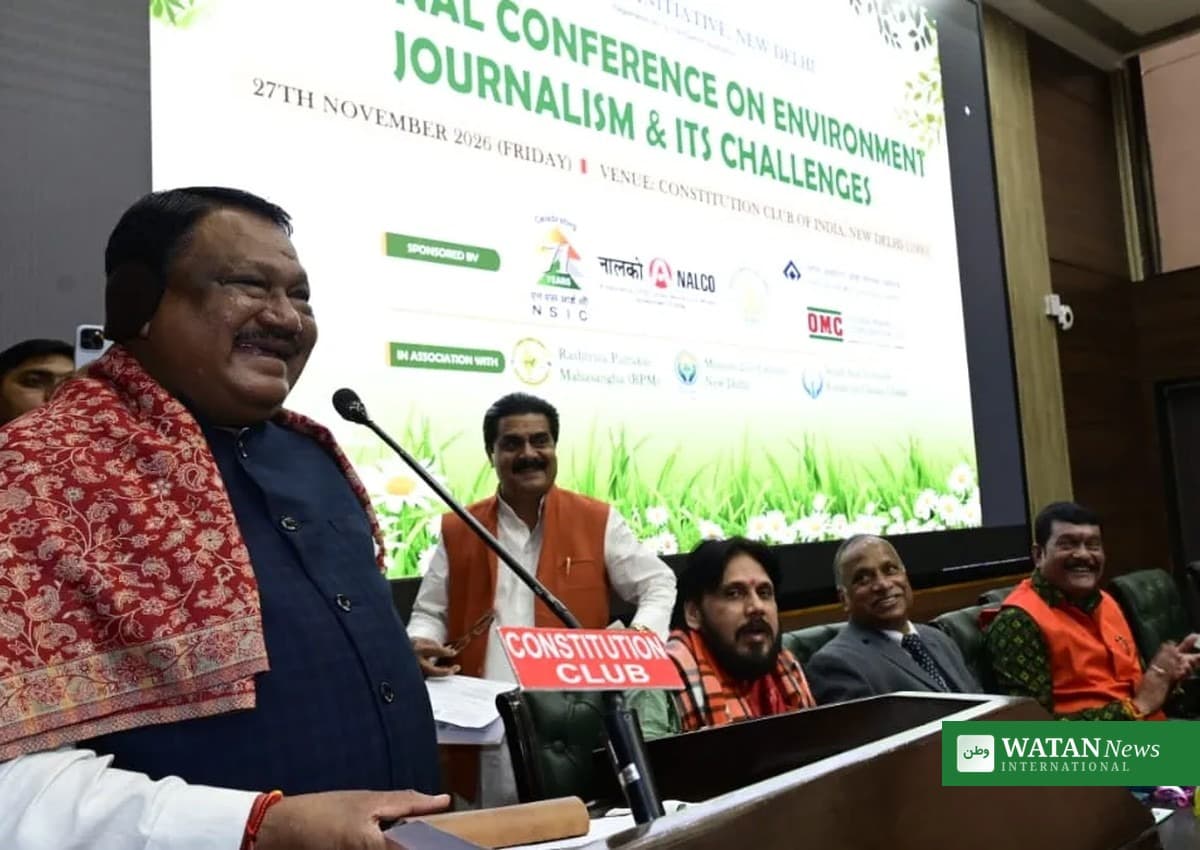
New Delhi — A national conference in the Indian capital has put the spotlight on the journalists who report the climate crisis, with a Union minister, grassroots campaigners and senior reporters agreeing that environmental journalism must be rooted in ground-level reporting and backed by stronger protection.
The Nature Care Initiative organised the national conference, titled “Environmental Journalism and Its Challenges”, at the Constitution Club of India in New Delhi on Friday, 27 November 2026. Policymakers, journalists, environmental activists and experts from across the country took part in the discussions, which were reported on 28 November.
A conference devoted to the reporters of the climate crisis
Addressing the gathering, Union Minister for Tribal Affairs Jual Oram said that addressing environmental challenges in India was not impossible, and emphasised that journalists have a vital role in raising awareness and contributing to solutions.
The seminar was chaired by Dr Pabitra Mohan Samantray, president of the National Journalist Federation. Nature Care Initiative vice-president Akhilesh Kumar Singh delivered the welcome address, and Ashish Gupta, president of the South Asia Climate Change Journalist Forum, delivered the vote of thanks.
The conference featured Bargarh (Odisha) MP Pradeep Purohit and Padma Shri awardees Popatrao Baguji Pawar of Ahilyanagar, Maharashtra, and Umashankar Pandey of Banda, Bundelkhand, as special guests. The guests of honour included Delhi University professor Dr Dinabandhu Sahu, founder of India’s first Carbon Garden and Indian Cherry Blossom, and senior journalist Kumar Sambhav Srivastava, founder-director of Land Conflict Watch and Natgraph Social Data Lab.
Environmental journalism on the ground: the Gandhamardan story
Bargarh MP Pradeep Purohit received the Nature Care National Award 2026, instituted in memory of the organisation’s late former chief advisor, R.C. Mishra.
Speaking at the conference, Purohit highlighted the challenges faced by journalists reporting on environmental issues. He recalled the eight-year-long struggle by local residents, supported by him and substantially backed by journalists, to protect the Gandhamardan hill range in Odisha.
He said the experience demonstrated the importance of sustained public engagement and media support in environmental protection, adding that journalists would continue to play a significant role in addressing similar challenges in the future.
Water, sanitation and the view from the ground
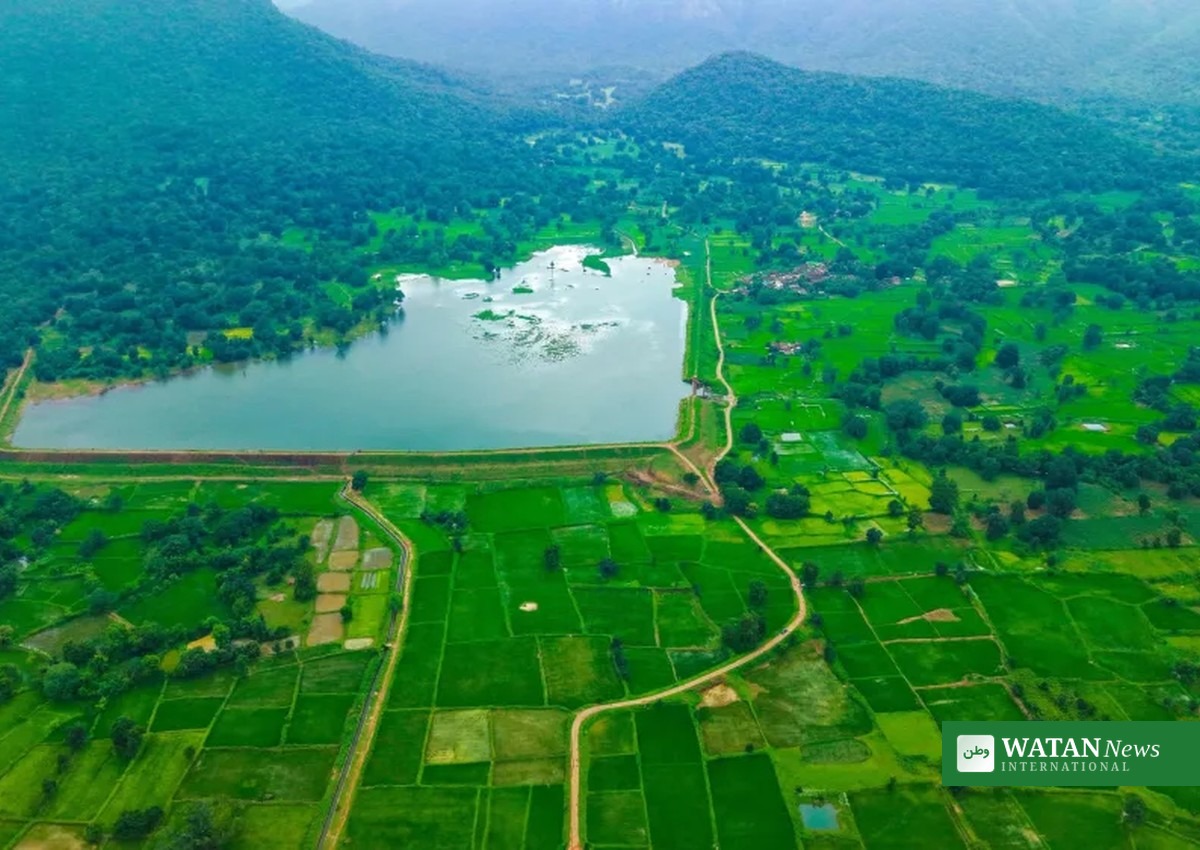
Padma Shri awardee Umashankar Pandey emphasised that water conservation is a collective public responsibility and should not be viewed as the government’s responsibility alone. Sharing insights and data during his address, he observed that water cannot be manufactured but can be conserved, harvested and recycled, and called for greater public participation in protecting water resources.
Fellow Padma Shri awardee Popatrao Baguji Pawar highlighted sanitation as an ongoing challenge. Recalling his work towards a clean India since 1992, he said that reducing the divide between rich and poor could contribute to resolving environmental challenges.
Guest of honour Dr Dinabandhu Sahu said climate change should be viewed as an economic issue and not merely an environmental concern. He described tribal communities as important protectors of nature and stressed the need to balance ecology, including biodiversity, with economic development. He also highlighted the role of journalists as change-makers in society.
Senior journalist Kumar Sambhav Srivastava said environmental journalism must be rooted in ground-level reporting. He observed that development and journalism are complementary rather than contradictory, highlighting the importance of reporting environmental issues alongside development-related concerns.
Why this matters beyond India
The Delhi discussion echoes a wider global concern. UNESCO has reported that more than 70 percent of environmental journalists surveyed have faced attacks, threats or pressure, and that 44 environmental journalists have been killed since 2009. Reporters Without Borders has documented nearly 30 journalists murdered since 2015 for covering environmental issues, with South and Southeast Asia accounting for nearly 90 percent of these killings.
The same concerns were raised at the COP31 climate summit in Antalya, where Reporters Without Borders called on governments to protect environmental journalists, combat climate disinformation and secure funding for independent environmental journalism. COP31 closed on 22 November 2026 without a final deal, but the call to protect the reporters of the climate crisis continues to gather support.
Recognition of climate reporting is also growing through awards: in West Africa, the Centre for Journalism Innovation and Development honoured reporting on Nigeria’s illegal rosewood trade at its 2026 Excellence in Media Awards. The message from Delhi was the same — without reporters who investigate environmental harm, both the damage and the solutions stay hidden.
Key Facts
- What: National conference “Environmental Journalism and Its Challenges”
- Organiser: Nature Care Initiative
- When: Friday, 27 November 2026 (reported 28 November 2026)
- Where: Constitution Club of India, New Delhi
- Award: Nature Care National Award 2026 to Bargarh MP Pradeep Purohit
- Key themes: ground-level reporting, water conservation, biodiversity, sanitation and tribal communities