Italy has deployed 500 additional soldiers to Milan as the city prepares for demonstrations on Saturday, a week after protests near Duomo Square turned violent and shops were looted. The extra troops join hundreds already stationed in the city and will support around 5,000 police officers and other law enforcement personnel.
The Milan protests security deployment comes with a wider set of measures, including drone surveillance, checks at railway stations, rapid-response units and online monitoring for calls to violence. Prime Minister Giorgia Meloni has also announced tougher penalties for minors involved in violent acts.
FAKTA: Milan protests at a glance
- 500 extra soldiers sent to Milan, on top of hundreds already deployed there
- Around 5,000 police and other law enforcement personnel supporting the operation
- Security tools: drone surveillance, railway checks, rapid-response units and online monitoring
- Last weekend: about 2,000 people involved in the unrest; 45 arrested over two days, including 34 minors
- Tougher penalties announced for minors taking part in violence
- More protests planned in Rome, Albania, Spain and Portugal over pensions, housing, tuition fees and public services
Milan protests security deployment stepped up after Duomo unrest
Last weekend, rioters broke into shops on streets running off the Duomo Square, targeting trainers, sportswear and other goods. Police said about 2,000 young protesters were involved in the unrest, and officers arrested 45 people over two days, including 34 minors. Officials warned that violence could spread to other neighbourhoods, and security measures for Saturday extend beyond the city centre.
Security has also been tightened in Rome, where authorities restricted access to luxury shopping streets and strengthened controls near major public squares. Several demonstrations are planned there, including an anti-war march and a protest by right-wing students, and organisers have urged participants to avoid actions that could lead to violence. City officials in Milan have expressed concern about a repeat of last weekend’s scenes and support the reinforced deployment.
Protests spread across Europe
The unrest is not limited to Italy. In Albania, student protests have continued for more than a week, with demonstrators demanding lower tuition fees, greater public investment in education and action against corruption. Some have also joined a wider movement calling for the resignation of Prime Minister Edi Rama, and clashes have involved fireworks, firebombs and tear gas.
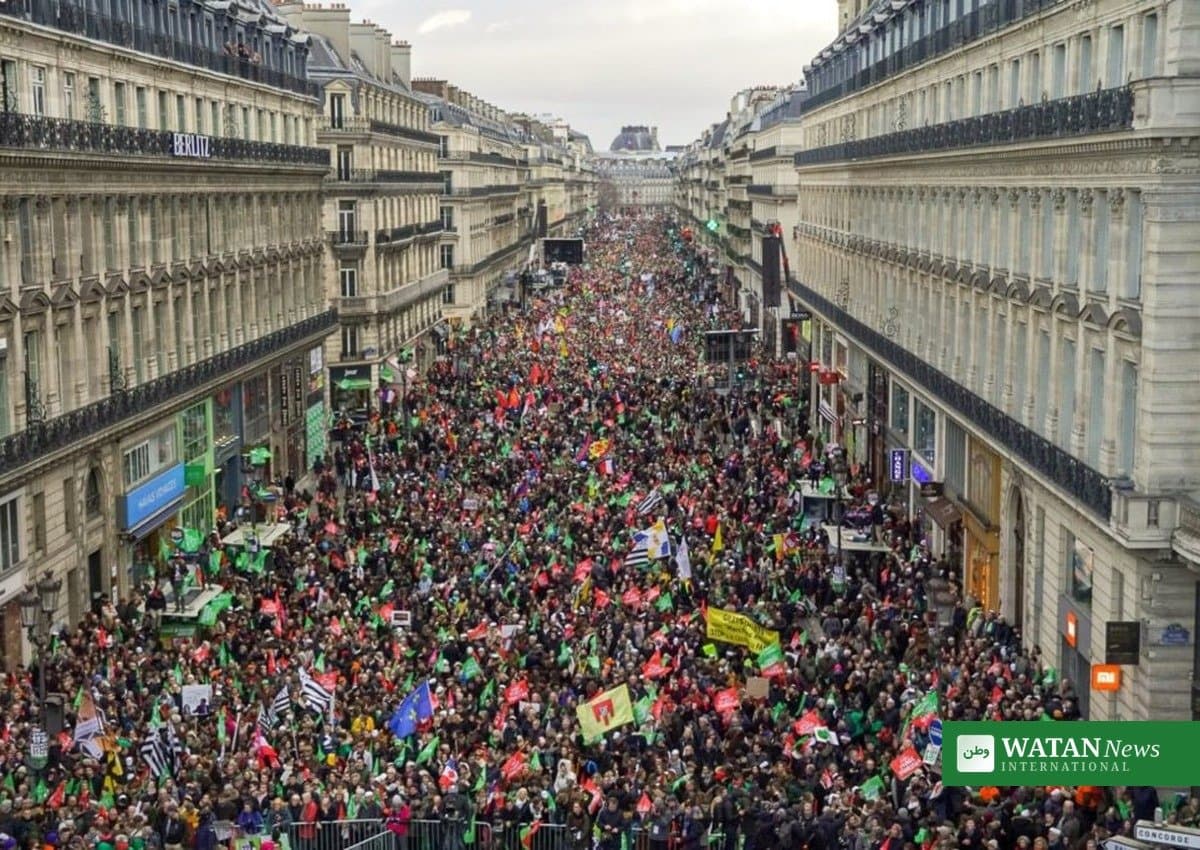
In Spain, thousands of pensioners and other demonstrators marched through Madrid on Saturday to demand protection for public pensions, ahead of next month’s snap election. Housing costs have also fuelled unrest, with campaigners demanding affordable homes and opposing policies they say weaken tenant protections. In Portugal, housing campaigners planned another march in Lisbon against government measures affecting rent increases and tenant evictions.
What happens next
Authorities across the affected cities face the same difficult balance: keeping demonstrations peaceful while responding to public demands on the cost of living, housing, pensions and public services. From Milan to Lisbon and Tirana, officials say the reinforced security presence is a precaution for the weekend’s planned marches. More international news is available on Watan News.