The Judicial Committee of the Privy Council ruled on Tuesday, 10 November 2026, that the Trinidad anti-gay laws criminalising private, consensual same-sex relations between adults are unconstitutional, bringing a nine-year legal battle to a close. The unanimous judgment, delivered in London, allows activist Jason Jones’s appeal and dismisses the Attorney General’s cross-appeal, holding that sections 13 and 16 of Trinidad and Tobago’s Sexual Offences Act 1986 cannot be used to criminalise private, consensual intimacy between adults of the same sex.
Read this story on Watan News: Privy Council Strikes Down Trinidad and Tobago Anti-Gay Laws
FAKTA
- The Judicial Committee of the Privy Council delivered its unanimous judgment on Tuesday, 10 November 2026, in the case of The Attorney General of Trinidad and Tobago v Jason Jones, [2026] UKPC 38. All five judges ruled in Jones’s favour.
- The court held that sections 13 and 16 of Trinidad and Tobago’s Sexual Offences Act 1986 infringe the constitutional right to respect for private and family life, and must be read so that they do not criminalise private, consensual sexual relations between adults of the same sex.
- Jason Jones filed his constitutional challenge in February 2017. The High Court ruled in his favour on 12 April 2018, but the Court of Appeal overturned that ruling on 25 March 2025. The Privy Council has now restored decriminalisation.
- The court rejected the state’s argument that the laws were protected by the constitution’s savings clause, finding that the 1986 Act was new legislation passed in Port of Spain, not pre-independence law shielded from challenge.
- The precise wording of the final order is still to be settled. The Board’s provisional view favours restoring the High Court’s 2018 remedy, and both sides have been invited to make further written submissions.
- UN Human Rights Chief Volker Türk welcomed the judgment on 11 November, calling it a significant milestone for human rights and equality, and urged other Caribbean states to decriminalise consensual same-sex relations.
- The ruling does not change the law on non-consensual sexual offences or offences against children, and it says nothing about marriage.
- Before the judgment, Trinidad and Tobago was among around 34 Commonwealth countries that continued to criminalise same-sex intimacy under laws rooted in Britain’s colonial past.
What the Trinidad Anti-Gay Laws Said
Sections 13 and 16 of the Sexual Offences Act 1986 were the provisions at the heart of the case. Section 13 made buggery an offence, while section 16 made serious indecency an offence. The 1986 Act excluded private acts between a husband and wife, or between a man and a woman who were both at least sixteen and both consenting, from the serious indecency offence. Same-sex couples were given no such exclusion, so the two sections together criminalised private, consensual sexual relations between adults of the same sex.
The laws carried prison sentences, although reports of the exact maximum penalties differ. They were rarely enforced in recent years, according to reports on the case, but campaigners argued that their presence on the statute book fuelled stigma, discrimination and violence, and created barriers to healthcare.
A Nine-Year Legal Battle
Jason Jones, a Trinidad and Tobago-born activist who left the country in 1996 after experiencing homophobic violence, filed his constitutional claim in the High Court in February 2017. Justice Devindra Rampersad ruled on 12 April 2018 that the two sections were unconstitutional, a landmark judgment in the English-speaking Caribbean that was later cited by courts in other countries.
The state appealed, and on 25 March 2025 the Court of Appeal overturned the High Court’s ruling by a majority, holding that the laws were protected by the constitution’s savings clause. Jones took the case to the Privy Council, Trinidad and Tobago’s final court of appeal, which heard the appeal in July 2026 and delivered its judgment on 10 November.
Delivering the judgment, Lord Sales said the laws at issue “cannot be regarded as reasonably justifiable in a society that has a proper respect for the rights and freedoms of the individual”. The five-member panel, comprising Lord Reed, Lord Briggs, Lord Sales, Lord Burrows and Lady Rose, was unanimous.
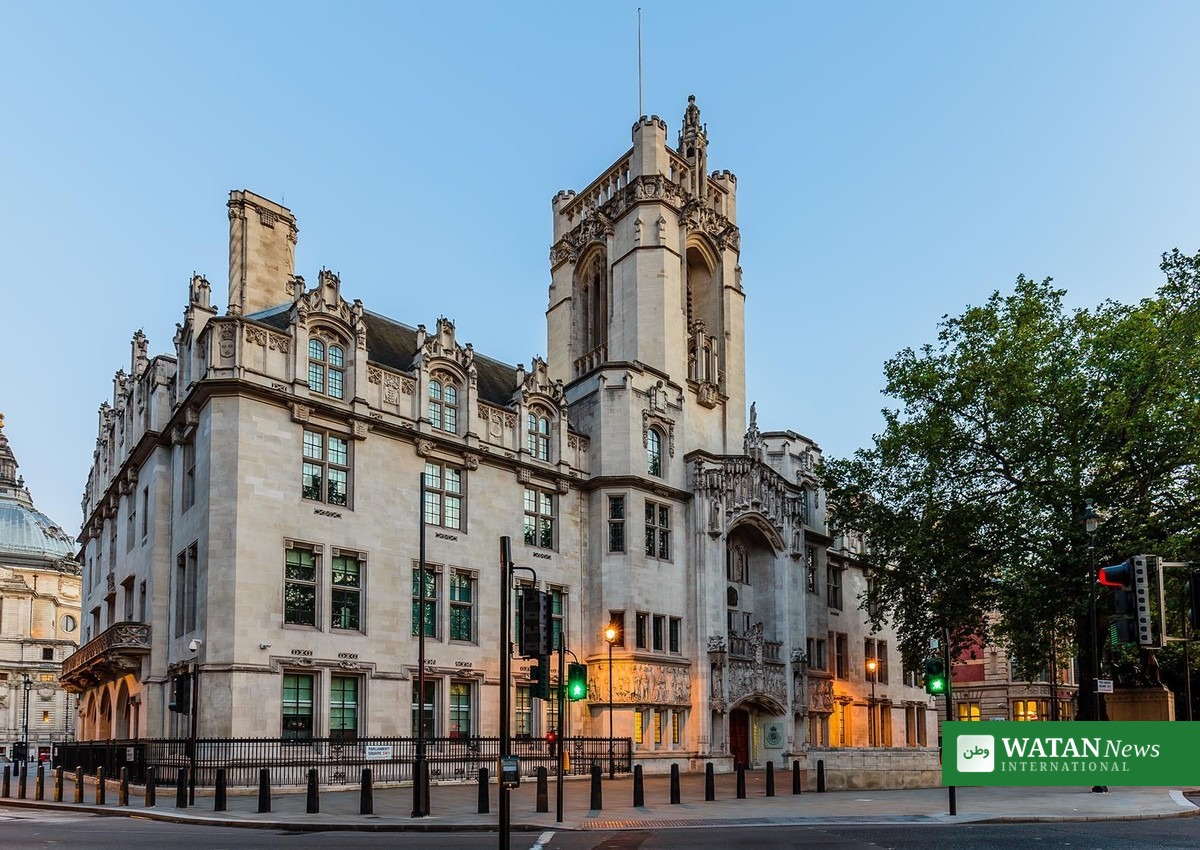
The UK Supreme Court building in London, where the Judicial Committee of the Privy Council sits as the final court of appeal for Trinidad and Tobago.
Why the Savings Clause Failed
The central legal dispute concerned section 6 of Trinidad and Tobago’s constitution, often called the savings clause, which protects certain laws that were in force before the constitution was enacted in 1976. The state argued that the 1986 provisions were sheltered by that clause and could not be challenged.
The Privy Council disagreed. It found that the Sexual Offences Act 1986 was a comprehensive replacement of the older law, not merely an old offence surviving unchanged, and that Parliament had rebuilt the law of sexual offences a decade after the country became a republic. The provisions therefore could not shelter behind the savings clause, and they also failed the constitution’s test of what is reasonable in a society that respects individual rights.
Campaigners say the case is particularly significant because it limits the extent to which governments can rely on constitutional savings clauses to preserve colonial-era laws that conflict with modern human rights protections. Legal experts believe the ruling will strengthen challenges to similar laws in other Caribbean nations, including Jamaica, Barbados, Grenada, Dominica, and Saint Vincent and the Grenadines.
Reaction in Trinidad and Tobago and Beyond
Welcoming the ruling, Jones said the judgment ended the message that LGBTQ+ people were “criminals in our own country”. “These laws never reflected who we are as a people and a nation: diverse, multiracial, and secular,” he said. “On a personal note, I am extremely proud to have led this challenge, but the work doesn’t end here. Let this victory be the rallying call to accelerate the fight for full equality and rights for all people, everywhere.”
UN Human Rights Chief Volker Türk said he hoped the judgment would help remove “a longstanding source of stigma, exclusion, barriers and violence experienced by Trinidadians and Tobagonians based on sexual orientation and gender identity”. He urged other Caribbean states to decriminalise consensual same-sex relations, saying this would align with “the strong regional trend of repealing outdated and harmful colonial laws”.
The ruling was also welcomed by British politicians. Liberal Democrat Shadow Attorney General Ben Maguire described the decision as a “landmark moment for LGBTQ+ rights in the Commonwealth”, saying no one should be treated as a criminal simply for who they love. The decision is the first time the Privy Council has decided a case concerning the decriminalisation of same-sex intimacy, according to the BBC.
What Happens Next
The constitutional question is settled, but the remedy is not yet final. The Board has not issued its final order on how sections 13 and 16 should be modified, and will first receive written submissions from both sides. Its provisional view is that the High Court’s 2018 order should stand, a remedy that makes clear there is no crime where the parties are consenting adults. Jones’s counsel has asked the Board instead to strike sections 13 and 16 out entirely.
The UN Human Rights Regional Office for the Caribbean said it stands ready to work with the Government of Trinidad and Tobago to take swift and concrete steps to ensure full implementation of the judgment, and to take robust action to end discrimination and violence against LGBTIQ+ people.
Conclusion
The Privy Council’s unanimous ruling on 10 November 2026 ends the criminalisation of private, consensual same-sex intimacy in Trinidad and Tobago, closing a legal battle that began when Jason Jones filed his claim in February 2017. The court found that sections 13 and 16 of the Sexual Offences Act 1986 breach the constitutional right to respect for private and family life, and that the savings clause cannot protect them. The precise wording of the final order remains to be settled, but the principle is now decided, and campaigners hope the judgment will encourage similar challenges across the Caribbean and the Commonwealth.