Five locally developed artificial intelligence solutions from Indonesia, Tanzania, Mali and Bangladesh have reached the final round of the 2026 UN AI for Climate Action Award, with the winner to be announced on 14 October at a forum in Phnom Penh, Cambodia. The finalists show how innovators in the Global South are building their own AI tools for climate adaptation rather than relying on technologies designed elsewhere.
The United Nations Framework Convention on Climate Change (UNFCCC) confirmed the five finalists in a media advisory issued on 9 October. They will present their solutions at the AI for Climate Action Forum 2026, held on 13–14 October at the Shangri-La Phnom Penh, before a judging panel selects the winner.
Who the five finalists are
Indonesia’s Ai-Moris combines artificial intelligence, satellite imagery and drones to identify suitable native tree species for restoring degraded watersheds in Timor-Leste, aiming to make ecosystem restoration more precise and effective.
Tanzania’s FirePredict uses AI, satellite observations and weather data to forecast forest fires and issue early warnings, potentially helping communities and authorities protect ecosystems and reduce emissions.
Mali’s ClimateVoice AI improves access to climate information by translating alerts into local languages and distributing warnings through voice messages, SMS, WhatsApp and radio.
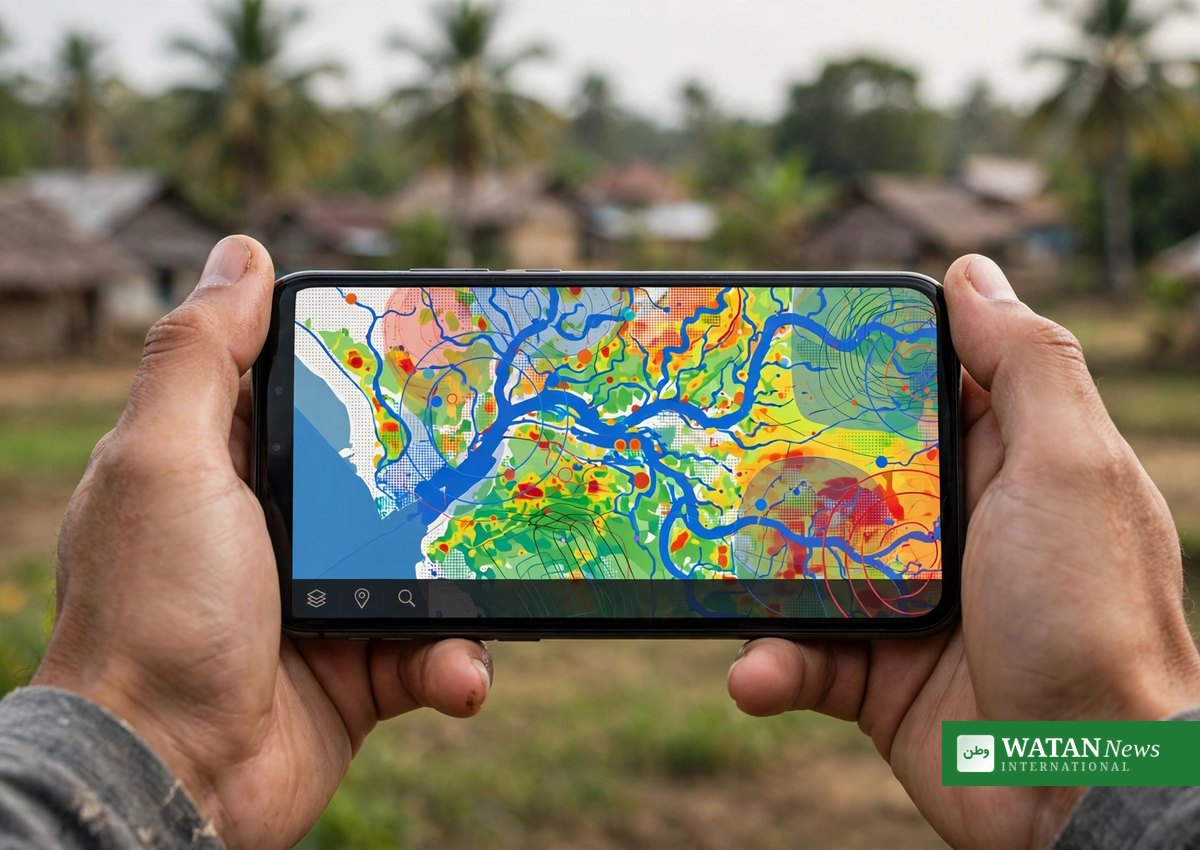
Bangladesh’s Climate Action Copilot combines AI with geospatial data to identify climate-vulnerable communities and infrastructure, helping governments prioritise cost-effective adaptation investments. The project is associated with a Bangladeshi team led by Faria Islam Sara, according to reports.
Tanzania’s CLIMAID applies artificial intelligence and climate data to assess climate risks, predict droughts, evaluate loss and damage, and inform adaptation planning and climate finance decisions.
Built for the most vulnerable countries
The award, organised through the UNFCCC Technology Mechanism by the Technology Executive Committee and the Climate Technology Centre and Network, focuses on open-source AI solutions developed in or for least developed countries and small island developing states — regions that face disproportionate climate risks with limited access to advanced technology.
Finalists receive sponsored participation at the forum, professional coaching for the live pitch session and international visibility through UNFCCC communication channels. The initiative is supported by the Korea International Cooperation Agency (KOICA).
What the award signals
The 2026 edition builds on the first AI for Climate Action Award held in 2025. Technology Mechanism documents indicate the award will continue in 2027, underlining a longer-term push to connect artificial intelligence with climate resilience where it is needed most.
As the UNFCCC’s own reporting notes, the descriptions of what each tool can achieve come from the project teams themselves; independent evidence of their performance at scale is not yet published. The forum in Phnom Penh will be the first public test of how these solutions hold up under expert questioning.
Key facts
- Award: 2026 UN AI for Climate Action Award, run through the UNFCCC Technology Mechanism.
- Finalists: Ai-Moris (Indonesia), FirePredict (Tanzania), ClimateVoice AI (Mali), Climate Action Copilot (Bangladesh), CLIMAID (Tanzania).
- Forum: AI for Climate Action Forum, 13–14 October 2026, Shangri-La Phnom Penh, Cambodia.
- Winner announced: 14 October 2026.
- Focus: open-source AI solutions developed in or for least developed countries and small island developing states.
- Sources: UNFCCC media advisory of 9 October 2026; independent reporting by The Climate Watch and BytesEU.
For more of Watan News’ climate coverage, follow our Climate desk’s daily reporting across all 13 climate categories.