LIVE
BREAKING
Magnitude 7.0 Earthquake Strikes Tibet’s Nagqu Region, Rescue Teams MobilisedSimple Changes Cut Household Food Waste by 28%, EU COMBINE Study FindsVirginia Senator Louise Lucas Indicted in Federal Cannabis Racketeering CaseNew Monash Report Shows How Training and Expert Links Can Strengthen Indonesia Climate ReportingCanada’s Carney Makes Historic First Bilateral Visit to TürkiyeInternational Criminal Court Wins EU’s 2026 Sakharov PrizeRussia’s New Filin Missile Carries US and Chinese Electronics, Ukraine SaysNextEra Renewables Backlog Reaches 36.7 GW After 3.7 GW Third-Quarter AdditionsHarry Brook Smashes Fastest ODI Double Century as England Pile Up 429 Against Sri LankaEuropean Parliament COP31 Mandate: Faster Fossil Fuel Exit and More Climate Finance DemandedDesirMED Seeks 100 Climate Ambassadors to Share Mediterranean Adaptation StoriesUS and Israel Draw Up Plans for Renewed Strikes on Iran After Midterms, Report SaysOxford’s Raff Lab Wins Top Prize as Dr Saroj Saurya Named Climate Action Champion 2026Gulf Markets Fall and Oil Tops $111 as Houthi Strikes Raise Regional RiskSustainability Global Leaders Conference Closes in Shanghai: Dialogue for a Resilient FutureTaiwan Issues Land Warning as Typhoon Champi Nears, Cancelling 125 FlightsPutin Proposes Meeting With Trump in China Amid Ukraine Peace EffortsGreen Libraries Week 2026: UK Libraries Take On Climate MisinformationDeepSeek Wraps Up $15 Billion Fundraising Round Backed by Tencent and CATL25 Youth-Led Climate Groups Win $1 Million Each in Global Emerging Climate Champions AwardMagnitude 7.0 Earthquake Strikes Tibet’s Nagqu Region, Rescue Teams MobilisedSimple Changes Cut Household Food Waste by 28%, EU COMBINE Study FindsVirginia Senator Louise Lucas Indicted in Federal Cannabis Racketeering CaseNew Monash Report Shows How Training and Expert Links Can Strengthen Indonesia Climate ReportingCanada’s Carney Makes Historic First Bilateral Visit to TürkiyeInternational Criminal Court Wins EU’s 2026 Sakharov PrizeRussia’s New Filin Missile Carries US and Chinese Electronics, Ukraine SaysNextEra Renewables Backlog Reaches 36.7 GW After 3.7 GW Third-Quarter AdditionsHarry Brook Smashes Fastest ODI Double Century as England Pile Up 429 Against Sri LankaEuropean Parliament COP31 Mandate: Faster Fossil Fuel Exit and More Climate Finance DemandedDesirMED Seeks 100 Climate Ambassadors to Share Mediterranean Adaptation StoriesUS and Israel Draw Up Plans for Renewed Strikes on Iran After Midterms, Report SaysOxford’s Raff Lab Wins Top Prize as Dr Saroj Saurya Named Climate Action Champion 2026Gulf Markets Fall and Oil Tops $111 as Houthi Strikes Raise Regional RiskSustainability Global Leaders Conference Closes in Shanghai: Dialogue for a Resilient FutureTaiwan Issues Land Warning as Typhoon Champi Nears, Cancelling 125 FlightsPutin Proposes Meeting With Trump in China Amid Ukraine Peace EffortsGreen Libraries Week 2026: UK Libraries Take On Climate MisinformationDeepSeek Wraps Up $15 Billion Fundraising Round Backed by Tencent and CATL25 Youth-Led Climate Groups Win $1 Million Each in Global Emerging Climate Champions Award
Climate

Uttar Pradesh approves sustainable aviation fuel manufacturing policy

News Desk 6Published October 15, 2026
Uttar Pradesh approves sustainable aviation fuel manufacturing policy
Share this story

Lucknow — The Uttar Pradesh Cabinet has approved the Uttar Pradesh Sustainable Aviation Fuel Manufacturing Promotion Policy-2026, making it one of the first Indian states with a dedicated incentive package for cleaner jet fuel production. The decision was taken at a Cabinet meeting chaired by Chief Minister Yogi Adityanath on 9 October 2026, where 39 proposals covering industry, agriculture, employment and technology were cleared, according to Hindustan Times and the Free Press Journal.

The policy aims to position Uttar Pradesh as a major hub for sustainable aviation fuel (SAF) — a lower-carbon alternative to conventional jet fuel made from crop residues, municipal waste and used cooking oil. SAF can be blended with conventional fuel and used in existing aircraft without engine modifications, making it the most practical near-term route to cutting aviation emissions.

FAKTA

  • Decision: Uttar Pradesh Cabinet approved the Sustainable Aviation Fuel Manufacturing Promotion Policy-2026 on 9 October 2026.
  • Unit categories: large (Rs 200–500 crore), mega (Rs 500–1,500 crore), ultra-mega (above Rs 1,500 crore).
  • Feedstocks: rice husk, wheat straw, sugarcane bagasse, municipal waste, non-edible oilseeds.
  • Key incentives: stamp duty relief, exemption from land-use conversion charges, net state GST reimbursement, interest subsidy, 100% electricity duty exemption for up to 10 years, skill development subsidy, patent fee reimbursement.
  • Nodal agency: UPNEDA (Uttar Pradesh New and Renewable Energy Development Agency); policy in force for five years.

Why sustainable aviation fuel matters now

Aviation is one of the hardest sectors to clean up. Sustainable aviation fuel can cut lifecycle carbon emissions by up to 80 per cent compared with conventional jet fuel, according to the International Air Transport Association, because the carbon released in flight was earlier absorbed by the biomass used as feedstock. Yet SAF still costs two to five times more than conventional fuel, and global production is far below what mandates will require.

India is moving fast. The government has approved indicative SAF blending targets of 1 per cent by 2027, 2 per cent by 2028 and 5 per cent by 2030 for international flights, Minister of State for Civil Aviation Murlidhar Mohol told Parliament — targets aligned with CORSIA, the International Civil Aviation Organization’s market-based measure whose mandatory phase begins in 2027.

Incentives, categories and how the policy works

Under the Uttar Pradesh policy, SAF manufacturing units are classified by capital investment into three tiers: large units investing Rs 200 crore to Rs 500 crore, mega units investing Rs 500 crore to Rs 1,500 crore, and ultra-mega units with investments above Rs 1,500 crore, according to reporting by BioEnergy Times.

The incentive package includes stamp duty exemption or reimbursement, exemption from land-use conversion charges and development fees, reimbursement of net state GST, interest subsidies and a full exemption from electricity duty for up to 10 years, plus skill development subsidies and patent registration fee reimbursement. Customised packages can be offered where required, and centres of excellence are to be established. The Uttar Pradesh New and Renewable Energy Development Agency has been designated as the nodal agency, with an evaluation committee under its director. Finance Minister Suresh Khanna and Principal Secretary for IT and Electronics Alok Kumar briefed the media after the Cabinet meeting.

A rural value chain behind the green fuel

What sets the policy apart is its feedstock logic. Uttar Pradesh has abundant rice husk, wheat straw and sugarcane bagasse that can be converted into SAF through pyrolysis and gasification, while its strong sugarcane and ethanol industries support the alcohol-to-jet pathway. Creating a market for these materials also builds rural value chains and gives farmers extra income from material that is often burned or left unused.
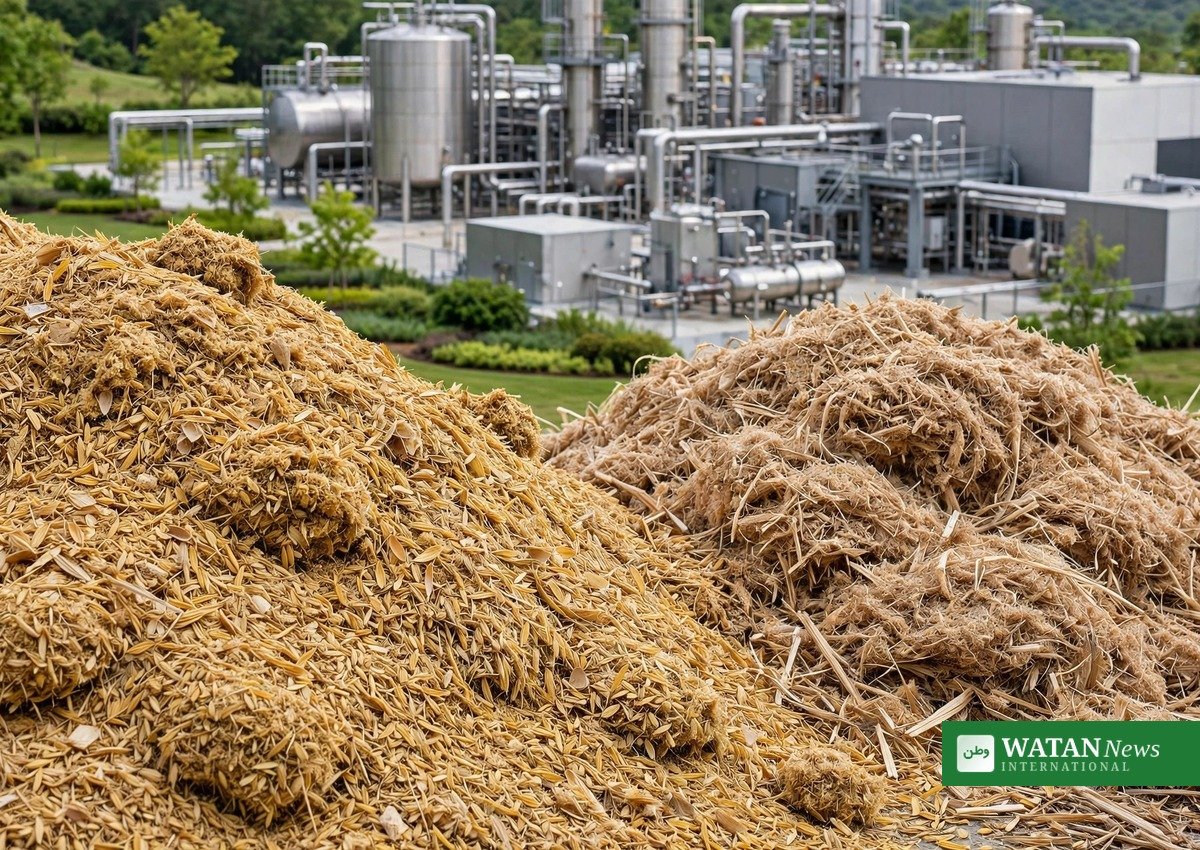
Agricultural residues rice husk and sugarcane bagasse as feedstock for sustainable aviation fuel production

SAF production in India is still at an early stage, so the first investors will test whether state incentives can close the cost gap with conventional fuel. If the policy draws its target projects, Uttar Pradesh could turn farm waste into one of the fastest-growing links between rural India and the global push for cleaner travel. Read more in the Watan News climate section.

Conclusion

The Uttar Pradesh SAF policy shows how the clean-aviation transition is moving from international pledges to concrete industrial policy at the state level. With national blending targets approaching from 2027, the race is now on to build the plants that can supply the fuel — and the farms that feed them.


Related Stories

Planet & environment

Climate & Sustainability

News, stories and solutions driving change towards a greener and more sustainable planet for future generations.

Simple Changes Cut Household Food Waste by 28%, EU COMBINE Study Finds
Featured story

Simple Changes Cut Household Food Waste by 28%, EU COMBINE Study Finds

Simple, practical changes at home cut household food waste by an average of 28% among participating households in a European study, according to the EU-funded COMBINE project. The finding, published in a new European toolkit on 19 October 2026, suggests that awareness alone is not enough: what works is making the right choice the easy

Read full story

GREEN JOURNALISM

EITB’s ‘Bizi Natura’ Wins Basque Environmental Communication Award 2026
Green Journalism

EITB’s ‘Bizi Natura’ Wins Basque Environmental Communication Award 2026

The Basque Association of Journalists and the Basque College of Journalists have announced that EITB’s wildlife programme “Bizi Natura” is the winner of the Basque environmental communication award 2026, the environmental section of the 15th Basque Journalism Awards. The announcement was made on 16 October 2026, honouring a programme that brought the Urdaibai Biosphere Reserve

Read full story
Forest Governance Media Workshop: EJN to Train 30 Journalists on Forest Reporting
Green Journalism

Forest Governance Media Workshop: EJN to Train 30 Journalists on Forest Reporting

The Earth Journalism Network (EJN) is bringing around 30 journalists together for a two-day forest governance media workshop on 21–22 October 2026, held virtually under its Forest Governance Media Initiative (FGMI) and with funding from UK International Development. The training aims to strengthen reporting on deforestation, community rights and sustainable forest management across Africa and

Read full story

Every Action Counts

Small steps today, big impact tomorrow.

Explore more stories