A Basra power station fire killed at least four people and injured dozens on Saturday, 21 November 2026, after a gas pipeline blast at the Hartha power station north of Basra spread to nearby homes and forced the plant to stop operating.
Civil defence teams brought the fire under control after firefighters responded to the incident, Iraq’s state news agency INA reported. Most of the casualties were residents of houses near the plant who suffered burns and smoke inhalation, according to Iraq’s Security Media Cell.
FAKTA
- What happened: A gas pipeline supplying the Hartha power station exploded, sparking a fire that spread to nearby homes and vehicles
- Where: Hartha power station, about 20 kilometres north of Basra, southern Iraq
- When: Early on Saturday, 21 November 2026; the blast was reported at about 05:15 local time
- Killed: At least four people, according to Iraqi security officials
- Injured: 35 people, according to security officials; the Health Ministry put the figure at 46
- Damage: More than 17 houses damaged and several vehicles burned
- Plant status: Operations stopped after the fire; the plant director said it is ready to resume
Basra Power Station Fire Spreads to Nearby Homes
The fire broke out at around 6 a.m. local time (03:00 GMT), Iraq’s Security Media Cell said. The blast occurred in one of the gas transmission pipelines supplying the Al-Hartha Thermal Power Station, and the fire swept through several nearby homes and vehicles, damaging more than 17 houses, the Security Media Cell said in a statement carried by Qatar News Agency.
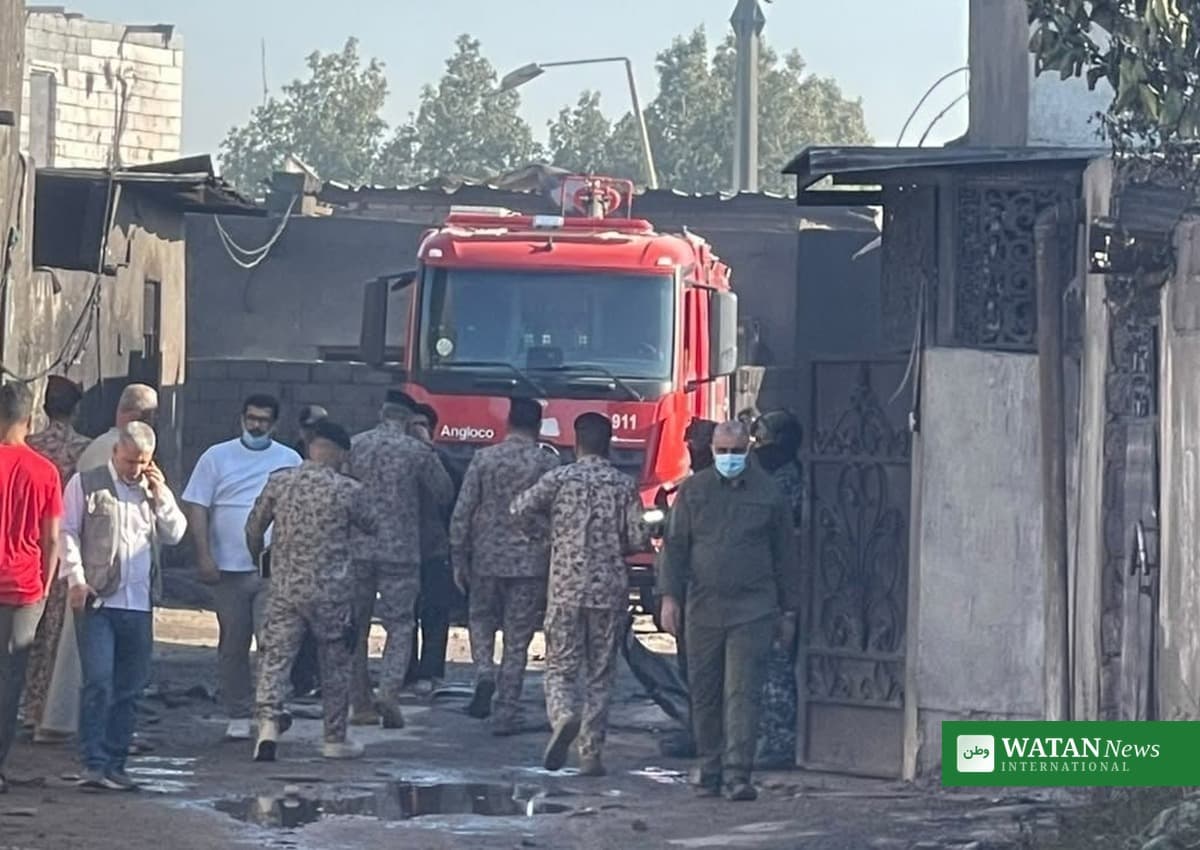
Civil defence personnel began responding at 6 a.m., supported by specialised security forces, the army and police, and later brought the fire under control. Witnesses said flames spread from the pipeline to the surrounding neighbourhood, forcing families out of their homes and closing the main road through the area.
Pictures from the scene showed severely damaged sections of a gas pipeline, with the surrounding ground blackened and debris scattered across the site. Iraq’s Electricity Ministry said the incident involved a gas pipeline supplying the power station.
Conflicting Casualty Figures
Officials gave different casualty figures in the hours after the blast, and the difference was not explained. The Security Media Cell said its preliminary count, which it described as not final, was four dead and 35 injured, most of them residents of informal houses built next to the plant. Maher al-Amiri, Basra’s first deputy governor, also said four people had died.
The Health Ministry gave a lower death toll and a higher injury count. Its spokesman, Saif al-Badr, told the Iraqi News Agency that two people were killed and 46 injured, most of them with minor to moderate injuries, and that three people were in intensive care. Basra’s health directorate said later that 25 of the injured had been discharged and 19 were still being treated at al-Fayhaa and al-Mawani teaching hospitals. A local source told Shafaq News that eight people, including children, had been killed.
Officials warned that the toll could rise as rescue teams checked the damaged buildings.
Investigation Ordered as Plant Prepares to Restart
Prime Minister Ali al-Zaidi ordered an urgent investigation into the explosion to determine its causes and establish responsibility, his office said. His office added that the families of the dead and the injured would be compensated, and that households who lost their homes would be included in the government’s Watan scheme, which is distributing residential plots of land. Basra’s governor, Asaad al-Eidani, formed a separate provincial committee of inquiry.
The plant’s director, Qais Ali Al-Ahmad, told Shafaq News that the station is ready to resume operations. He said the explosion occurred outside the station, and that the pipeline involved is not under its administration, adding that the plant had sustained no damage that would prevent it from operating.
Electricity Minister Ali Saadi Wahib held an emergency meeting on the plant’s condition and ordered repairs and measures to prevent a repeat of the incident.
Officials have not said what caused the pipeline to rupture. Video shared on social media prompted claims of a drone attack, but no official has confirmed that, and local and federal authorities have described the incident as a gas pipeline explosion. There was no immediate official information on the full extent of the damage.
Iraq’s Ageing Power Network Under Strain
The Hartha station is one of the main sources of electricity in southern Iraq. It has an installed generating capacity of 800 megawatts but had been operating at around 400 megawatts before the fire, security officials told Reuters.
Iraq’s electricity infrastructure has long struggled with decades of underinvestment, inadequate maintenance and an inability to meet peak demand, particularly during the extremely hot summer months. Fires and technical failures at substations and power facilities have previously disrupted electricity supplies and caused widespread outages.
An earlier explosion on the main gas pipe in Al-Hartha in August 2019 also caused a large fire and cut the gas supply to the Hartha power station. Iraq also has a long record of deadly fires at public facilities, including the 2021 blazes at Ibn al-Khatib hospital in Baghdad and al-Hussein hospital in Nasiriyah, which together killed more than 100 people. Officials blamed both on negligence and poor safety standards.
Read more world news on Watan News International.