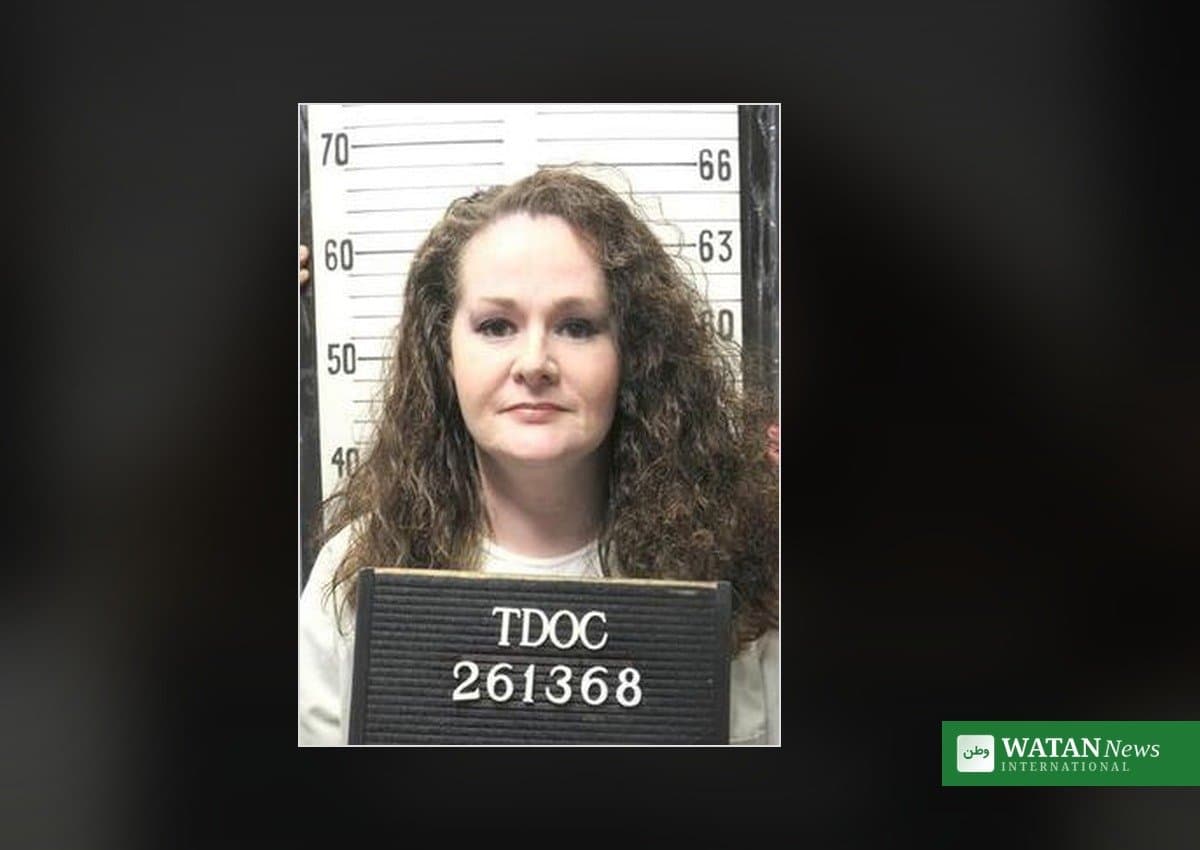
The failed Christa Pike execution attempt has thrown Tennessee’s death-penalty system into crisis: the state’s effort to execute Pike — the only woman on Tennessee’s death row — collapsed on Wednesday night after two syringes of the lethal drug pentobarbital failed to stop her heart. Pike, 50, was still breathing and audibly snoring more than 40 minutes after the second dose, and was taken by ambulance to a nearby hospital, where her lawyers say she is receiving life-saving care.
Governor Bill Lee has now paused Tennessee’s remaining executions for 2026 and ordered a comprehensive third-party review of what went wrong — the second time this year the state has failed to carry out a lethal injection.
FAKTA: The failed Christa Pike execution
- Who: Christa Gail Pike, 50 — Tennessee’s only woman on death row, sentenced to death in 1996 for the 1995 torture and murder of 19-year-old Colleen Slemmer.
- Where: Riverbend Maximum Security Institution, Nashville, Tennessee.
- When: Wednesday, September 30, 2026 — the procedure began in the evening after a day of court battles.
- What happened: Two syringes of pentobarbital were administered. Pike did not lose consciousness, kept a heartbeat, and was audibly snoring. She was transported to an off-site hospital; her condition has not been disclosed.
- Aftermath: Governor Bill Lee paused the rest of 2026’s executions and ordered an independent review. The December 3 execution of Gary Wayne Sutton is on hold.
- Historic context: Pike would have been the first woman executed in Tennessee in more than 200 years.
A day of legal battles before the Christa Pike execution attempt
The execution warrant was set for 10 a.m. Wednesday. Around 9 a.m., the U.S. Court of Appeals for the Sixth Circuit granted Pike a temporary stay to consider her challenge to Tennessee’s lethal-injection protocol. The state’s attorney general went straight to the U.S. Supreme Court, which vacated the stay in a 6–3 decision at about 5:50 p.m.
With the warrant expiring at midnight, the state raced the clock. Media witnesses were brought into the observation room at 6:26 p.m., and the procedure began shortly after.
What the witnesses saw
According to reporters in the witness room, the execution was troubled from the start. Pike spoke what she believed would be her last words: “I’m going to leave this world the way I spent most of my life — and that is with love. I’m at peace, I’m ready to be free. This is a happy day.” She sang with her spiritual adviser, Rev. Mikey Noechel, before the drugs began to flow.
Witnesses said Pike remained conscious through much of the procedure and complained of pain — “the vein in my arm feels like it’s about to bust,” she said — kicking her legs so hard that she knocked the sheets off her body. The curtains to the chamber were drawn and reopened twice. After the second syringe, she lost consciousness but kept breathing, with loud snoring audible in the chamber. More than 40 minutes after the final dose, she was still alive, and the witnesses were escorted out at about 8:53 p.m.
The Nashville Banner reported that the execution-team physician, Dr. Mark Walton Fowler, could not establish a central IV line during the procedure.

Lawyers: “The state once again failed to carry out a lawful execution”
Pike’s legal team filed an emergency motion during the procedure seeking to halt it and secure immediate medical treatment. In a statement after 11 p.m., her lawyers said: “Tonight the State of Tennessee once again failed to carry out a lawful execution. We take no pleasure in being right, but the concerns raised by Ms. Pike proved to be true: difficult vein access, blown veins, degraded pentobarbital, no emergency medical care available when things inevitably go wrong, all under a protocol that remains veiled in secrecy.”
One of her attorneys told the BBC that Pike was “being provided life-saving measures” in a nearby hospital, though her precise condition remains unclear.
The state defends its protocol
The Tennessee Department of Correction said it “followed every step of the State’s lawful, established execution protocol approved by the Attorney General’s Office,” adding that “the lethal injection chemical in the protocol has consistently been effective, and the protocol does not allow for additional procedures beyond what was carried out this evening. Christa Pike has been transported to an off-site medical facility.”
The protocol calls for a second injection “if the inmate is not deceased” — but says nothing about what officials should do if the second dose also fails.
Governor Lee halts 2026 executions, orders review
Governor Bill Lee said he has ordered a “comprehensive, third-party review to determine exactly what occurred,” adding: “Carrying out a lawfully imposed sentence is among the State’s most serious responsibilities, and the people of Tennessee expect it to be done in a manner that is not only legal and constitutional, but is effective.”
The pause covers the rest of 2026 and directly affects Gary Wayne Sutton, whose execution had been reset for December 3, 2026. His date is now on hold; the suspension does not overturn his death sentence.
Tennessee’s troubled execution record
Pike is the second person Tennessee has failed to execute this year. In May, the state abandoned its attempt on Tony Carruthers after officials could not establish IV access. Governor Lee had previously paused executions in 2022 while the state revised its lethal-injection procedures.
Pike’s own challenge to the protocol — citing her blood disorder, small and compromised veins, and severe trauma history — had been heard in August by a court-appointed special master, but the state maintained she was a “standard” patient with accessible veins.
Who is Christa Pike
Christa Gail Pike was 18 when she and her then-boyfriend, 17-year-old Tardaryl Shipp, tortured and killed 19-year-old Colleen Slemmer — a fellow student at the Job Corps center in Knoxville — on January 12, 1995. Slemmer’s body was found the next day on the University of Tennessee agriculture campus. Pike was sentenced to death in 1996, becoming one of the youngest women sentenced to death in the modern era in the United States. Shipp received a life sentence.
Pike has spent three decades on death row. If the execution had gone ahead, she would have been the first woman executed in Tennessee in more than 200 years — and the 19th woman executed nationwide since 1976. Read more of our U.S. coverage in the America section.
Conclusion
The failure of the Christa Pike execution is unprecedented in the modern history of lethal injection — the first case in which an inmate remained alive after the drugs were actually administered twice. With the governor’s review underway and the rest of the year’s executions paused, Tennessee’s death-penalty machinery faces its most serious credibility crisis in years, and Pike’s fate — alive in a hospital bed under guard — remains legally and medically unresolved.