LIVE
BREAKING
Iran Attacks Navigation Systems on Oman’s Didamar Island in Strait of HormuzVeteran AP Reporter Seth Borenstein’s Guide to COP31: What Journalists Should Watch in AntalyaTreasury Secretary Bessent Moved to Military Base After Iranian Death ThreatsThree Palestinians Killed in Israeli Strikes on Gaza CityCOP31 Zero Waste Day: Leaders Pitch Sustainable Living as Cheaper Living in AntalyaNATO Weighs Major Shift in Military Planning to Focus on RussiaIran Says Hormuz Strait Will Stay Shut Until US Meets Seven ConditionsWest Bank Arson Attacks Pass 1,180 in Three Years, Palestinian Body SaysCOP31 Puts Money Behind the ‘Age of Electricity’ as Finance Coalition and Utilities Pledge $156bn a YearPochettino Ready to Accept Manchester United Offer as Carrick Exit NearsRussia and Ukraine Agree Large Prisoner Swap as Abu Dhabi Talks ConcludeIran Refuses to Move Enriched Uranium Abroad, Warns US BasesCOP31: Global Rooftop Solar Declaration Aims to Put Solar on 300 Million Homes by 2030Spain Stages First General Strike in 14 Years Over Housing CrisisBukele Says Salvadoran Forces Destroyed 400 Mawozo Gang Headquarters in HaitiSaudi Arabia and Turkiye Seal 5,000 MW Clean Energy Deal at COP31Climate Ambassadors Take Centre Stage as COP31 Leaders’ Summit Continues in AntalyaAnthropic Targets $1.4 Trillion Valuation in $90 Billion IPO PushCOP31 Yearbook: Climate Champions Report a Decade of Action Delivering ResultsPLA-Linked Chinese University Bought Nvidia H200 Chips Despite US Blacklist, Records ShowIran Attacks Navigation Systems on Oman’s Didamar Island in Strait of HormuzVeteran AP Reporter Seth Borenstein’s Guide to COP31: What Journalists Should Watch in AntalyaTreasury Secretary Bessent Moved to Military Base After Iranian Death ThreatsThree Palestinians Killed in Israeli Strikes on Gaza CityCOP31 Zero Waste Day: Leaders Pitch Sustainable Living as Cheaper Living in AntalyaNATO Weighs Major Shift in Military Planning to Focus on RussiaIran Says Hormuz Strait Will Stay Shut Until US Meets Seven ConditionsWest Bank Arson Attacks Pass 1,180 in Three Years, Palestinian Body SaysCOP31 Puts Money Behind the ‘Age of Electricity’ as Finance Coalition and Utilities Pledge $156bn a YearPochettino Ready to Accept Manchester United Offer as Carrick Exit NearsRussia and Ukraine Agree Large Prisoner Swap as Abu Dhabi Talks ConcludeIran Refuses to Move Enriched Uranium Abroad, Warns US BasesCOP31: Global Rooftop Solar Declaration Aims to Put Solar on 300 Million Homes by 2030Spain Stages First General Strike in 14 Years Over Housing CrisisBukele Says Salvadoran Forces Destroyed 400 Mawozo Gang Headquarters in HaitiSaudi Arabia and Turkiye Seal 5,000 MW Clean Energy Deal at COP31Climate Ambassadors Take Centre Stage as COP31 Leaders’ Summit Continues in AntalyaAnthropic Targets $1.4 Trillion Valuation in $90 Billion IPO PushCOP31 Yearbook: Climate Champions Report a Decade of Action Delivering ResultsPLA-Linked Chinese University Bought Nvidia H200 Chips Despite US Blacklist, Records Show
Europe

Russia’s New Filin Missile Carries US and Chinese Electronics, Ukraine Says

News Desk 6Published October 22, 2026
Russia’s New Filin Missile Carries US and Chinese Electronics, Ukraine Says
Share this story

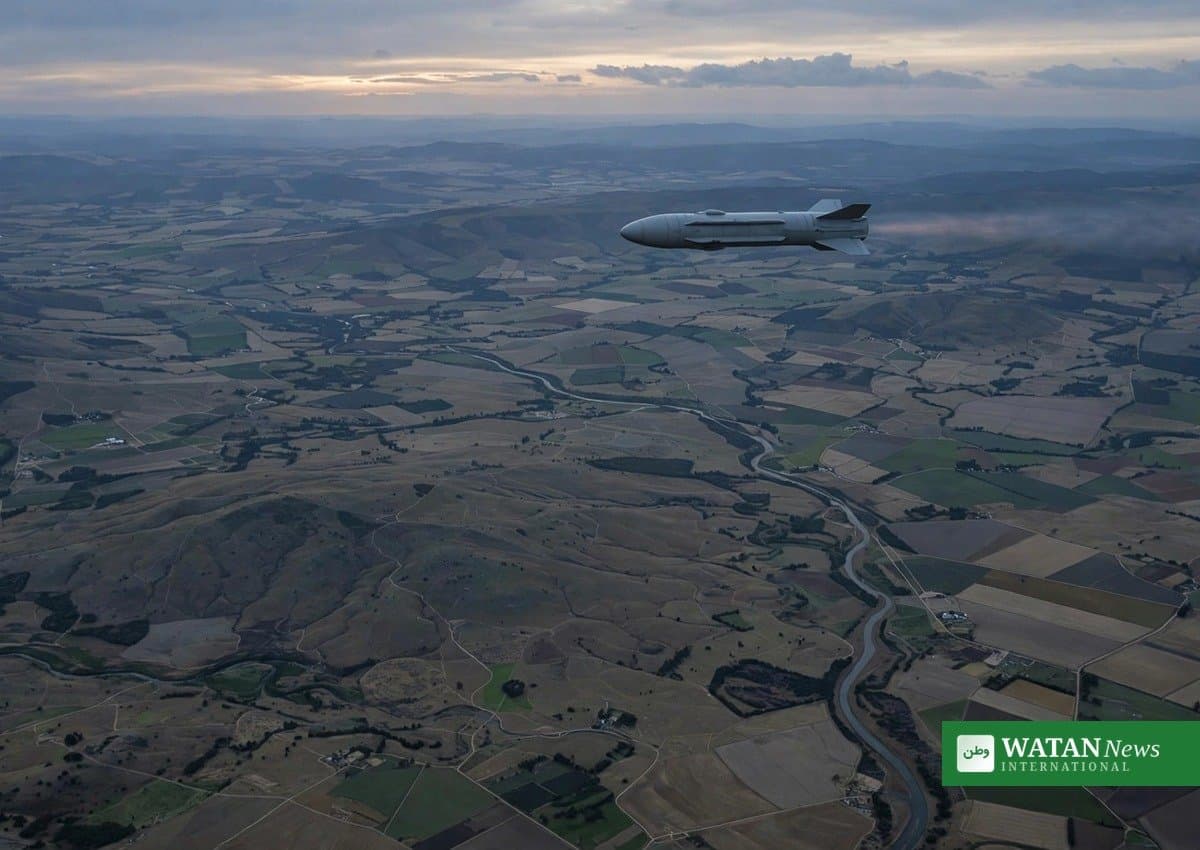
Ukraine’s military intelligence agency (HUR) has published a detailed breakdown of a new Russian ground-launched cruise missile, saying the weapon entered operational use against Ukraine in late summer and contains electronics linked to manufacturers in the United States and China. The Russia Filin missile, described on the agency’s War and Sanctions portal, is presented as a relatively inexpensive jet-powered weapon for long-range strikes from a ground launcher.

FAKTA: Russia Filin Missile

  • Weapon: Filin ground-launched cruise missile, made by NPO Molniya, part of Russia’s Tactical Missiles Corporation.
  • First reported use: Against Ukraine in late summer 2026, according to HUR.
  • Claimed performance: Up to 800 kilometres per hour, with a range of up to 1,200 kilometres and a warhead of 50 or 100 kilograms. These figures have not been independently verified.
  • Electronics: 35 components linked to manufacturers in the United States and 22 linked to manufacturers in China, according to HUR.
  • Guidance: A Chinese-made inertial navigation system and a 16-channel Kometa module, described as resistant to electronic interference.
  • Engine: A Russian-made R500 turbojet engine.

What the intelligence disclosure describes

Alongside the component list, HUR released an interactive three-dimensional model of the missile. The agency describes a composite body of carbon fibre and fibreglass, measuring 3.5 metres long with a wingspan of three metres, with some parts made using three-dimensional printing. The missile launches from a ground-based platform with a solid-propellant booster and can fly at very low altitude or as high as six kilometres.

The agency links the missile’s onboard equipment to the Russian company PLAZ, which it says also produces equipment for the Garpiya attack drone, and notes similar layouts and markings between the two systems. The same R500 engine had previously appeared in Russia’s S-71K Kover and S-71M Monokhrom air-launched cruise missiles, according to HUR.

Why the foreign components matter

The central claim is not only that a new weapon exists, but that its electronics draw heavily on parts associated with American and Chinese manufacturers despite years of sanctions and export controls on Russia’s military sector. HUR says the missile’s electronic base resembles that of other Russian missiles and drones, but with a larger share of Chinese components than in earlier systems it has examined.

The agency has not said how the parts were obtained, and a component’s country of origin does not by itself show that a manufacturer supplied Russia’s military directly: commercial electronics can reach weapons programmes through intermediaries or third-country markets. The disclosure is therefore evidence of a supply-chain enforcement challenge, rather than proof of direct corporate involvement.

What remains unverified

Russia has not publicly confirmed the details, and HUR has not said how many Filin missiles have been launched, which targets they struck, or how investigators obtained the parts examined. The claimed speed, range, and warhead figures come from Russian-advertised specifications cited by HUR and remain unverified. The technical claims should therefore be treated as Ukraine’s assessment until corroborated by further evidence. More international coverage is available on Watan News International’s English section.

Related Stories

Planet & environment

Climate & Sustainability

News, stories and solutions driving change towards a greener and more sustainable planet for future generations.

Veteran AP Reporter Seth Borenstein’s Guide to COP31: What Journalists Should Watch in Antalya
Featured story

Veteran AP Reporter Seth Borenstein’s Guide to COP31: What Journalists Should Watch in Antalya

AP veteran Seth Borenstein, who has covered seven COPs, sets out what journalists should watch at COP31 in Antalya — the missing $1.3 trillion in climate finance, the fate of the 1.5C goal, and Türkiye's 35-by-35 electrification target.

Read full story

GREEN JOURNALISM

Every Action Counts

Small steps today, big impact tomorrow.

Explore more stories