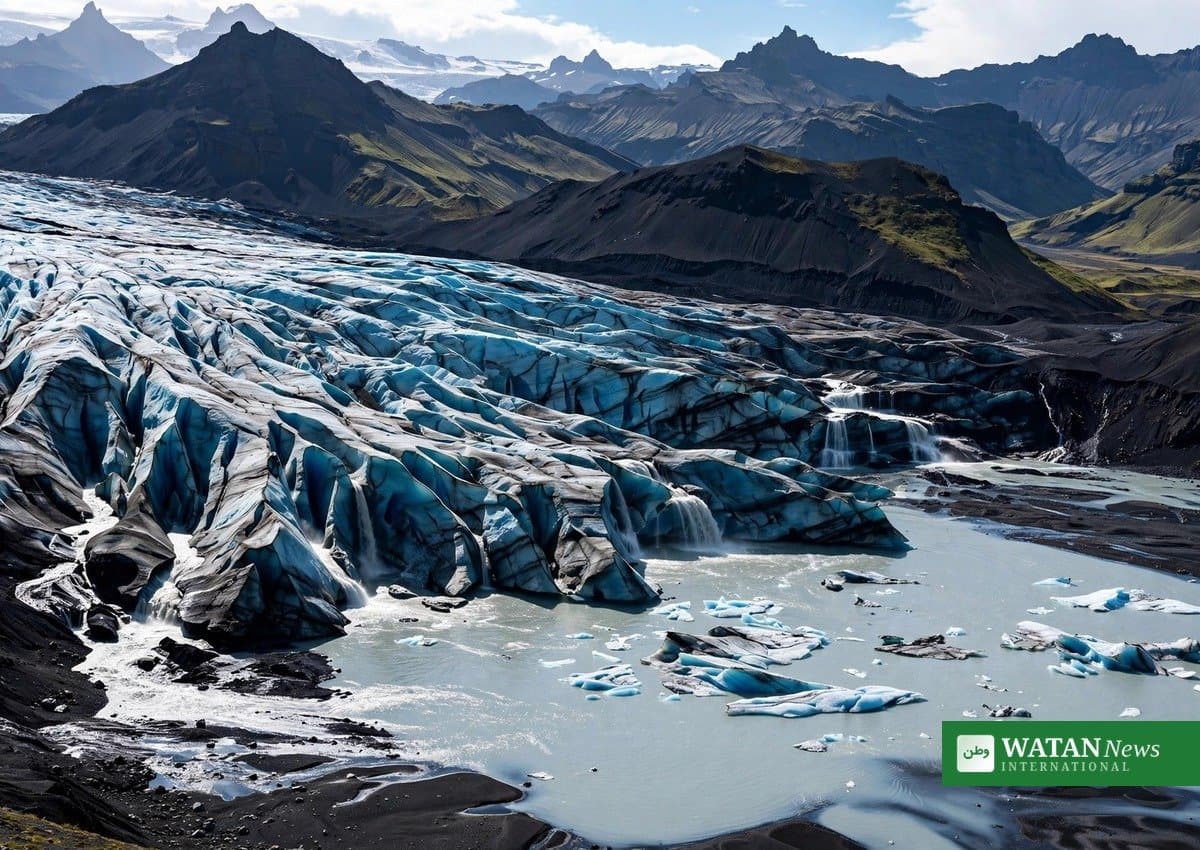
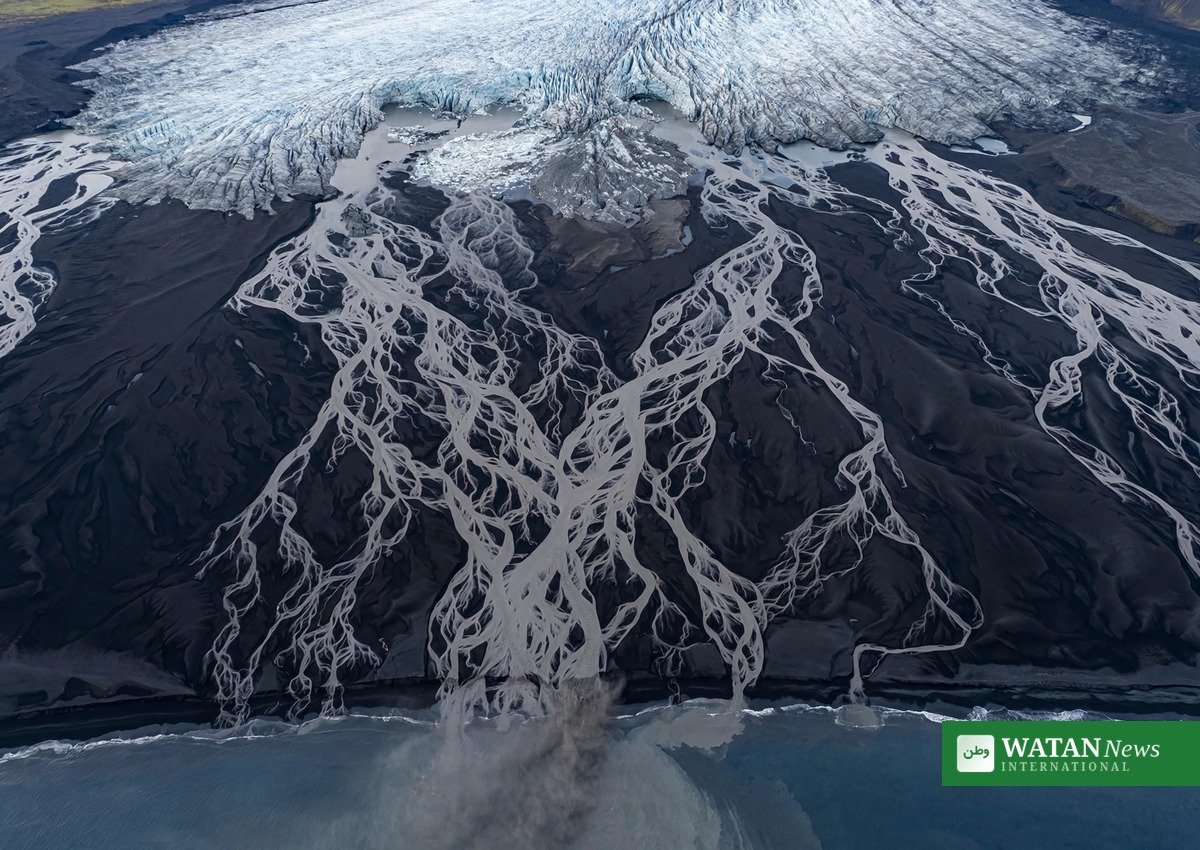
REYKJAVÍK — Iceland glaciers are melting at an alarming rate, contributing to global sea-level rise and threatening the island’s environment. The country’s glaciers hold about 3,400 cubic kilometres of ice — enough to raise global sea levels by around 9 millimetres if it all melted, according to a comprehensive study in Frontiers in Earth Science. Since the end of the 19th century, Icelandic glaciers have already lost about 16 percent of the mass they held around 1890.
Almost half of that loss happened between 1994/95 and 2018/19, and during the most rapid decade of melt (1994/95–2009/10) the loss rate reached about 11.6 gigatonnes per year. Global warming is the primary driver: Iceland’s glaciers, almost all of which terminate on land, lose ice through surface melt when summer meltwater runoff exceeds winter snowfall.
FAKTA
- Iceland’s glaciers hold about 3,400 km³ of ice — equivalent to about 9 mm of potential global sea-level rise (source: Frontiers in Earth Science, Aðalgeirsdóttir et al.).
- From 1890/91 to 2018/19, Icelandic glaciers lost 540 ± 130 gigatonnes of ice — about 1.50 mm of sea-level equivalent, or 16% of their mass around 1890.
- Almost half of the total loss occurred in 1994/95–2018/19, with the fastest loss in 1994/95–2009/10.
- The three largest ice caps — Vatnajökull, Langjökull and Hofsjökull — have been measured continuously since the early 1990s.
- GPS measurements show Iceland’s crust rebounding as the ice thins, in some places rising as much as 35 mm per year (source: Live Science / Utrecht University research).
- In a strong warming scenario, Iceland’s glaciers could lose a third of their current volume by 2100 and be gone by 2300, contributing about 3 mm to sea-level rise.
Iceland glaciers: how the melt happens
Almost all of Iceland’s glaciers terminate on land, so they melt through their surface mass balance — the difference between ice gained from winter snowfall and ice lost through meltwater runoff in summer. As global temperatures rise, that balance has tipped decisively toward loss.
The melting is visible in the landscape itself: the Icelandic crust is rebounding as the weight of ice decreases. Geoscientists measuring this uplift with a network of GPS receivers found that south-central Iceland is rising as fast as 35 millimetres per year — and that the acceleration of uplift matches the accelerated melting of the ice caps. More on glacier science on the main Watan News site.
Why Iceland’s glaciers matter for sea levels
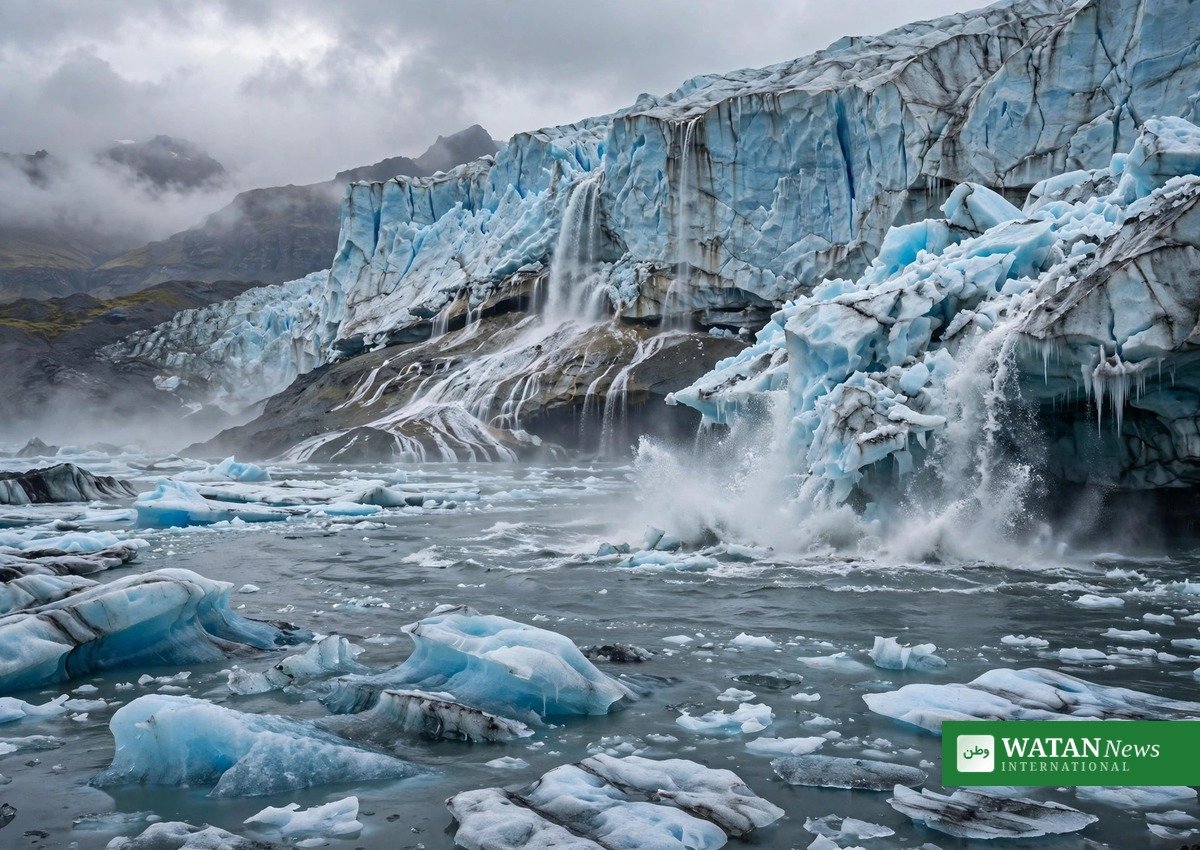
Water from melting Icelandic glaciers flows into the ocean, raising sea levels and threatening coastal communities and ecosystems with flooding and erosion. While 9 millimetres of total potential rise sounds small next to Greenland or Antarctica, scientists stress that small glaciers worldwide are melting fast and together play a major role in rising seas.
There is one temporary brake on the melt: a cold patch of North Atlantic water south of Iceland — the “Blue Blob” — has been cooling the air around Iceland and slowing surface melt. But models show the respite will not last. Under a strong warming scenario, the Blob’s cooling effect fades by mid-century, and Iceland’s glaciers start leaking mass again, losing a third of their current volume by 2100.
Conclusion
The message from researchers is direct: the only way to slow the loss of Iceland’s glaciers in the long term is to curb the greenhouse gas emissions driving global warming. “The Arctic is warming fast. If we wish to see glaciers in Iceland, then we have to curb the warming,” said lead author Brice Noël of Utrecht University.