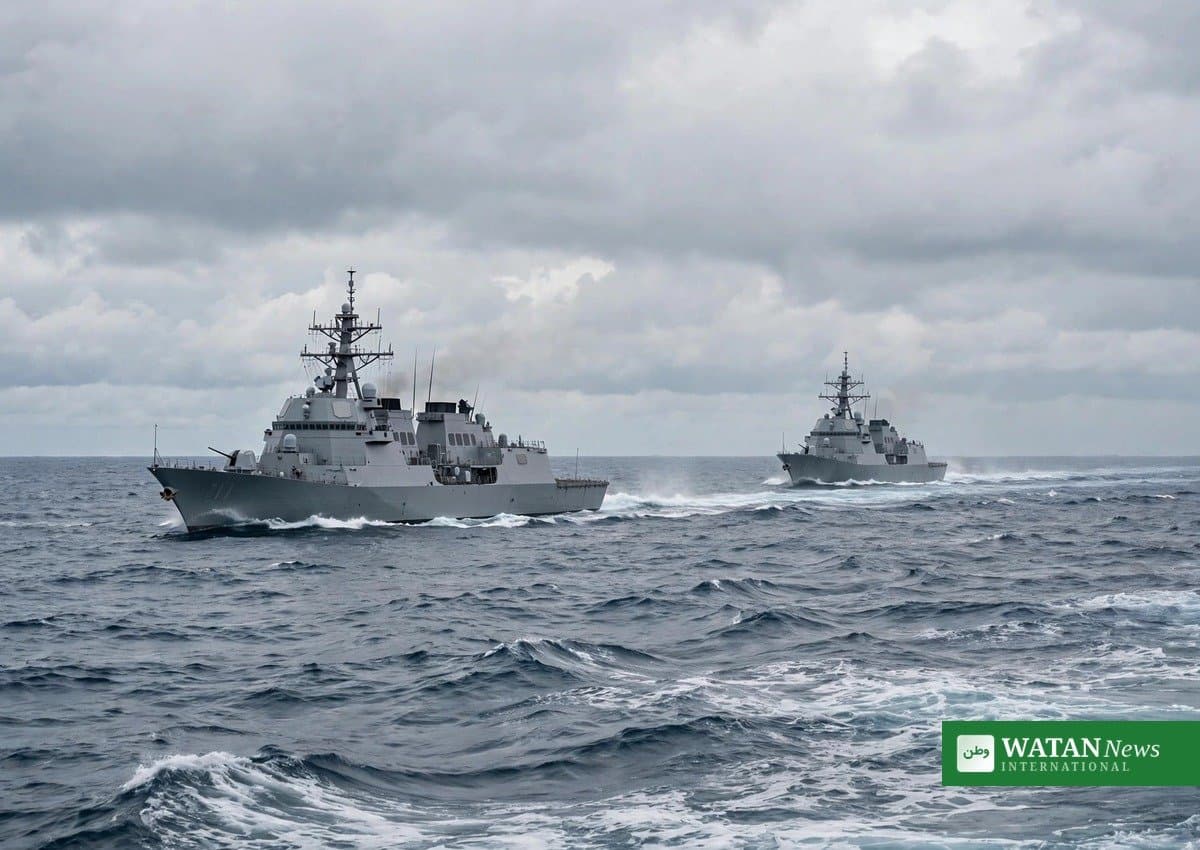
The United States has described China’s recent maritime activities off Taiwan’s east coast as “deeply destabilising”, after a Chinese maritime militia vessel was sighted operating near the island in August 2026 — the latest in a series of grey-zone pressure tactics that Taipei and Washington say are designed to intimidate without triggering open conflict.
FAKTA
- The US State Department called China’s maritime moves off Taiwan’s east coast “deeply destabilising” in October 2026.
- A Chinese maritime militia boat was sighted near Taiwan’s east coast in August 2026, according to Taiwanese authorities.
- Taiwan’s defence ministry says it tracked a surge of Chinese military aircraft and naval vessels around the island through 2026.
- Beijing claims Taiwan as its own territory and has not ruled out the use of force; Taipei rejects Beijing’s sovereignty claims.
- The US is Taiwan’s most important international backer and arms supplier, though Washington maintains no formal diplomatic ties with Taipei.
What the US said
A State Department spokesperson said the United States was closely monitoring the situation and called on Beijing to exercise restraint. “We consider China’s maritime activities off Taiwan’s east coast deeply destabilising,” the spokesperson said, urging all parties to avoid unilateral changes to the status quo. The comments followed Taiwanese reports of a maritime militia vessel loitering in waters east of the island in August — an area where China’s coast guard and navy have stepped up patrols in 2026.
Taiwan’s Mainland Affairs Council said the militia presence was part of a pattern of coercion. “These grey-zone tactics are meant to wear down our defences and normalise intimidation,” a council official said.
Grey-zone pressure around Taiwan
Analysts describe the militia sighting as classic grey-zone warfare: actions aggressive enough to pressure Taiwan but calibrated to stay below the threshold of armed conflict. Through 2026, Taiwan’s defence ministry has reported near-daily incursions by Chinese military aircraft into its air defence identification zone and regular naval transits through the Taiwan Strait.
Beijing has intensified pressure since Taiwan’s 2024 elections, combining military drills, economic coercion and disinformation campaigns. The US has responded with arms sales and freedom-of-navigation transits, while repeatedly stating its “one China” policy has not changed.
Why the east coast matters
Most Chinese pressure has historically focused on the Taiwan Strait to the west. Increased activity off the east coast — facing the Pacific — signals an expanding operational footprint and complicates Taiwan’s defensive planning, which has long assumed any invasion would come from the west. It also puts Chinese vessels closer to sea lanes used by Japan and the US.
Regional governments are watching closely. Japan has described Taiwan’s security as directly linked to its own, and the Philippines has deepened defence cooperation with Washington amid its own maritime disputes with Beijing in the South China Sea.
In short, a single militia boat off Taiwan’s east coast has become the latest data point in a steady escalation — one the US now publicly labels destabilising.
Related Articles
More on Asia-Pacific security: China Holds Military Drills Around Taiwan.