A catastrophic rock-ice avalanche that turned into a high-speed debris flood along the Nepal–China border on 26 August has been examined by an international scientific team that finds rapid Himalayan warming intensified the conditions that made such a cascade more likely. The analysis, published on 17 September by World Weather Attribution (WWA), stops short of claiming that climate change alone caused the slope failure, but concludes that fossil-fuel warming is raising the odds and severity of compound mountain hazards beyond existing adaptation limits.
Nepal’s National Disaster Risk Reduction and Management Authority figures cited by WWA put confirmed deaths at more than 1,300 as of mid-September, with over 5,000 people still missing, about 13,700 rescued and more than 8,600 treated medically. Roughly 84,270 people across six districts were affected, and the government declared 15 municipalities disaster crisis-hit areas for three months. Early speculation that an earthquake triggered the event was set aside after evidence linked recorded seismic signals to the collapse itself of roughly two square kilometres of rock wall and glacier ice.
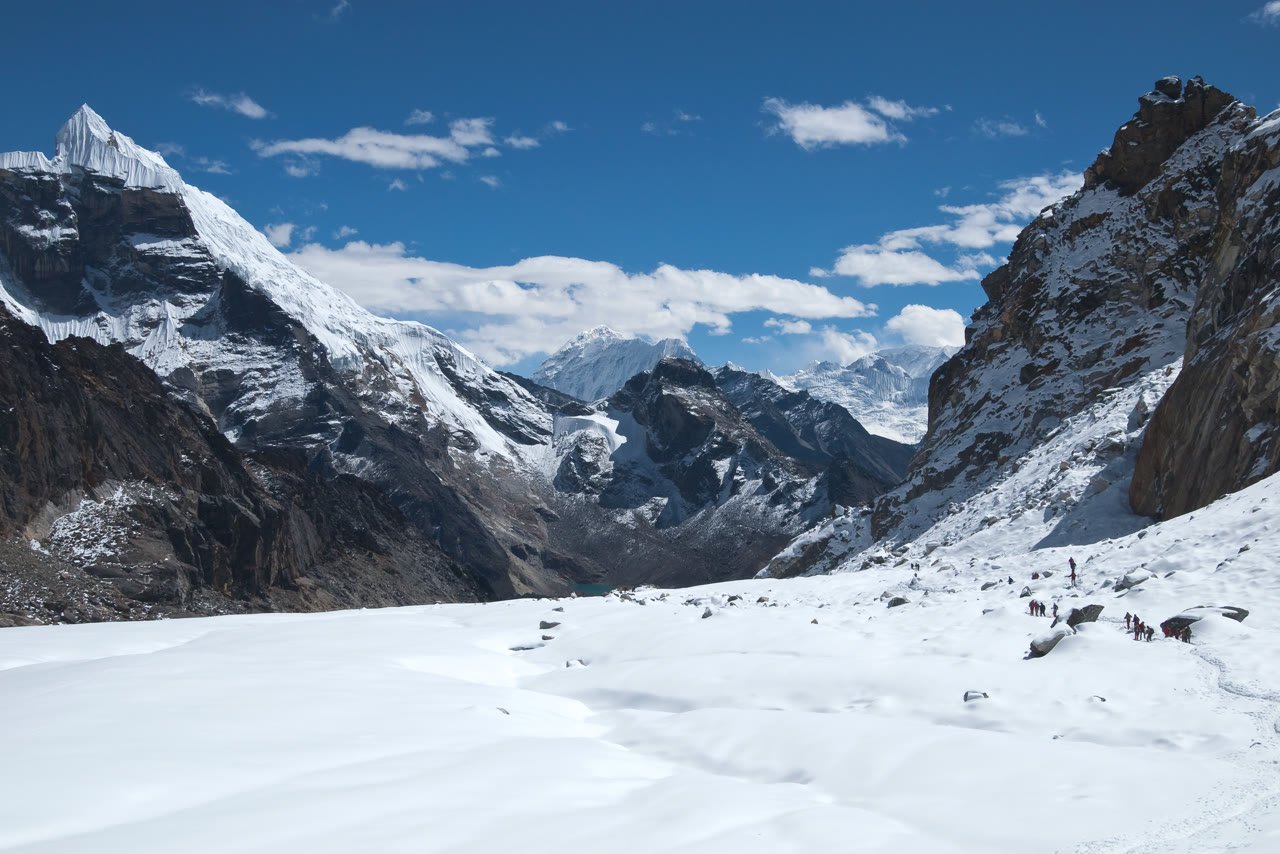
Researchers say material fell about 1,400 metres from around 5,150 metres above sea level to the valley floor near 3,750 metres, releasing energy equivalent to a magnitude 5.5 earthquake. Friction and impact likely melted ice and drew in water stored in and beneath the glacier and permafrost. A wall of water, ice, rock and sediment reached the Rasuwagadhi border about 22 kilometres downstream within seven minutes at an average speed of roughly 188 kilometres per hour, devastating Timure and Syabrubesi before racing far down the Trishuli corridor. WWA cites estimates that the flood travelled some 200 kilometres to Devghat in under seven hours and deposited about 30.5 million cubic metres of sediment and debris.
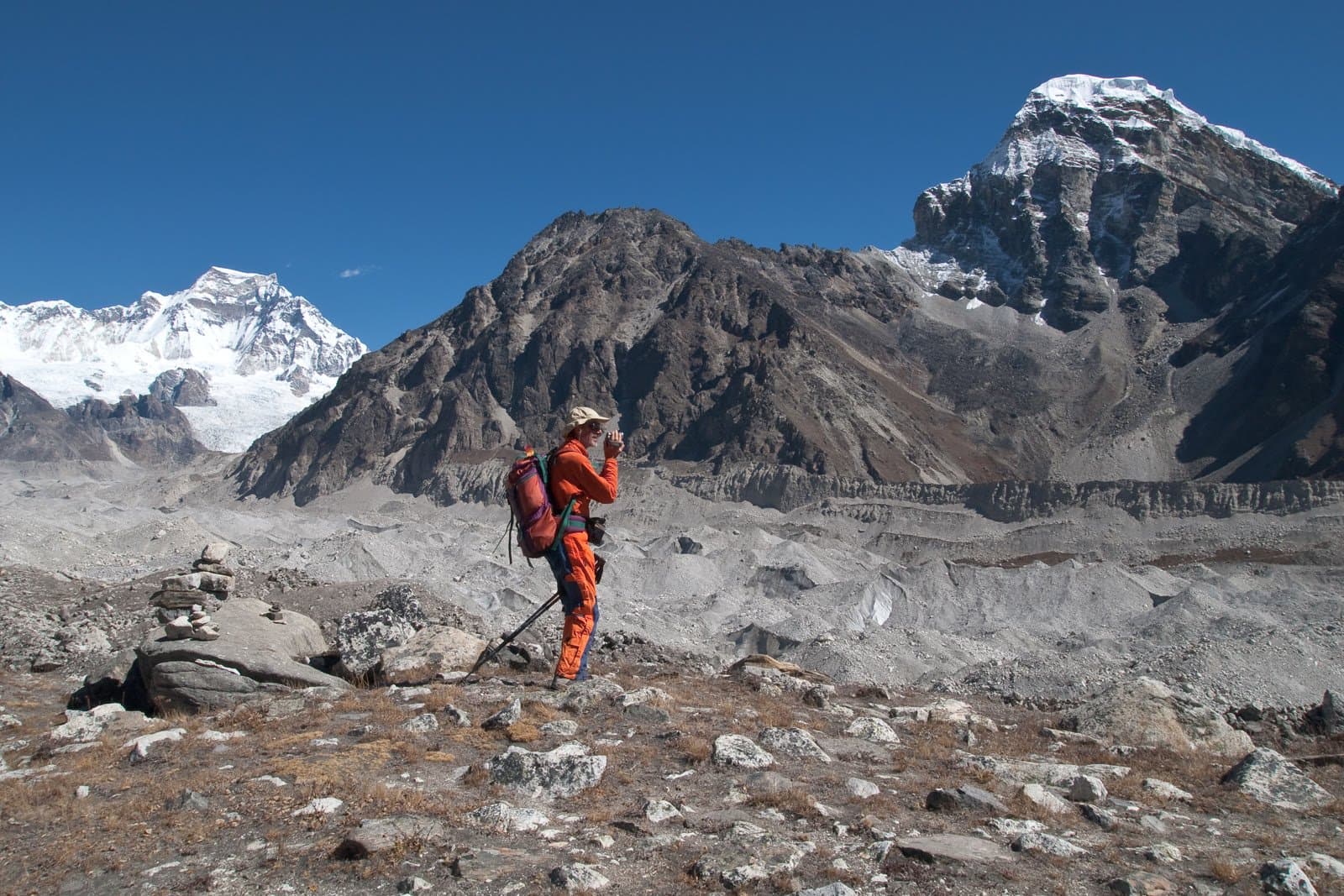
The multi-country team — including experts from Nepal, Pakistan, the United Kingdom, Ireland, Sweden, Denmark, Norway, the United States, New Zealand and the Netherlands — treats climate change as a destabilising factor acting on geological predisposition, not as a single root cause. Warming and permafrost degradation can thaw ice in fractures, weaken rock–ice contacts and raise water pressure. Glaciers in the region have been thinning for decades, and recession of the Langtang–Lirung glacier extent has accelerated since 2010. The 2015 magnitude 7.8 earthquake is noted as a possible long-term preconditioner of the rock mass, though its specific contribution to the 2026 failure is not confirmed.
Observational analysis found unusually warm conditions in the 12 months before the collapse, including July and August 2026. Using WWA’s standard framework comparing today’s climate with a 1.4°C cooler pre-industrial world, the team finds human-caused warming increased July–August temperatures near the failure site by about 1.5°C. Annually, the attributable increase is about 2°C; in some winter months it reaches as high as 3°C. The 0°C isotherm has also shifted upward on the order of 100 metres per decade in recent monsoon and post-monsoon seasons, favouring permafrost thaw, glacial retreat and a shift from snow toward rain at high elevations.
WWA stresses it has not assessed whether this specific avalanche would have occurred without human-induced warming; that would need further subsurface and mechanical evidence. Nepal’s early-warning and adaptation systems have helped against more conventional river floods, the authors say, but this event’s speed, magnitude and complexity exceeded design and predictive limits. They argue that addressing loss and damage, accelerating the shift away from fossil fuels, and delivering climate finance for monitoring and recovery are now unavoidable parts of the Himalayan climate response.