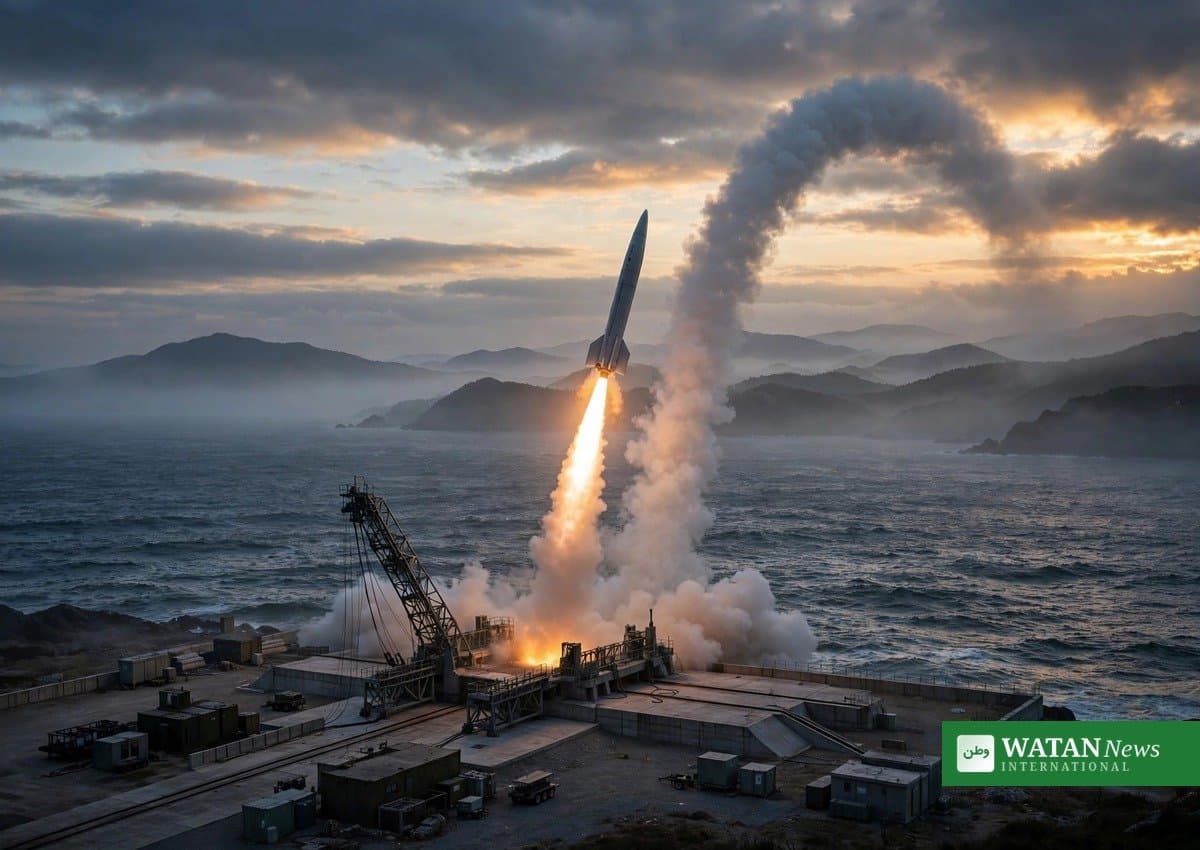
North Korea fired a ballistic missile toward the sea off its east coast early on Saturday, South Korea and Japan said, a day after Pyongyang rejected Seoul’s demand for an apology over a landmine blast in the Demilitarized Zone (DMZ) that wounded South Korean soldiers. The missile was launched from the Wonsan area at around 6:30 a.m. local time and flew more than 700 kilometres before landing in the East Sea, according to South Korea’s military. Read the full story on watannews.dk.
FAKTA
- What happened: North Korea launched a ballistic missile from the Wonsan area toward the East Sea (Sea of Japan) on Saturday, 3 October 2026.
- Time and distance: Around 6:30 a.m. KST (2130 GMT Friday); the missile flew more than 700 km, South Korea’s military said.
- Trigger: A day earlier, Kim Yo-jong dismissed Seoul’s demand for an apology after South Korea said North Korean mines caused a blast in the DMZ.
- DMZ blast casualties: Three South Korean soldiers were wounded, two of them seriously, according to South Korean and wire-service reports.
- Response: South Korea’s National Security Council held an emergency meeting; Seoul, Washington and Tokyo are sharing intelligence and analyzing the test.
- Context: North Korea has carried out more than 10 missile tests this year, according to Reuters.
North Korea ballistic missile: what we know about the launch
South Korea’s Joint Chiefs of Staff said the military detected the missile shortly after launch and is working with the United States to analyze the test, including the type of missile used. Japan’s coast guard, citing the defence ministry, said the object appeared to be a ballistic missile and had already come down, warning ships in the area to take precautions.
South Korea’s military said it had raised its monitoring of further North Korean missile activity and would share intelligence with the United States and Japan. The presidential office’s National Security Council convened an emergency meeting on Saturday to assess the situation, Reuters reported.
The DMZ mine blast behind the apology demand
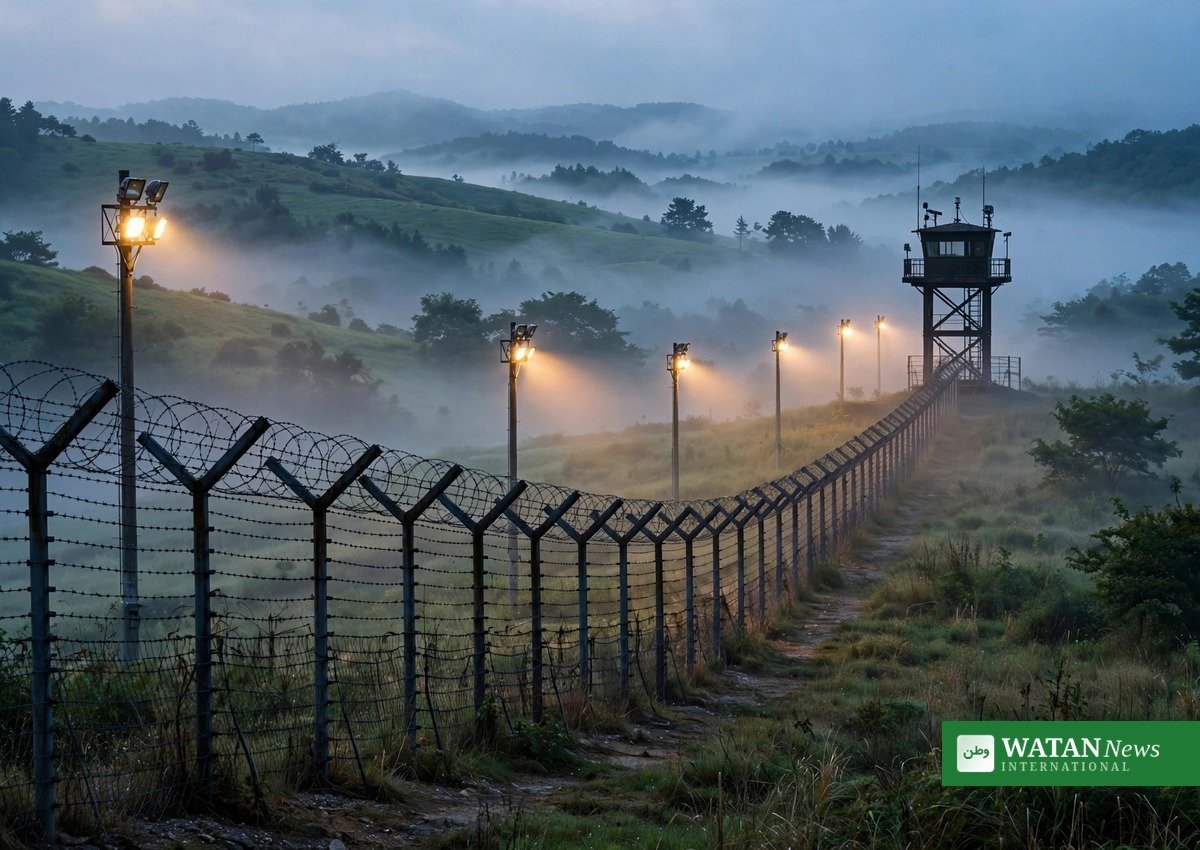
Seoul said this week that North Korean mines caused the blast that wounded its soldiers on a reconnaissance mission inside the 4-km-wide DMZ, the heavily fortified buffer dividing the peninsula since the 1953 armistice. South Korea and the US-led United Nations Command found that last month’s explosion was caused by North Korean mines laid on the South side of the border, AFP reported.
Defence Minister Kang Shin-chul said the mines were believed to have been laid as part of Pyongyang’s border fortification work. North Korea has been laying mines and building anti-tank barriers along the frontier as part of efforts to permanently seal it off, after Kim Jong Un designated South Korea the country’s “principal enemy” in 2024.
Kim Yo-jong rejects Seoul’s apology demand
On Friday, Kim Yo-jong, the powerful sister of North Korean leader Kim Jong Un, issued a statement dismissing Seoul’s demand for an apology. She called South Korea “despicable” over the accusation and ridiculed President Lee Jae Myung’s call for dialogue as “the climax of the farce that everyone should watch.”
The exchange undercut overtures by Seoul’s civilian leadership. Lee, a dovish president, had urged Pyongyang on Thursday to return to dialogue, and Unification Minister Chung Dong-young proposed talks on Friday to address issues along the border — both rebuffed by Pyongyang, which denies responsibility for the mine blast.

Seoul, Washington and Tokyo respond
South Korea’s presidential office called on the North to stop repeated ballistic launches, describing them as a violation of UN Security Council sanctions. Japan protested the launch through North Korea’s embassy in Beijing, and Prime Minister Sanae Takaichi ordered officials to gather information and confirm the safety of ships and aircraft, Japanese media reported.
The launch is the latest in a busy year of North Korean missile testing. Pyongyang has conducted more than 10 missile tests so far this year, sometimes saying it was testing new weapons systems, with some tests following North Korean protests over joint military drills between Seoul and Washington. North Korea has also rebuffed recent US outreach, saying Washington must first drop what it calls a “hostile policy” and denuclearization as a precondition for talks.
Conclusion
Saturday’s missile launch, coming a day after Kim Yo-jong’s blunt rejection of Seoul’s apology demand, signals a further hardening of inter-Korean ties. With Pyongyang treating the South as its “principal enemy” and dismissing dialogue, while Seoul steps up military monitoring alongside the US and Japan, the risk of further escalation on the peninsula remains high.