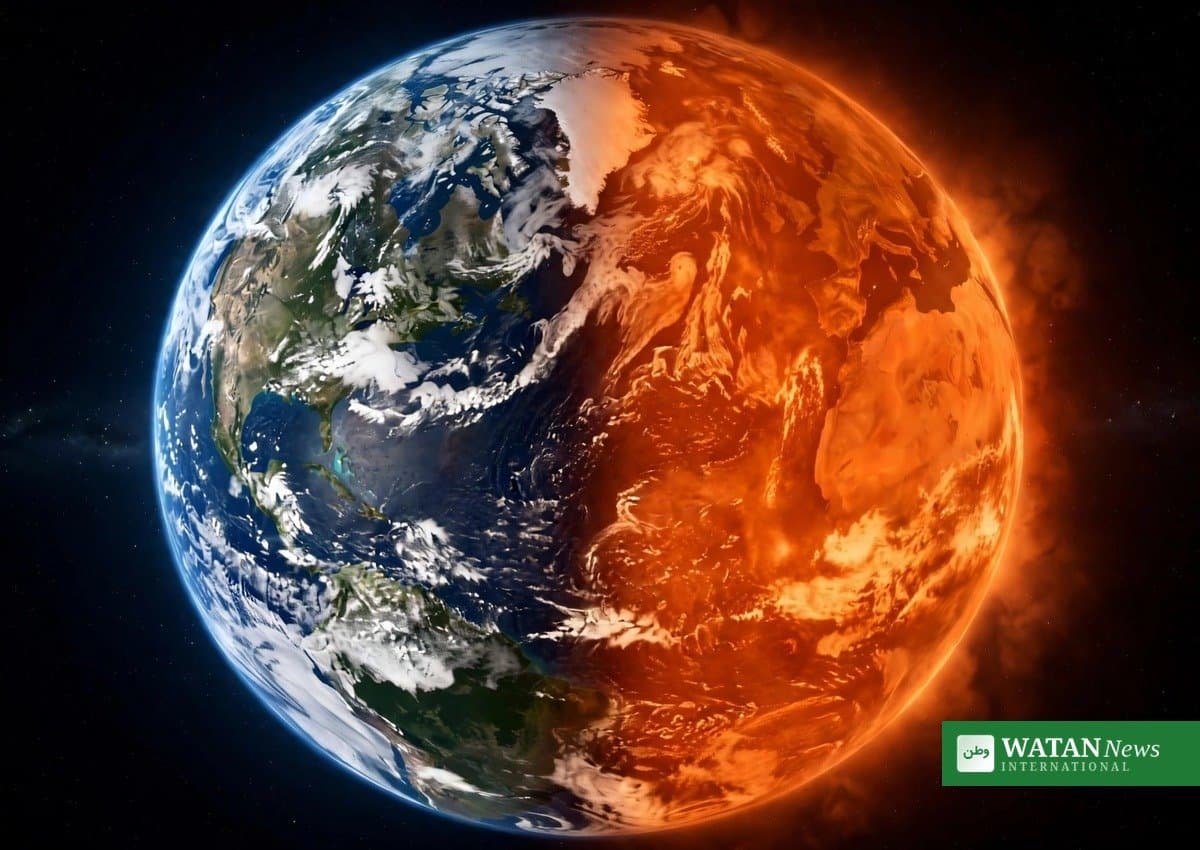
NAIROBI — The world’s 1.5°C overshoot is now effectively unavoidable: global warming is already around 1.4°C above pre-industrial levels and is set to cross the Paris Agreement’s 1.5°C guardrail within the next few years, according to a United Nations Environment Programme (UNEP) report released in September 2026.
FAKTA
- Report: Limiting Overshoot — Navigating exceedance of 1.5°C and pathways towards return, released 2 September 2026, per the agency’s own release.
- Human-induced warming is already around 1.4°C; the long-term 1.5°C level is likely to be crossed within the next few years — the clearest such acknowledgement yet from a UN agency.
- UNEP proposes an “overshoot, peak and decline” pathway: cross 1.5°C, keep the peak as low as possible, then bring temperatures back down later this century.
- Even the most optimistic modelled pathway peaks near 1.8°C around mid-century before long-term carbon removal could return temperatures below 1.5°C by 2100.
- On the trajectory of current policies rather than pledges, the median projected outcome is about 2.6°C of warming by 2100, with a plausible range of 1.9°C to 3.6°C.
- The pathway requires immediate deep emissions cuts including methane, adaptation for unavoidable impacts, and net-negative emissions via a major scale-up of carbon dioxide removal.
- UN Secretary-General António Guterres: “we must make the overshoot as small and short as possible” — demanding, in his words, “an overshoot of ambition”.
What the 1.5°C overshoot pathway means
UNEP’s framing treats overshoot not as a destination but as a dynamic sequence. First, immediate and sustained cuts in greenhouse gas emissions — including methane — to keep the peak as low as possible. Second, adaptation that reduces vulnerability to impacts that cannot be avoided, recognising that adaptation has limits and some losses may be irreversible. Third, long-term net-negative emissions, with carefully governed carbon dioxide removal as part of the mix, as coverage of the report summarises.
The report does not abandon the 1.5°C goal. Instead it argues the goal must now be pursued from the other side: exceed it, hold the peak down, and engineer a return. That is a technical pivot with a plain meaning — decades of delay mean the world now needs a second phase, actively bringing temperatures back down, layered on top of the emissions cuts it was already supposed to be making.
Why UNEP changed the framing
The new framework makes immediate mitigation more important, not less, because every fraction of a degree avoided reduces future losses and climate risks. As independent reporting on the agency’s release notes, the difference between the 1.8°C best case and the 2.6°C current-policy outcome is the difference between a manageable overshoot and a deeply dangerous one.

The political test comes fast. UNEP released the report weeks before the UN General Assembly high-level week and Climate Week NYC, where leaders were pressed to respond — and COP31 in Antalya in November will be the first COP to negotiate under the explicit premise that 1.5°C will be exceeded. Whether the overshoot is small and short, in Guterres’s phrase, depends on what governments do now.
Related on Watan News: UNEP: world set to cross 1.5°C, but overshoot–peak–decline still possible.