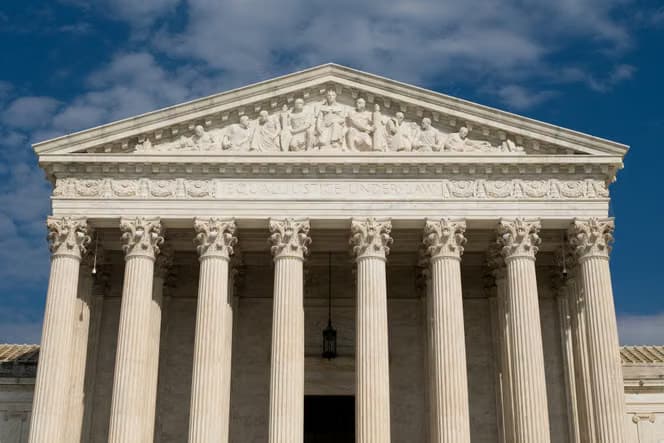
The U.S. Supreme Court has temporarily lifted restrictions on deporting migrants to countries other than their own, a significant shift in immigration policy that will allow the Trump administration to resume the practice while its legality is debated.
This decision, made by the court’s conservative majority, bypasses safeguards that previously required deportees to be notified of their destination and given an opportunity to raise concerns about potential persecution.
- Supreme Court allows deportations to third countries, overturning prior safeguards.
- Migrants may now be sent to nations other than their origin or the U.S.
- Temporary block on notice and persecution-concern raising requirements.
- Decision impacts asylum seekers and the broader immigration system.
Background of Third-Country Deportations
The policy of deporting migrants to third countries, often referred to as “third-country agreements,” has been a contentious issue in U.S. immigration law.
These agreements aim to process asylum claims in countries other than the United States, theoretically reducing the burden on the U.S. asylum system.
- The Trump administration sought to expand the use of these agreements.
- Critics argued the policy endangered vulnerable asylum seekers.
- Previous administrations had limited or avoided such broad third-country arrangements.
- Legal challenges focused on the humanitarian implications and statutory authority.
Supreme Court’s Temporary Block
The Supreme Court’s recent order allows the government to implement its third-country deportation policy without adhering to certain procedural safeguards. This means individuals apprehended at the border may be sent to countries with which they have no connection, potentially leaving them in precarious situations.
- The court’s conservative majority voted to temporarily lift restrictions.
- Safeguards requiring notice of destination were temporarily blocked.
- The ability for migrants to raise persecution concerns was also curtailed.
- This allows the government to proceed with deportations to third countries while the case is under review.
Legal and Humanitarian Concerns
Immigration advocates and human rights organizations have expressed grave concerns about the implications of this ruling. They argue that sending asylum seekers to third countries, especially those with inadequate asylum systems or safety concerns, violates international and domestic legal obligations.
Asylum Seeker Protections
The core of the legal challenge revolves around whether the U.S. government has the authority to send asylum seekers to countries where they may face further danger or be unable to secure protection.
The blocked safeguards were intended to ensure that individuals were not sent to places where their lives or freedom could be threatened.
- Potential for increased refoulement (returning individuals to danger).
- Risk of asylum seekers being stranded in unstable regions.
- Concerns about the capacity and fairness of asylum processes in potential third countries.
- The ruling could disproportionately affect vulnerable populations, including women and children.
Implications for Immigration Policy
This decision represents a significant victory for the administration’s efforts to reshape immigration enforcement and border management. It signals a potential shift towards more expansive use of third-country agreements as a tool to deter irregular migration.
Future Legal Battles
The Supreme Court’s order is temporary, and the underlying legality of the third-country deportation policy will continue to be litigated. The full court will eventually hear arguments and issue a decision on the merits of the case, which could have long-lasting consequences for asylum law in the United States.
Conclusion
The U.S. Supreme Court’s decision to lift restrictions on third-country deportations marks a pivotal moment in the ongoing debate over immigration policy.
By temporarily allowing migrants to be sent to nations other than their own without prior notice or the opportunity to raise persecution concerns, the court has empowered the administration to implement a more stringent approach to border control. This ruling, however, is not final, and the broader legal and ethical implications for asylum seekers will remain a central focus as the case proceeds through the judicial system.
What does the Supreme Court’s decision allow?
The court allows the government to deport migrants to countries other than their own while the policy’s legality is reviewed.
What safeguards were temporarily blocked?
Restrictions requiring notice of destination and time to raise persecution concerns for deportees were temporarily lifted.
Who is affected by this ruling?
Migrants seeking asylum in the U.S. who may now be deported to third countries instead of their home nations.
Is this decision permanent?
No, the Supreme Court’s order is a temporary block, and the case will be heard on its merits.