LIVE
BREAKING
Afghanistan Suspends BBC Radio Broadcasts NationwideSaudi Crown Prince Turns Down Israeli Bid to Join Anti-Houthi CampaignKenya’s Green Challenge: 3.3 Million Trees Planted in One HourBreaking Bad Star RJ Mitte Dies Aged 3414-Year-Old Pupil Arrested After Shooting Principal and Teacher at French SchoolYemen’s Military Claims 950 Houthi Fighters Killed in Fajr al-Yemen OperationThe Ocean Cleanup Shifts Two-Thirds of Global Effort to Southeast Asia Ahead of COP31Houthis Claim Fresh Overnight Strikes on Riyadh Airport and Khamis Mushait; Coalition Says Missiles InterceptedAfrican Negotiators to COP31: “Antalya Must Be About Delivery, Not Another Cycle of Promises”Russian Missiles Hit Kyiv and Kharkiv Apartment Blocks, Killing Civilians in Overnight BarrageOPEC Slashes 2026 Oil Demand Growth Forecast to 400,000 BPDEquality Fund Launches Inaugural Journalism Fellowship for Global South ReportersVirginia Unlocks $67 Million for Home Energy Efficiency: 1,000+ Homes to Get Repairs and Lower BillsTwo Pakistan Army Pilots Martyred as Training Aircraft Crashes Near QuettaVena Energy to Invest ₱115 Billion in Philippine Renewable Energy ExpansionEU to Push “Mitigation Package” for Faster CO2 Cuts at COP31, Document ShowsSaudi Arabia Faces New Houthi Missile and Drone Barrage as Riyadh Airport Stays ClosedHamburg Sustainability Conference Opens Fully Funded Youth Ambassador Programme for 2027US Calls China’s Maritime Moves off Taiwan ‘Deeply Destabilising’Satya Nadella Demands AI ‘Emergency Brake’ After Anthropic’s Fake Police Tip ScandalAfghanistan Suspends BBC Radio Broadcasts NationwideSaudi Crown Prince Turns Down Israeli Bid to Join Anti-Houthi CampaignKenya’s Green Challenge: 3.3 Million Trees Planted in One HourBreaking Bad Star RJ Mitte Dies Aged 3414-Year-Old Pupil Arrested After Shooting Principal and Teacher at French SchoolYemen’s Military Claims 950 Houthi Fighters Killed in Fajr al-Yemen OperationThe Ocean Cleanup Shifts Two-Thirds of Global Effort to Southeast Asia Ahead of COP31Houthis Claim Fresh Overnight Strikes on Riyadh Airport and Khamis Mushait; Coalition Says Missiles InterceptedAfrican Negotiators to COP31: “Antalya Must Be About Delivery, Not Another Cycle of Promises”Russian Missiles Hit Kyiv and Kharkiv Apartment Blocks, Killing Civilians in Overnight BarrageOPEC Slashes 2026 Oil Demand Growth Forecast to 400,000 BPDEquality Fund Launches Inaugural Journalism Fellowship for Global South ReportersVirginia Unlocks $67 Million for Home Energy Efficiency: 1,000+ Homes to Get Repairs and Lower BillsTwo Pakistan Army Pilots Martyred as Training Aircraft Crashes Near QuettaVena Energy to Invest ₱115 Billion in Philippine Renewable Energy ExpansionEU to Push “Mitigation Package” for Faster CO2 Cuts at COP31, Document ShowsSaudi Arabia Faces New Houthi Missile and Drone Barrage as Riyadh Airport Stays ClosedHamburg Sustainability Conference Opens Fully Funded Youth Ambassador Programme for 2027US Calls China’s Maritime Moves off Taiwan ‘Deeply Destabilising’Satya Nadella Demands AI ‘Emergency Brake’ After Anthropic’s Fake Police Tip Scandal
Climate

WMO: 2025 among driest river years in 35 years as land water storage keeps falling

Ch UsmanPublished September 21, 2026
WMO: 2025 among driest river years in 35 years as land water storage keeps falling
Share this story

GENEVA — Rivers worldwide suffered one of their driest years for discharge in more than three decades in 2025, the World Meteorological Organization said in its State of Global Water Resources report released on 17 September 2026, warning that the planet’s freshwater buffers are eroding on a multi-year timescale. Below-normal river flows covered about 36 percent of global basin area in 2025, based on simulations from 13 global hydrological models driven by observed weather data.

For the seventh consecutive year, river basins with historically “normal” flows were in a clear minority — roughly 34–38 percent, against a 1991–2020 average near 46 percent. WMO Secretary-General Celeste Saulo said the findings have “serious future implications” because freshwater stocks act as the planet’s buffer in exceptionally dry years. “We are depleting that savings account,” she said.

FAKTA

  • 2025 was one of the driest years for river discharge globally in 35 years of data, with below-normal flows over 36% of global basin area (source: WMO, 17 September 2026).
  • For a seventh consecutive year, basins with “normal” flows were a minority: 34–38%, versus a 1991–2020 average near 46%.
  • Global terrestrial water storage — groundwater, lakes and rivers, soil moisture, vegetation, ice and snow — has shown a declining trend since 2014–2016, which Saulo called “a persistent, decade-long signal.”
  • Nearly two-thirds of monitored wells worldwide showed conditions outside the historical norm in 2025, with the balance shifting further toward deficit rather than recovery.
  • For the fourth consecutive year, every major glaciated region on Earth lost ice mass; between 2023 and 2025 glaciers lost a cumulative 1,400 gigatonnes of water — about one third of annual freshwater withdrawals.
  • Asia and Africa together accounted for at least half of all recorded water-related extreme events and more than 80% of reported associated deaths over the past five years.
  • Saulo said the strengthening El Niño will increase the risk of drought in some areas and flooding in others.

Global water resources: the savings account is depleting

“Traditionally these slow reserves have acted as the planet’s savings account: a buffer that absorbs bad years so that a single drought or a single dry season does not translate directly into a water crisis,” said WMO Secretary-General Celeste Saulo at the report’s launch. “We are depleting that savings account.”

Groundwater tells a similar story, WMO reports. Nearly two-thirds of monitored wells worldwide showed conditions outside the historical norm in 2025, and the balance shifted further toward deficit compared with 2024 — not toward recovery.
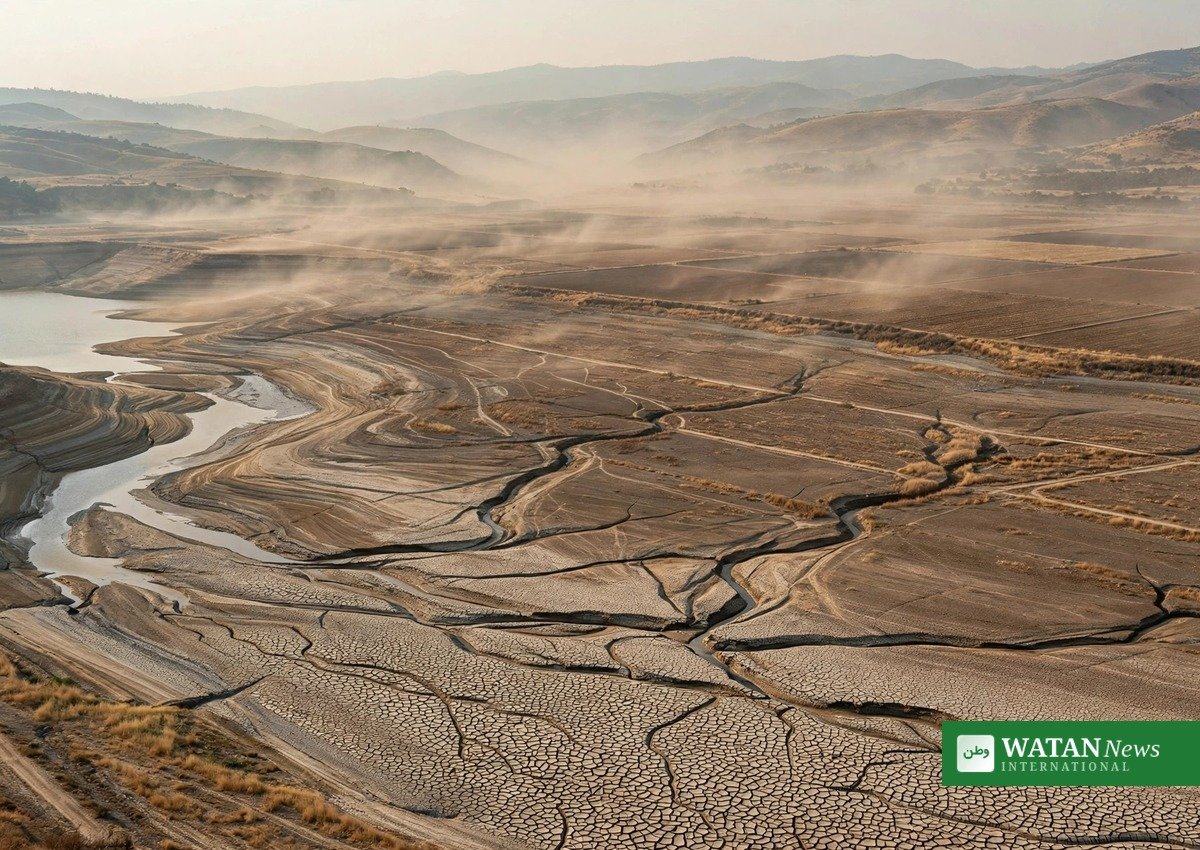
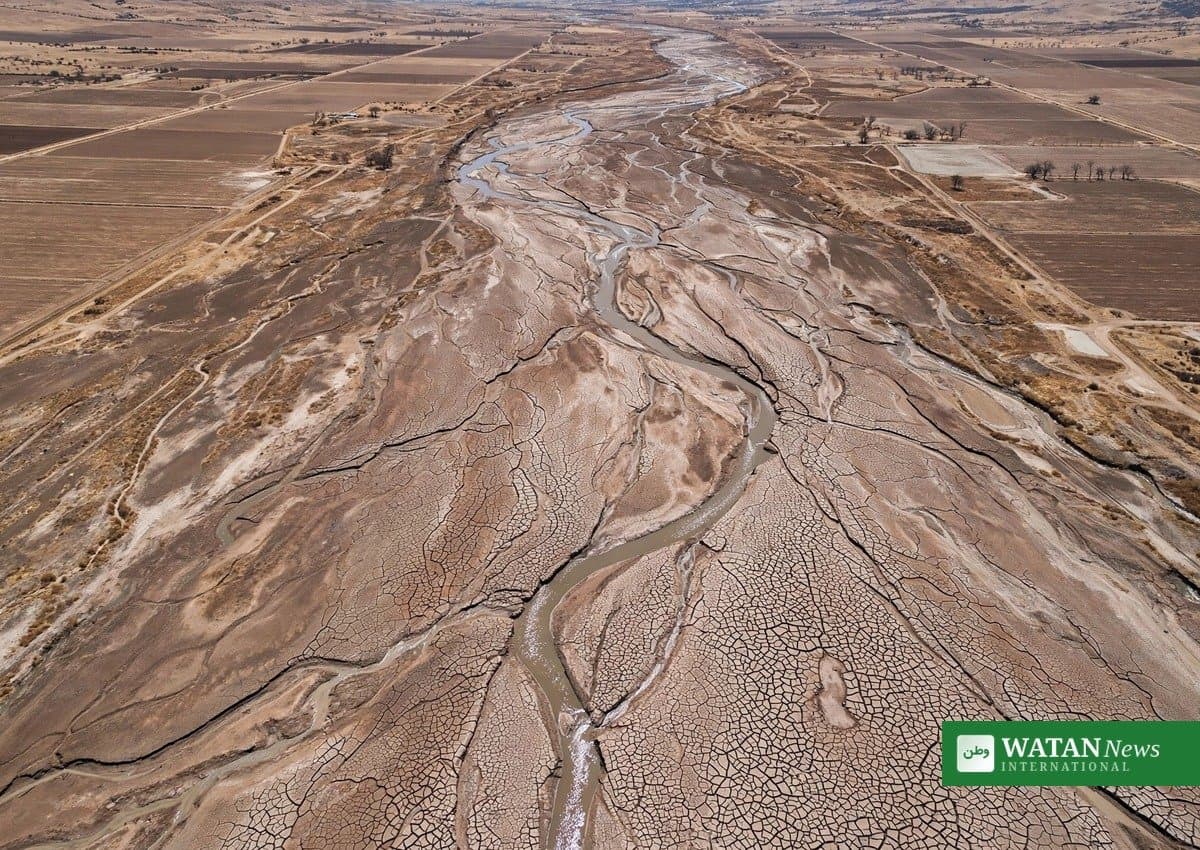
Parched river basin with exposed cracked shorelines illustrating declining global water resources
A parched river basin. Below-normal river flows covered about 36 percent of global basin area in 2025, WMO reports.

Erratic cycle: too little or too much

The report shows the global water cycle becoming more erratic and unpredictable, swinging between too little or too much. Some river basins, such as parts of South Asia, had too much water, even as over a third of the world’s basins ran below normal. Record-breaking floods and droughts occurred in each of the past five years, 2021–2025, with some places experiencing little recovery time between events, WMO says.

Responding to a question about whether the changing water cycle contributed to the deadly Nepal–China flooding disaster, Saulo explained that melting ice and rock was one factor in the chain of events that sent a wall of water and debris downstream on 26 August, killing at least 1,367 people. Read the related coverage on the main Watan News site.
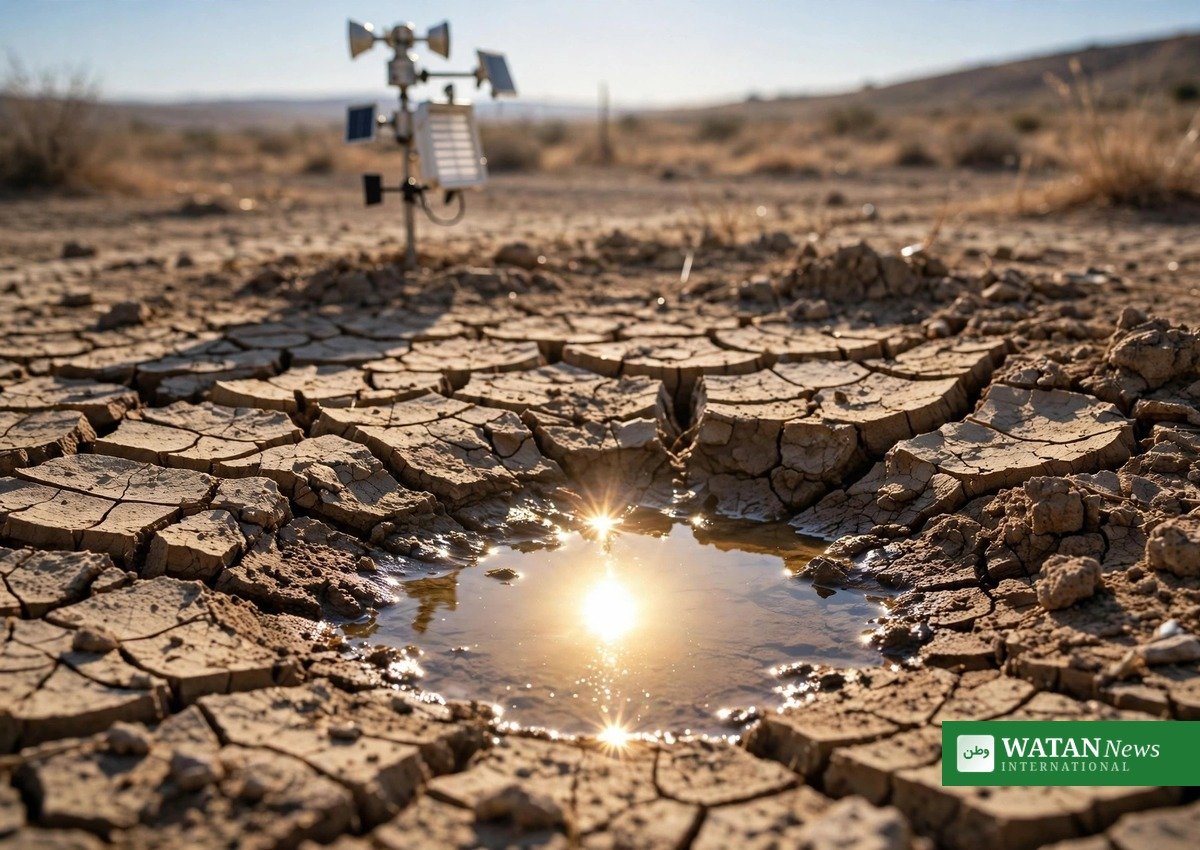
Close-up of cracked dry earth with a small remaining puddle and a weather monitoring station in a drought-hit area
Cracked earth and a last puddle near a monitoring station. WMO says the water cycle has become more erratic, swinging between extremes.

What happens next

WMO warns of the serious future implications of the declining trend in terrestrial water storage, since such stocks buffer the planet in exceptionally dry years. With a strengthening El Niño raising drought risk in some areas and flood risk in others, the agency says better water data and early warnings are essential — especially in Africa and Asia, which are among the least represented regions in hydrological observations despite being most affected by water-related extremes.


Frequently Asked Questions

Related Stories

Planet & environment

Climate & Sustainability

News, stories and solutions driving change towards a greener and more sustainable planet for future generations.

Kenya’s Green Challenge: 3.3 Million Trees Planted in One Hour
Featured story

Kenya’s Green Challenge: 3.3 Million Trees Planted in One Hour

Kenya planted over 3.3 million trees in one hour under the Green Challenge on Mazingira Day, passing two billion trees on its national dashboard toward the 15-billion goal by 2032.

Read full story

GREEN JOURNALISM

UNESCO: At least 46 Environmental Journalists Killed Since 2010 — Protecting Press Freedom Protects the Planet
Green Journalism

UNESCO: At least 46 Environmental Journalists Killed Since 2010 — Protecting Press Freedom Protects the Planet

Awareness article: Climate reporting is one of the most dangerous beats in modern journalism. UNESCO data shows that environmental journalists are attacked, threatened and in some cases killed for their work — and that protecting the press is a prerequisite for protecting the planet. Journalists who investigate illegal logging, poaching, pollution and the climate crisis

Read full story
How the Washington Post’s ‘Floods Above’ Won the Poynter Climate Journalism Prize
Green Journalism

How the Washington Post’s ‘Floods Above’ Won the Poynter Climate Journalism Prize

WASHINGTON – The Washington Post’s sweeping investigation into the world’s rising flood danger, Floods Above, has won the inaugural Poynter Journalism Prize for Excellence in Climate Change Reporting, a new award for scientifically grounded climate journalism announced by the Poynter Institute. The prize, sponsored by the Hennecke Family Foundation, recognizes rigorous reporting that enlightens and

Read full story

Every Action Counts

Small steps today, big impact tomorrow.

Explore more stories
WMO: 2025 among driest river years in 35 years as land water storage keeps falling - Watan News International | Watan News International