PARIS — Thursday, 17 September 2026
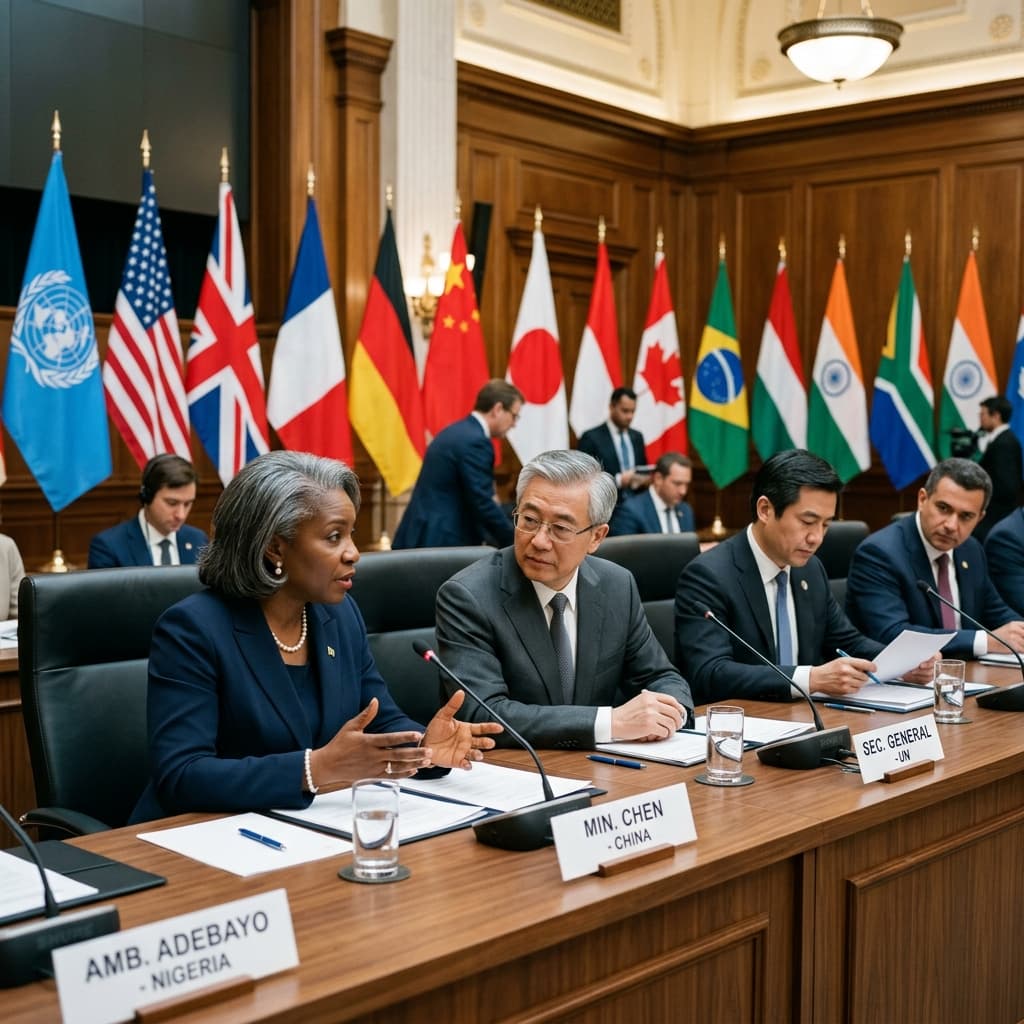
COP31 President-Designate and Türkiye’s environment minister, Murat Kurum, used an OECD Council meeting and a COP31 strategic partnership event at the organisation’s Paris headquarters on Thursday to announce what the presidency describes as a strategic partnership with the Organisation for Economic Co-operation and Development. Coverage by Türkiye’s Environment, Urbanization and Climate Change Ministry and by Aksiyon said OECD Secretary-General Mathias Cormann and ambassadors and permanent representatives of OECD members attended.
Kurum presented the arrangement as a way to marry the OECD’s economic expertise, comparable datasets and policy tools with the COP31 presidency’s implementation-focused Action Agenda — work the presidency, not Parties negotiating under the UNFCCC, is driving. He argued that reliable data can help identify needs, narrow unequal access to finance and stretch limited resources for higher climate impact, according to the ministry readout.
“We now have to talk not only about which targets we will reach, but also how we will reach them,” Kurum said, as quoted by the ministry, calling for concrete plans on policy, investment mechanisms, financing strategies and how results will be measured. He summarised the presidency approach as dialogue, consensus and action, and recalled that Türkiye is hosting COP31 in Antalya while Australia chairs the negotiations.
Climate finance, he told the room, should be treated as a matter of strategic security rather than a secondary environmental line-item. In remarks reported by the ministry, he compared the willingness of allies to mobilise large defence outlays with the slower scale-up of climate spending, and invited OECD countries to put resources into clean energy, electrification, water security, resilient cities and green industry. Those formulations are presidency messaging; they do not themselves create new Party obligations.
As a practical bridge from plans to bankable projects, Kurum cited Türkiye’s Sustainable Urban Resilience Financing Facility (SURFF) — developed with ILBANK and the Climate Change Presidency — which packages local policy, project preparation, institutional capacity and access to finance. He cast SURFF as aligned with the presidency’s Climate Implementation Bridge concept and said the OECD partnership should help produce concrete outputs before Antalya.
Closing, he invited ambassadors and permanent representatives to Antalya for the summit window of 9–20 November 2026, pointing to the World Leaders Summit planned for 11–12 November and further consultations at New York Climate Week and Pre-COP in Fiji.
Separately, a draft EU Council conclusions text dated 14 September and seen by Euronews — not final adopted conclusions — said current ambition and implementation remain insufficient for 1.5°C and urged “tangible progress” in Antalya on clean-energy deployment, moving away from fossil fuels, electrification, tripling renewables, doubling energy efficiency and cutting methane and other non-CO₂ gases by 2030, alongside finance for developing countries. That Brussels debate is part of the wider delivery pressure around COP31 but is distinct from Thursday’s Paris presidency–OECD announcement.
Featured image: Château de la Muette, Paris — seat of the OECD. Photo by Pymouss / Wikimedia Commons (CC BY-SA 3.0). Illustrative of the venue of Thursday’s partnership event; not a photograph of the 17 September meeting.