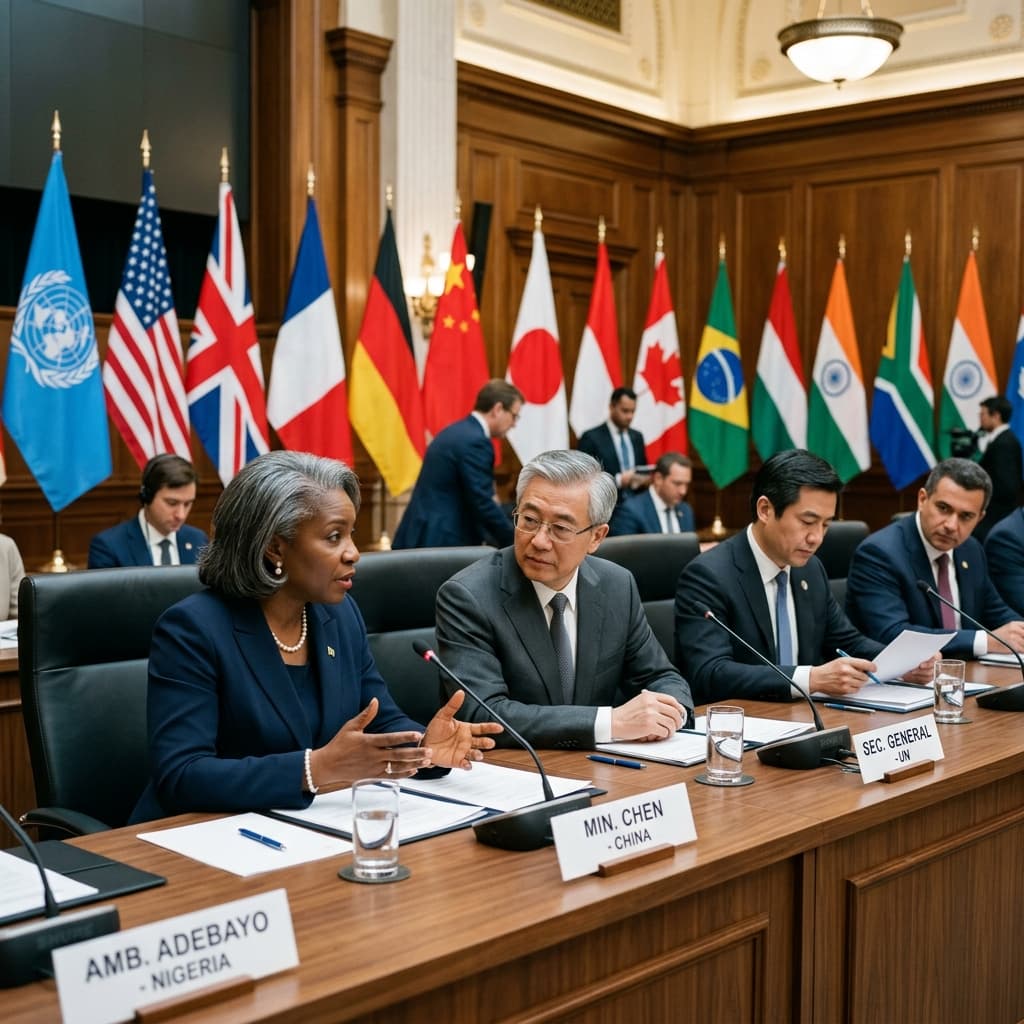

The recent Shanghai Cooperation Organisation (SCO) summit in Bishkek has highlighted the complexities of the emerging multipolar order, particularly for middle powers. Iranian President Masoud Pezeshkian received significant political support from the organisation, but it stopped short of offering a security guarantee. This distinction between political solidarity and collective defence is crucial in understanding the implications of multipolarity for middle powers.
The SCO’s response to the US-Israeli war on Iran has made it clear that alternative relationships with non-Western organisations do not provide the same level of security guarantees as formal military alliances. This challenges the conventional wisdom that multipolarity would lead to a straightforward replacement of the US-led international system with an alternative bloc centered around China, Russia, and organisations like BRICS and the SCO.
- The SCO condemned the military attacks against Iran and reaffirmed Iranian sovereignty and territorial integrity.
- The organisation called for the conflict to be resolved through political and diplomatic means but did not offer to defend Iran.
- Turkiye’s membership in NATO and its participation in the SCO as a dialogue partner demonstrate the complexities of middle power strategies in the emerging multipolar order.
Shanghai Cooperation Organisation (SCO) Summit
The SCO summit in Bishkek marked a significant moment in the evolution of the multipolar order. The organisation’s response to the US-Israeli war on Iran underscored the limitations of political solidarity in the face of security threats. As Luciano Zaccara, professor of Gulf Politics at the Qatar University Gulf Studies Center, noted, the SCO’s actions suggest that the emerging multipolar order may work differently from what many expected.
Implications for Middle Powers
The SCO’s response has significant implications for middle powers, which are increasingly seeking to navigate the complexities of the multipolar order. As Zaccara observed, the emerging order may provide middle powers with more room for manoeuvre, but it also means less certainty about who will stand beside them when their security is threatened. Turkiye’s strategy, which combines NATO membership with engagement with Russia, China, and other regional actors, illustrates the complexities of middle power approaches in this context.
Turkiye’s Strategy in the Multipolar Order
Turkiye’s membership in NATO and its participation in the SCO as a dialogue partner demonstrate the complexities of middle power strategies in the emerging multipolar order. Ankara’s approach depends on avoiding a binary choice between the West and non-Western organisations, instead seeking to maintain relationships with a range of actors to expand its diplomatic and economic options. As Zaccara noted, Turkiye’s NATO membership provides security benefits that the SCO could not replicate, while its relationships with Russia, China, Iran, and other regional actors expand its room for manoeuvre.
Future of the Multipolar Order
The emerging multipolar order is likely to continue to evolve in complex and unpredictable ways. As middle powers navigate this new landscape, they will need to balance their desire for greater autonomy and flexibility with the need for security guarantees. The SCO’s response to the US-Israeli war on Iran highlights the challenges of achieving this balance, and the importance of careful diplomacy and strategic engagement in the pursuit of national interests.
For more in-depth analysis and insights on global politics and international relations, visit Watan News.
Conclusion
In conclusion, the emerging multipolar order presents both opportunities and challenges for middle powers. While it provides more diplomatic and economic options, it also means fewer security guarantees. As the international landscape continues to evolve, middle powers will need to navigate these complexities with care, seeking to balance their desire for autonomy and flexibility with the need for security and stability.
Q1: What is the significance of the SCO summit in Bishkek?
A1: The SCO summit in Bishkek highlighted the complexities of the emerging multipolar order, particularly for middle powers, and demonstrated the limitations of political solidarity in the face of security threats.
Q2: How does the SCO’s response to the US-Israeli war on Iran impact middle powers?
A2: The SCO’s response underscores the challenges of achieving security guarantees in the emerging multipolar order and highlights the need for middle powers to balance their desire for autonomy and flexibility with the need for security and stability.
Q3: What is Turkiye’s strategy in the multipolar order?
A3: Turkiye’s strategy combines NATO membership with engagement with Russia, China, and other regional actors, seeking to maintain relationships with a range of actors to expand its diplomatic and economic options while avoiding a binary choice between the West and non-Western organisations.
Q4: What are the implications of the emerging multipolar order for global politics?
A4: The emerging multipolar order is likely to continue to evolve in complex and unpredictable ways, presenting both opportunities and challenges for middle powers and requiring careful diplomacy and strategic engagement in the pursuit of national interests.
Q5: How can middle powers navigate the complexities of the multipolar order?
A5: Middle powers can navigate the complexities of the multipolar order by seeking to balance their desire for autonomy and flexibility with the need for security and stability, maintaining relationships with a range of actors, and engaging in careful diplomacy and strategic engagement to pursue their national interests.
Q6: What is the role of the SCO in the emerging multipolar order?
A6: The SCO plays a significant role in the emerging multipolar order, providing a platform for middle powers to engage with non-Western organisations and expand their diplomatic and economic options, while also highlighting the limitations of political solidarity in the face of security threats.