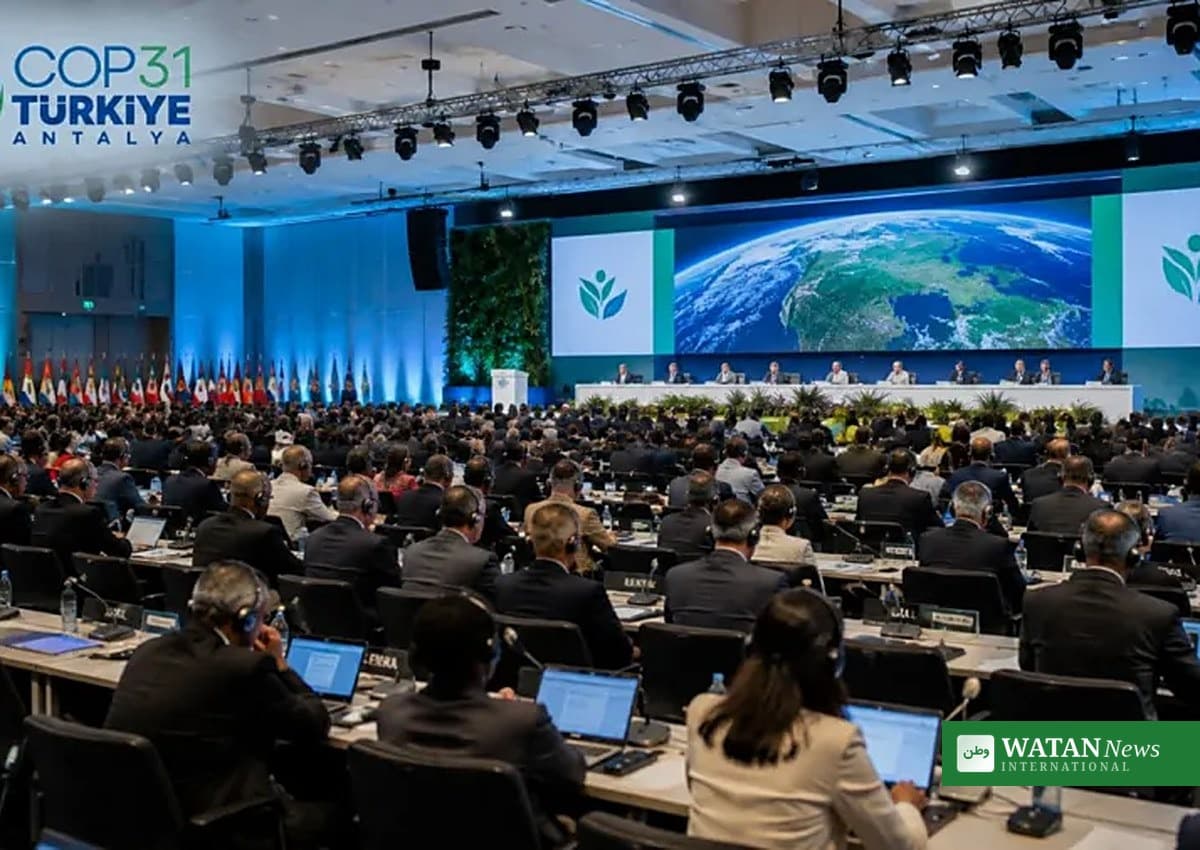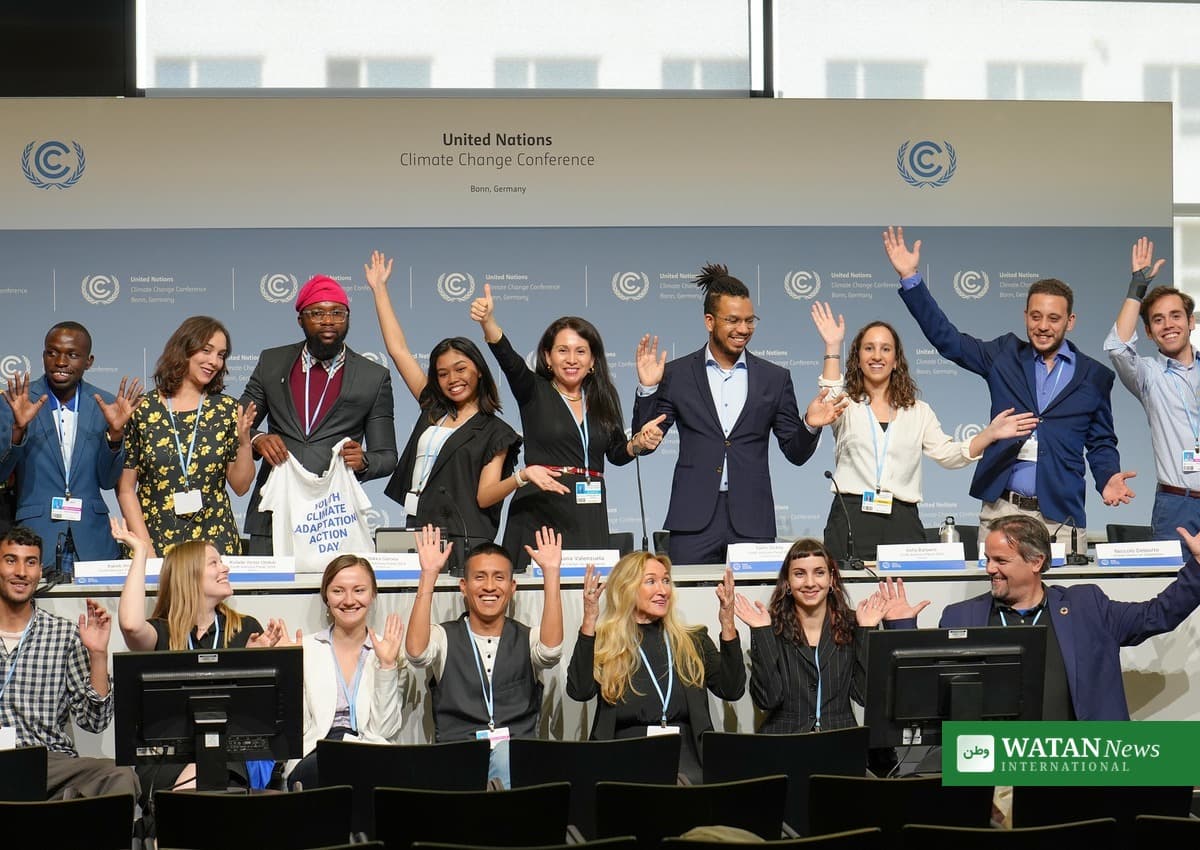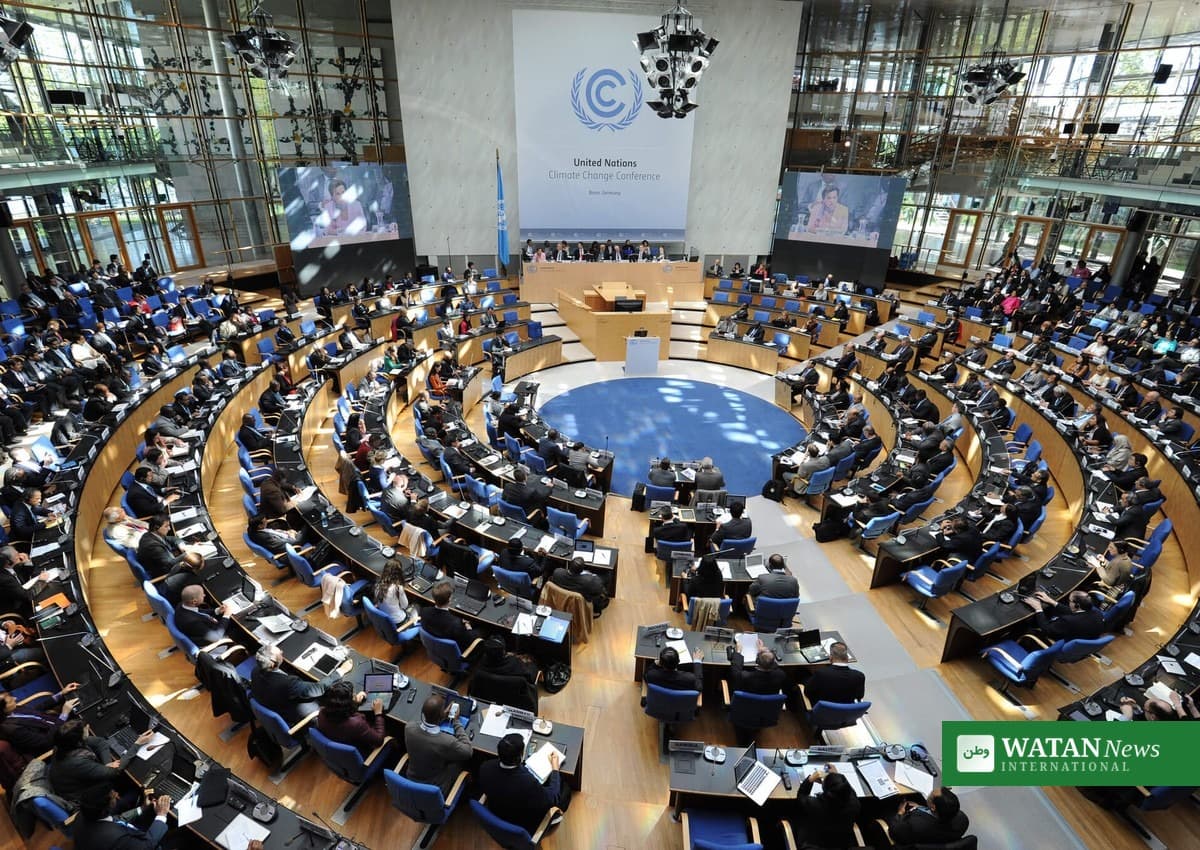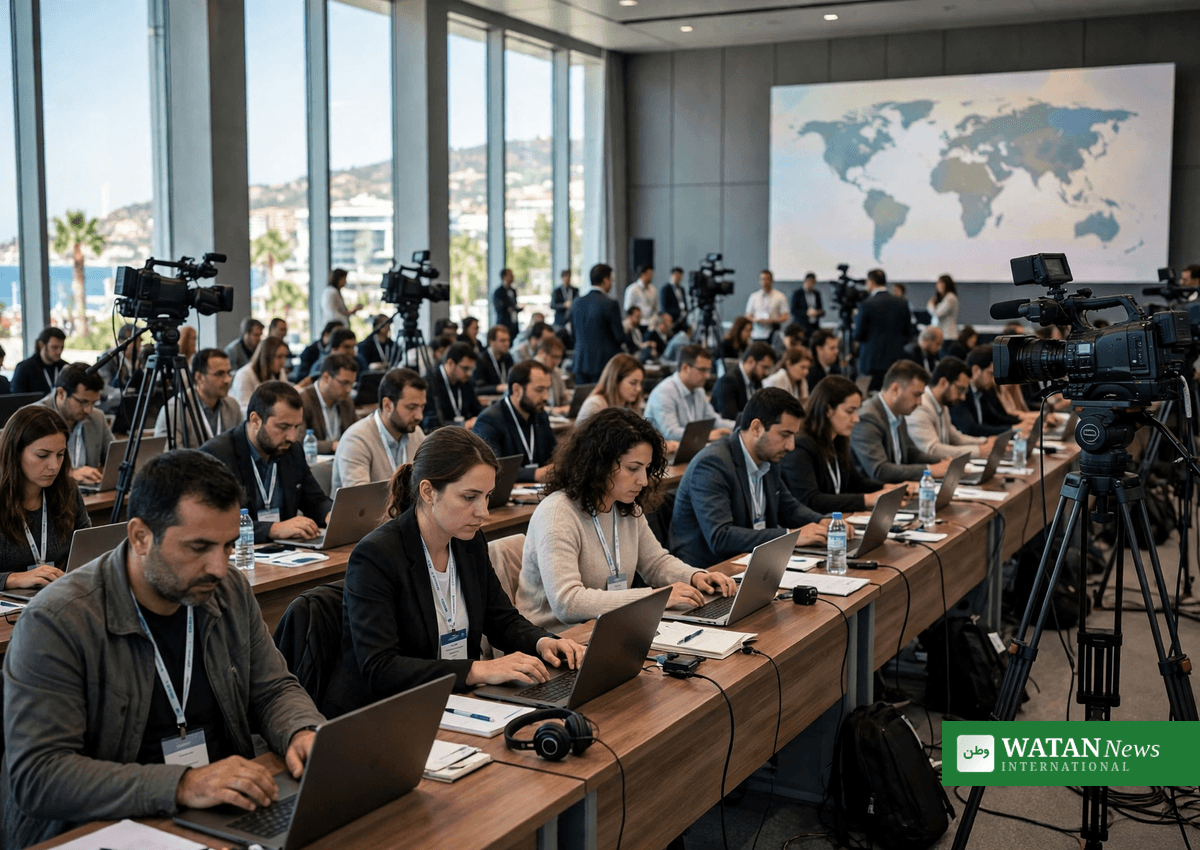
ANTALYA: Transport ministers gather at COP31 today to launch a new Global Green Freight Corridors Initiative, putting the way goods move — by road, sea and rail — at the centre of the climate fight on Energy and Transport Day. Transport accounts for about 16.3 per cent of global greenhouse gas emissions, according to SLOCAT’s COP31 briefing, making it the second-largest source of emissions — and freight is its fastest-growing part.
The ministerial roundtable, from 11:00 to 13:00 in the Blue Zone’s Special Event Room 2, is hosted by Türkiye’s Ministry of Transport and Infrastructure with the UN Economic Commission for Europe and the UN Economic and Social Commission for Asia and the Pacific. It will launch the initiative as a platform to accelerate international cooperation on sustainable freight corridors, and closes with the signing of a joint private-sector declaration between the Union of Chambers and Commodity Exchanges of Türkiye and the International Road Transport Union, in the presence of Transport Minister Abdülkadir Uraloğlu.
The problem in numbers
Road transport dominates the sector’s emissions, accounting for 74 per cent of transport greenhouse gases in 2023, according to SLOCAT’s Global Status Report. Freight makes up 43 per cent of transport carbon dioxide and is expected to reach 57 per cent by 2050 as trade grows. And 95.4 per cent of transport energy still came from fossil fuels in 2023.
The scale of the shift required is set out by the IPCC: transport carbon dioxide must fall by at least 59 per cent by 2050 compared with 2020 levels to stay within 1.5 degrees Celsius of warming. SLOCAT estimates the sector needs around $2.7 trillion a year in investment to 2050 — about seven times current levels.
The Global Transport Effort, launched at COP30, calls for a 25 per cent cut in overall transport energy demand by 2035 and for one-third of transport energy to come from sustainable biofuels and renewables by 2035. Eleven countries have signed it so far.
Why corridors and mode shift
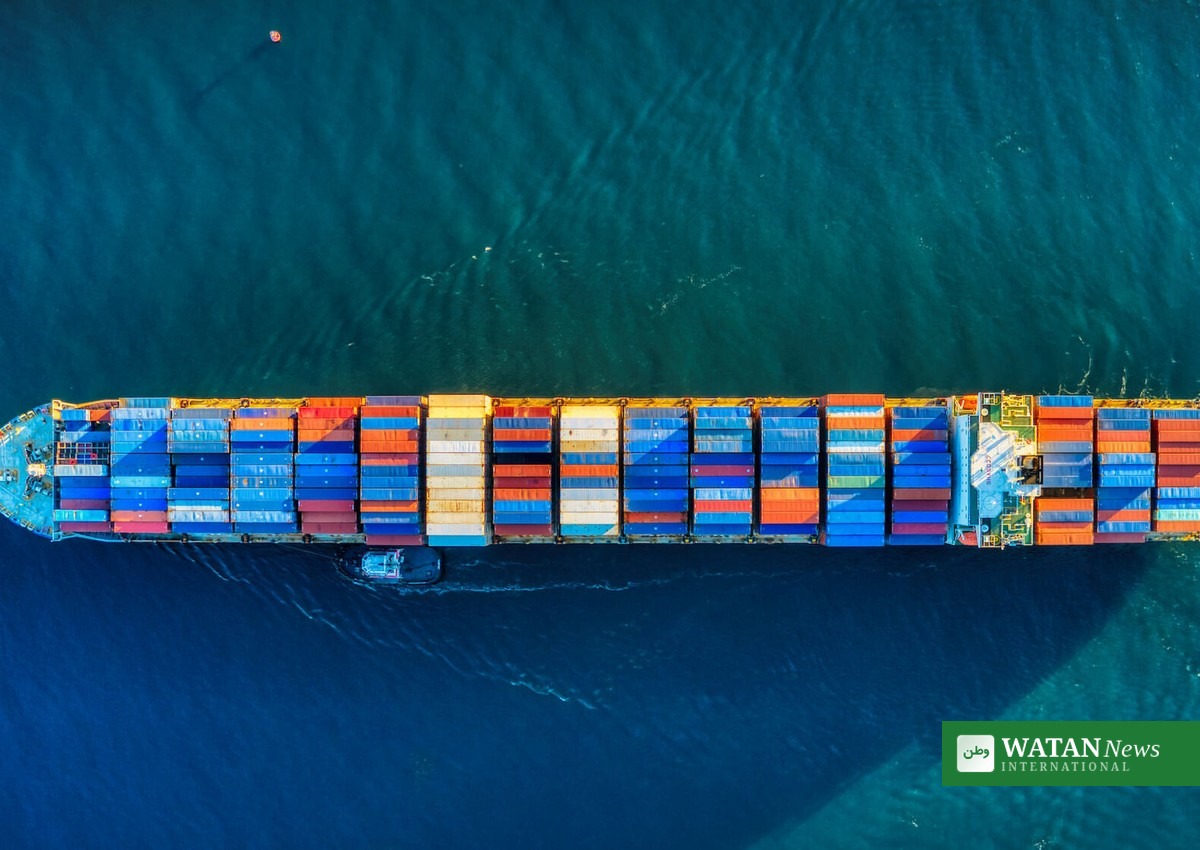
The corridor idea is simple: coordinate investment between shipping companies, ports, fuel producers and governments along a trade route, so that cleaner ships, cleaner fuels and the infrastructure to supply them arrive together instead of in isolation. There are now 84 green shipping corridors worldwide, with 25 new ones launched in 2025 — including first-time participation by China, India and Brazil — but only four have reached the operational stage, according to the Global Maritime Forum and the Getting to Zero Coalition.
The evidence for shifting freight between modes is striking. A report by Transport Emissions/Energy Research, launched at Australia’s Parliament House on 14 October, compared road, rail and coastal shipping on four Australian freight routes and found that shifting cargo to coastal shipping could cut greenhouse gas emissions by 60 to 90 per cent per tonne-kilometre on longer routes, while using 55 to 85 per cent less fuel. Coastal shipping currently carries just over 10 per cent of Australia’s freight task.
National plans are moving in the same direction. Germany’s federal cabinet adopted a National Action Plan for climate-friendly shipping on 14 October, with 47 measures and €400 million in new funding for alternative propulsion and fuels, fleet modernisation and green shipping corridors. South Africa’s Green Transport Strategy aims to shift 30 per cent of freight from road to rail.
Shipping’s missing rulebook
Corridors can only do so much without a global rulebook for shipping. The International Maritime Organization’s proposed Net-Zero Framework, which would combine fuel-intensity requirements with an economic mechanism to encourage cleaner fuels, had its draft approved in April 2025 — but formal adoption was adjourned at an extraordinary session in October 2025 for a year. The next decision is expected at the Marine Environment Protection Committee’s 85th session, from 30 November to 3 December 2026.
IMO Secretary-General Arsenio Dominguez has reaffirmed the organisation’s long-term objective: “The goal remains in place: the decarbonisation of the sector is by 2050.” The 2023 IMO greenhouse gas strategy’s goal of net-zero emissions from international shipping by or around 2050 remains in force; the delay is about adopting the measures, not withdrawing the strategy. COP31 will not decide the framework, but the conference is a platform for connecting shipping’s regulatory ambitions with wider climate policy and investment.
Environmental organisations are pressing for stronger action. Seas At Risk has called for an ambitious and equitable framework, including a dedicated fund to support developing countries facing disproportionate transition costs, and for faster cuts in methane and black carbon emissions from ships alongside wider deployment of clean technologies such as wind-assisted propulsion.
Fuels and roads on Transport Day
Today’s programme also looks at the fuels that could power the shift. At 12:00 in the Transport Pavilion, the Council of Engineers for the Energy Transition hosts “From Waste to Waves: Can port cities turn methane mitigation into low-carbon shipping fuels?”, drawing on waste-to-bio-LNG pre-feasibility work in Lagos and port-hinterland assessments in Brazil, with speakers from the IMO and the Mærsk Mc-Kinney Møller Center for Zero Carbon Shipping. According to IMO and World Biogas Association analysis, pure bio-LNG could meet 3 per cent of shipping fuel energy demand in 2030 and 13 per cent in 2050, and as a blend with fossil LNG, 16 per cent in 2030 and 63 per cent in 2050.
At 14:30, the European Union hosts a session on decarbonising road transport in low- and middle-income countries, looking at the tools available to boost zero-emission vehicle uptake and at managing the life cycle of vehicles and batteries, including recovery of raw materials. Road transport is one of the most important and fastest-growing sources of carbon dioxide in those countries.
In aviation, the International Civil Aviation Organization reports that certified sustainable aviation fuel supplies more than doubled in 2025 compared with 2024, with an estimated 1.1 million tonnes of carbon dioxide reduction, and that its CORSIA offsetting scheme now covers routes connecting 134 member states.
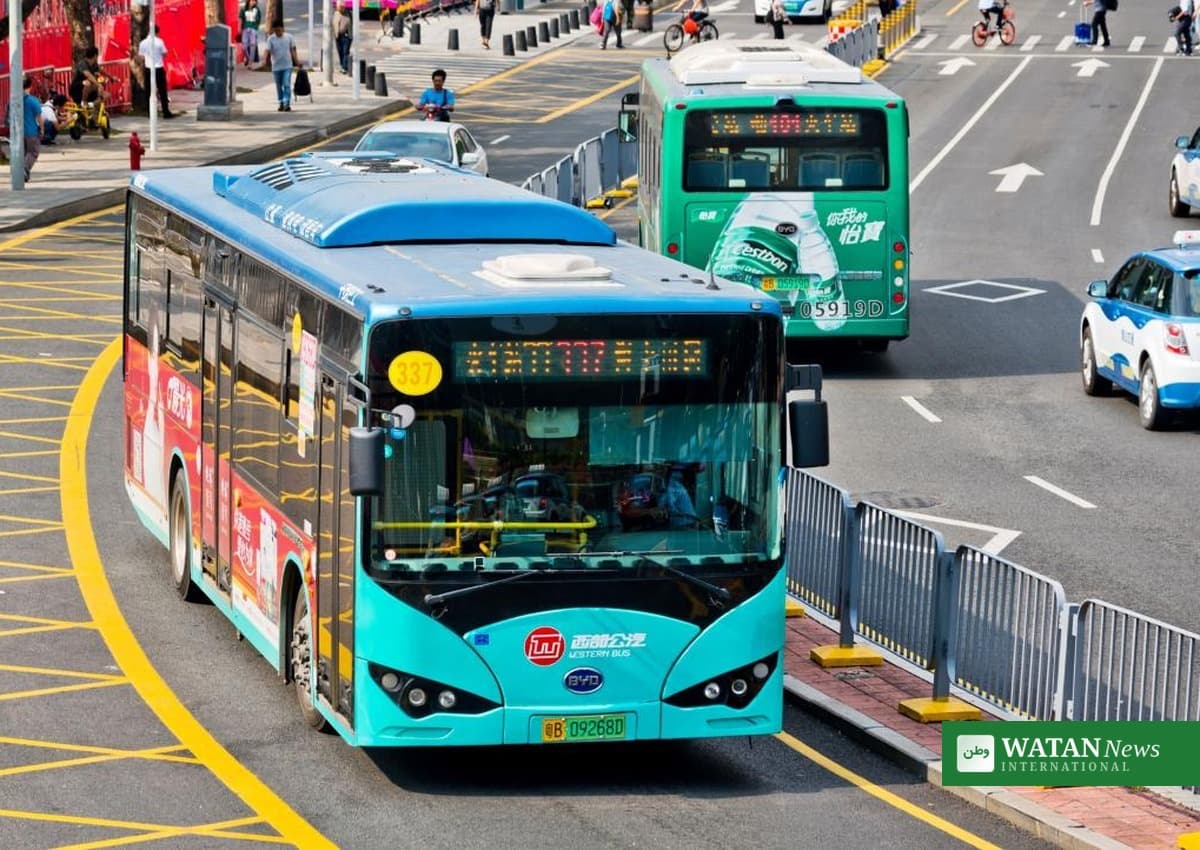
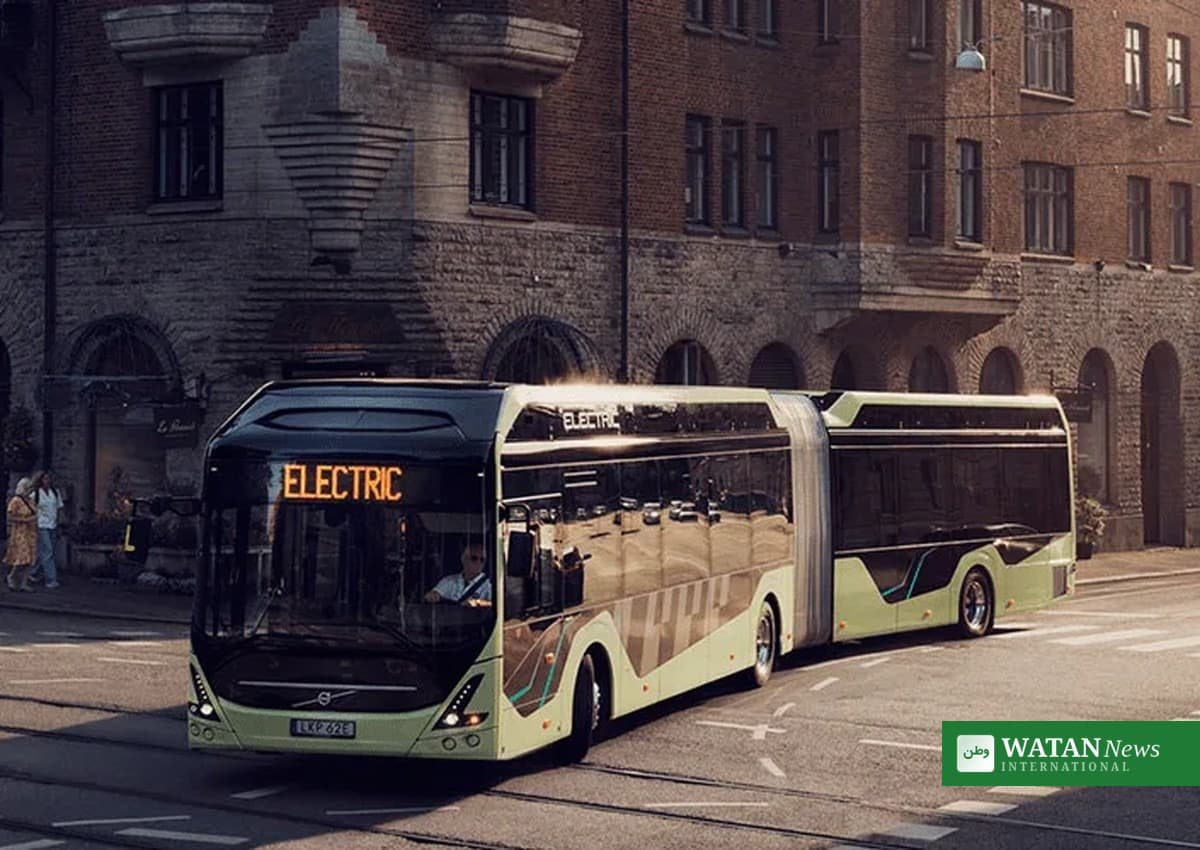
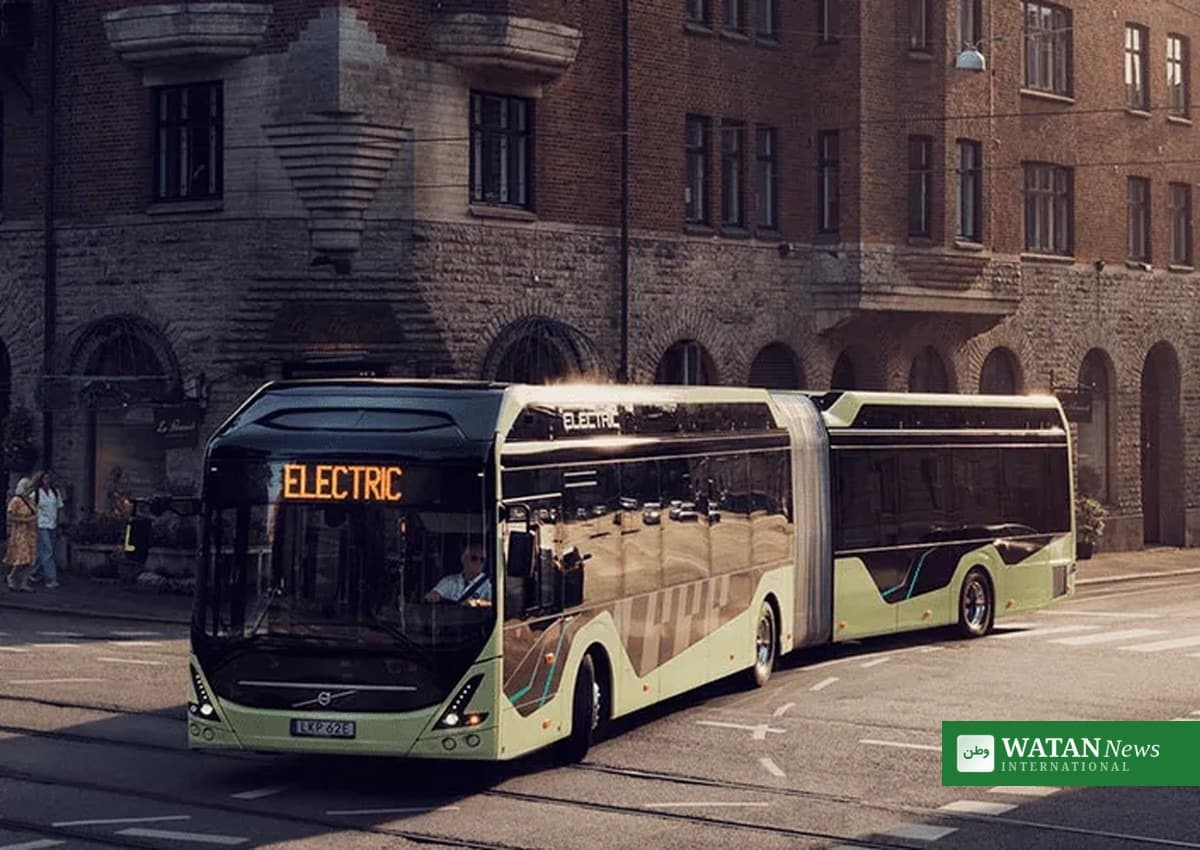
For delegates, the day’s theme is also visible in how they move around Antalya itself — COP31’s own green travel plan runs electric shuttles and free light rail for the summit’s 100,000 expected visitors. The question Transport Day must answer is whether the same shift — from road to sea and rail, from fossil fuels to clean ones — can now be scaled from one host city to the world’s freight routes. What to watch next: whether today’s launch produces corridor commitments, and what the IMO decides in December.
Key facts
- Transport accounts for about 16.3 per cent of global greenhouse gas emissions, according to SLOCAT’s COP31 briefing — the second-largest source.
- Road is 74 per cent of transport emissions; freight is 43 per cent of transport carbon dioxide, expected to reach 57 per cent by 2050.
- The Global Green Freight Corridors Initiative is due to be launched at a ministerial roundtable on 10 November, 11:00–13:00, in COP31’s Blue Zone.
- There are 84 green shipping corridors worldwide, but only four have reached the operational stage.
- Shifting freight to coastal shipping can cut emissions by 60 to 90 per cent per tonne-kilometre on longer routes, according to an Australian study published in October 2026.
- The IMO Net-Zero Framework’s adoption was adjourned in October 2025; the next decision is expected at MEPC 85, 30 November to 3 December 2026.