
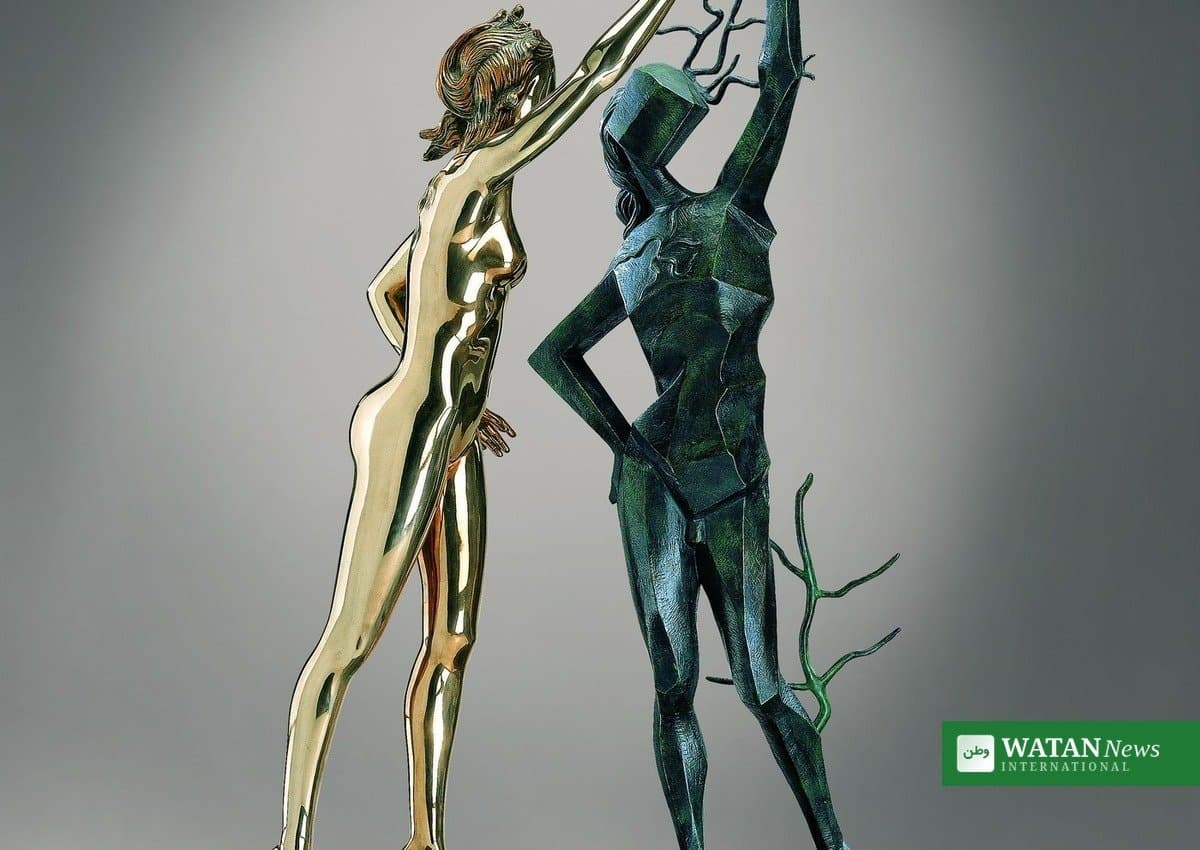
Thieves have stolen a bronze book cover designed by Salvador Dalí from a museum in central France — a 150-kilogram bejewelled masterpiece described by prosecutors as an “exceptional and unique” artwork of great value. The Dalí bronze book cover theft is the latest in a string of brazen museum heists across France.
FAKTA: Dalí Bronze Book Cover Theft at a Glance
- What was stolen: Salvador Dalí’s bronze cover of the “Livre de l’Apocalypse”, decorated with gold, precious stones and seashells; the cover alone weighs about 150 kg (330 pounds).
- Where: The Contemporary Art Centre C Karoutzos in Issoire, in central France’s Puy-de-Dôme department.
- When: Overnight between Sunday, 4 October and Monday, 5 October 2026.
- Investigation: The Clermont-Ferrand prosecutor’s office has opened a criminal investigation; the Gendarmerie research brigade is examining video footage and the scene.
- Owner: Collector Christian Karoutzos, who bought the work in 2003, called the theft a “cultural catastrophe”.
How the Dalí Bronze Book Cover Was Taken
Overnight between 4 and 5 October, thieves broke into the private Contemporary Art Centre C Karoutzos in Issoire and walked away with the bronze cover of an artistic reimagining of the New Testament’s Book of Revelation, also known as L’Apocalypse. The local prosecutor’s office is investigating and labelled the work an exceptional and unique piece.
Karoutzos told French radio outlet RMC that there were no visible signs of forced entry, and that the thieves had disconnected the cameras and the alarms — calling it a mystery. He said the theft was a cultural catastrophe, and told local radio the loss felt like an attack on French heritage itself.
Issoire’s mayor, Bertrand Barraud, told AFP the loss was incalculable and the work of a lifetime, adding that he had spoken with the owner, who was deeply distressed and regarded the piece as part of France’s heritage. Investigators found signs of forced entry at the building, including a fractured exterior gate, and say no suspects have been publicly identified so far.
A Monumental Work by 14 Artists
Dalí created the work, which weighs more than 300 pounds, between 1958 and 1961 at the request of the art publisher Joseph Forêt. It was one of three richly illustrated classics the pair collaborated on, alongside Cervantes’ Don Quixote and Dante’s Divine Comedy. At the time of its creation, the book was estimated at 2 million francs — roughly $4.5 million today.
The complete work is composed of 150 giant parchment sheets, with calligraphy estimated to have taken upward of 2,000 hours; 550 letters in the text were gilded. Aside from Dalí, L’Apocalypse was illustrated by 14 prominent artists and writers of the 20th century, including Léonard Tsuguharu Foujita, Jean Cocteau and Bernard Buffet.
After being exhibited at nearly 150 exhibitions around the world between 1961 and 1972, the work passed through Swiss and Japanese collectors before being acquired in 2003 by Karoutzos, who runs an art restoration company in Issoire. The cover had been on display inside the centre along with several parchment pages.

France’s Museum Theft Wave
The theft is the latest in a string of break-ins at French museums over the past 18 months. Last October, thieves snatched crown jewels from the Louvre’s Apollo Gallery, and hours later 2,000 gold and silver coins were stolen from the Maison des Lumières in northeast France. Over the summer, masked robbers took millions of dollars’ worth of jewellery from the Lalique Museum, and two paintings were stolen from the Renoir Museum in Cagnes-sur-Mer.
Such incidents have risen sharply and are becoming increasingly brazen, according to Europol, with one museum security expert recently telling the BBC that museums everywhere are under strain.
For more on arts and culture, see Watan News culture coverage.

Conclusion
The theft of Dalí’s bronze cover is both a cultural loss and a security alarm. As French museums face a rising wave of brazen heists, the question is no longer just who took the 150-kilogram masterpiece — but how it was carried away at all.
Related: British Museum Opens Korea Exhibition With 2,000 Years of Korean Art