Five European Union countries have announced plans to send migrants whose asylum claims have been rejected to a new Rwanda return hub, in the first scheme of its kind to move returns outside the European Union.
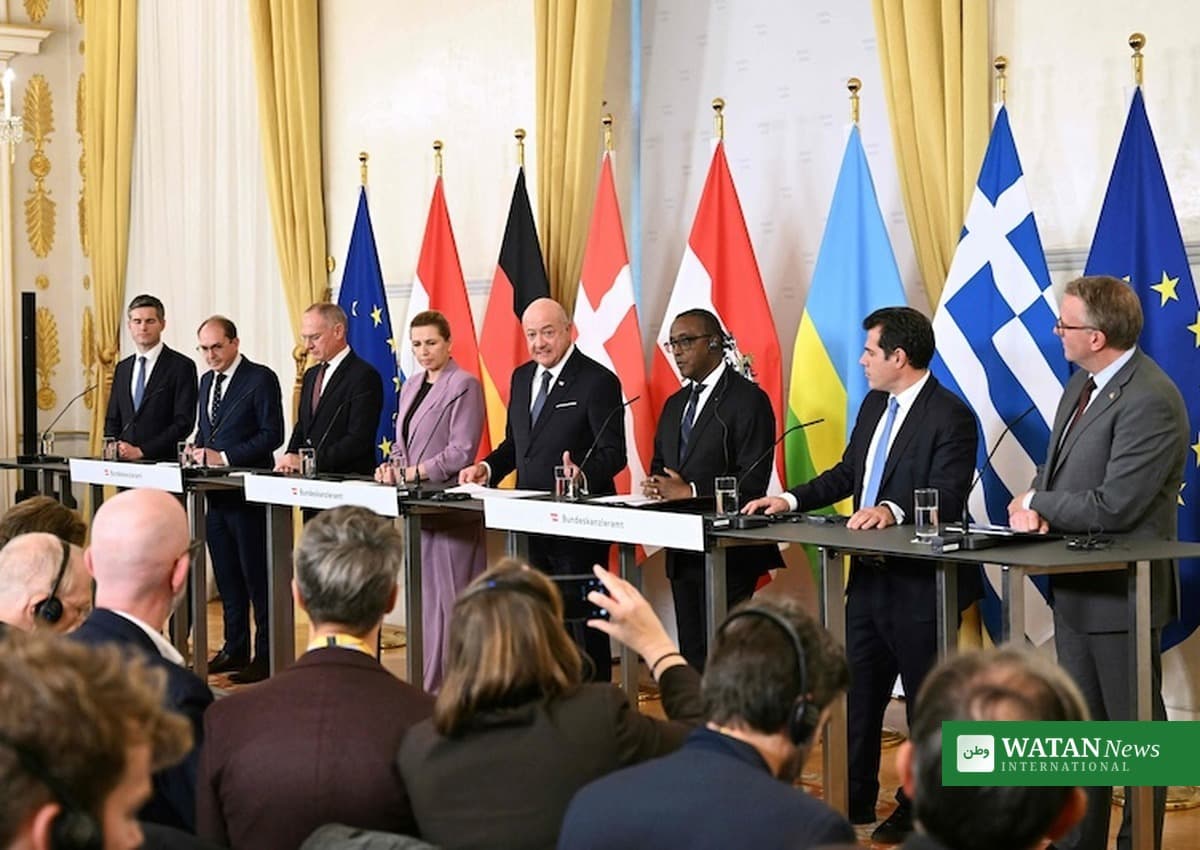
Germany, Austria, Denmark, Greece and the Netherlands unveiled the plan in Vienna on Monday, 16 November, after a meeting of ministers from the five countries on the sidelines of the Vienna Migration Conference. The pilot centre in Rwanda would hold about 100 people, roughly 20 from each country, with the first transfers expected in 2027.
FAKTA
- Five EU countries — Germany, Austria, Denmark, Greece and the Netherlands — announced a joint return hub in Rwanda on Monday, 16 November 2026, in Vienna.
- The pilot would hold about 100 people, around 20 from each country, and would apply only to people who have exhausted all legal avenues to remain in the EU and cannot be returned to their home countries.
- Those transferred would receive a residence permit in Rwanda, with access to work, training, education and healthcare, and could also choose to return to their country of origin.
- Negotiations with Rwanda are expected to conclude in early 2027, with the first transfers later that year.
- Rights groups condemned the plan, while the European Commission welcomed it.
Rwanda return hub: how the scheme would work
The five countries say the centre would be an open facility rather than a detention camp. People sent there would be adults, men or women, without dependent families, and the Dutch government said the first phase would involve single men. Rwanda has committed to granting each person a residence permit and helping them integrate into the country.
“Under this partnership, Rwanda would provide a second chance to people who no longer have the legal right to remain in the partner countries,” Rwandan Interior Minister Vincent Biruta said on Monday. He said Rwanda was not looking to be paid for the arrangement, but the partner countries would meet the cost of relocation and integration.
Austrian Chancellor Christian Stocker, who hosted the announcement with Danish Prime Minister Mette Frederiksen, called the agreement “a truly historic paradigm shift in migration policy”. Frederiksen described the plan as a “game changer” and said its purpose was to send a signal: “You can no longer enter the European Union illegally and think you can just stay around.”
The scheme follows the adoption of the EU’s new Return Regulation in mid-October, which set the rules for establishing return hubs in third countries. Under the regulation, member states may only send people who have been denied asylum and cannot return to their home country, either because that country refuses to take them back or because they do not wish to return. German Interior Minister Alexander Dobrindt said negotiations between the European capitals and Kigali were expected to wrap up in early 2027, with implementation later that year.

The skyline of Kigali, Rwanda’s capital. The exact location of the planned return hub has not been disclosed.
Rights groups warn of serious risks
The announcement drew swift criticism from human rights organisations. In a joint statement, 47 aid, trade union and rights groups urged the five countries to abandon the plan, saying it “signals that Member States accept the risk of serious human rights violations against one of the most marginalized groups in society, in return for a deterrence goal that evidence clearly suggests they will not reach”.
Amnesty International said there was “a real danger that the Rwanda deal will, with its limited chance for scrutiny, become a cruel black hole for human rights”. The European Council on Refugees and Exiles condemned the proposal as an attempt to shift Europe’s responsibility for migrants beyond its borders, and warned that people transferred to Rwanda risked prolonged legal uncertainty, inadequate protection and further removal to countries where they face persecution.
Legal experts also questioned the scale of the pilot. Almost 500,000 return decisions were made by EU countries in 2025, and only 27 percent were carried out, according to Eurostat figures cited by public law professor Serge Slama — leaving more than 350,000 people to be returned each year, against 100 places in the Rwanda pilot. “This symbol marks a turning point from foreigners’ rights toward an immigration policy inspired by the far right,” Slama said. The scheme is expected to face legal challenges, and the five countries hope to obtain support from the International Organization for Migration and the United Nations refugee agency, although no formal operational agreements have been finalised.
Why Rwanda — and what happens next
Rwanda has positioned itself as a destination for migrants whom Western countries want to remove. The United States last year began transferring migrants to Rwanda under an agreement allowing it to deport up to 250 people. Britain’s earlier plan to send asylum seekers to Rwanda was ruled unlawful by the UK Supreme Court in 2023 and abandoned in 2024, after costing about £715 million, with at most five migrants travelling to Rwanda and only on a voluntary basis.
The new scheme differs from the British plan in that it would only apply to people whose asylum claims have already been finally rejected, rather than those whose claims are still being processed. The European Commission welcomed the initiative, even though its president, Ursula von der Leyen, had said during her first term that such solutions were not feasible.
Not all European governments back the idea. France firmly refused to take part, with President Emmanuel Macron saying in June that such centres were “neither effective nor in line with our values”. Italy wanted to join the project but was not admitted to the group, on the grounds that it does not comply with the migration and asylum pact. The five countries are already proposing to replicate the scheme with other third countries such as Uganda or Uzbekistan if the pilot survives legal scrutiny.
The plan builds on the EU return-hub framework approved in October, which opened the way for member states to establish return facilities outside the bloc.