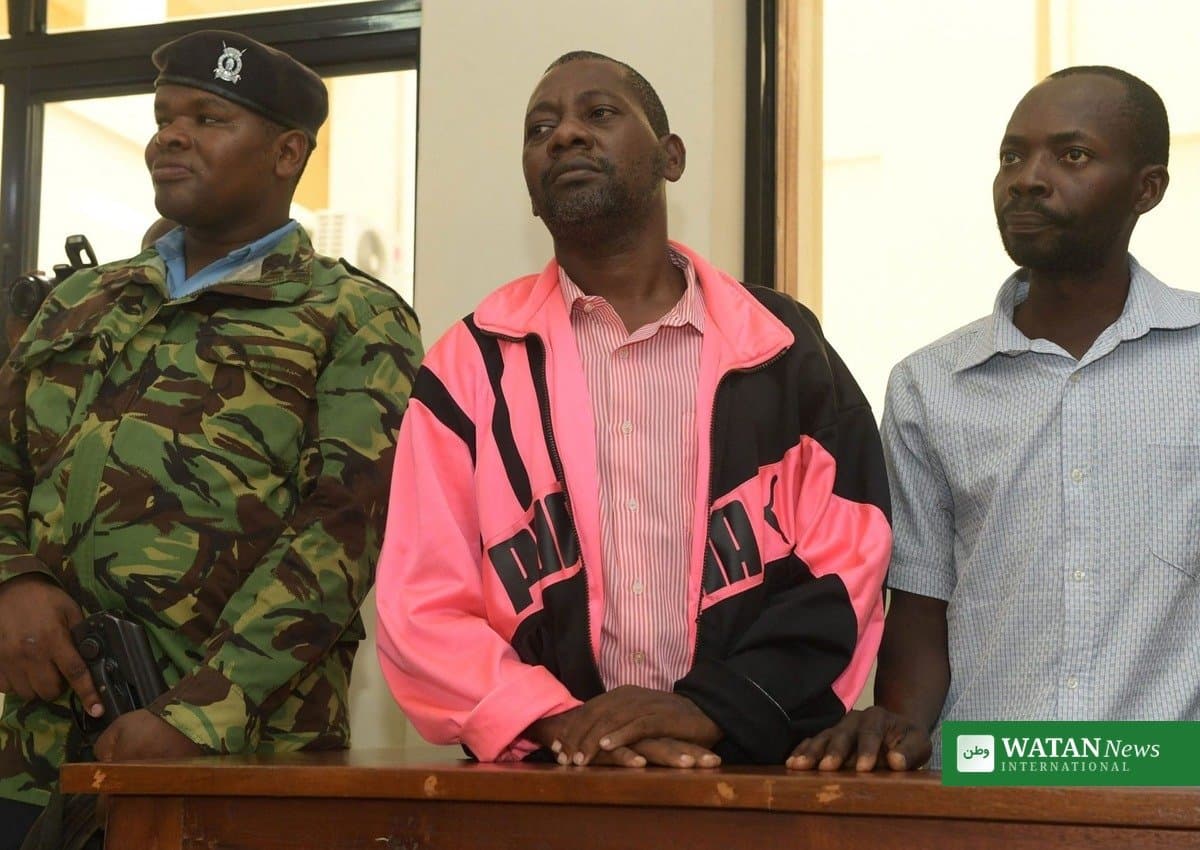
A Kenyan court in Mombasa on Monday, October 19, 2026, found doomsday preacher Paul Mackenzie convicted of murder over the deaths of 191 people — 190 children and one adult — in the Shakahola forest starvation cult, in one of the most harrowing criminal cases in Kenya’s history. Lady Justice Diana Kavedza delivered the verdict after a hearing lasting more than eight hours, convicting Mackenzie alongside 28 co-accused, and set sentencing for November 6, 2026.
FAKTA
- Paul Nthenge Mackenzie and 28 co-accused were convicted of murder under Section 203 of the Penal Code by the Mombasa High Court on October 19, 2026.
- The victims were 190 children and one adult, killed between January 2021 and September 2023 in Shakahola, Malindi Sub-County, Kilifi County.
- The court rejected the defence claim that the victims fasted voluntarily; Justice Kavedza said the prosecution had proved its case against all 29 accused.
- Sentencing is scheduled for November 6, 2026; probation officers must file pre-sentence reports by October 30, followed by defence mitigation.
- The 191 deaths are only part of the wider tragedy: more than 400 bodies have been recovered from Shakahola forest since April 2023, and only a few dozen have been identified.
- Mackenzie still faces separate cases, including terrorism-related charges and a case over 52 further deaths at Kwa Binzaro, to which he has pleaded not guilty.
Paul Mackenzie convicted: inside the court’s reasoning
Prosecutors said Mackenzie “initiated and directed” extreme fasting at his 800-acre ranch in Shakahola Forest through an organised system described by Deutsche Welle and Al Jazeera as a “structured hierarchy of death”: children first, then teenagers, then women, then men. The court found that the fasting directive was communicated through village elders, reinforced at regular meetings and enforced by guards who prevented followers from escaping.
The prosecution presented evidence from 123 witnesses, digital recordings, forensic and DNA reports, and 190 post-mortem samples from minors. Medical findings attributed 76 deaths to starvation and 112 to unascertained causes, with the remainder linked to specific injuries including asphyxia, neck compression and traumatic head injury, Kenya’s Kenya Digest reported.
According to the BBC, the judge said the victims “were celebrated as having wedded with Jesus,” and that in some cases children were isolated and denied food while their parents watched.
The doomsday cult of Good News International
Mackenzie led the Good News International Church, which the court heard operated as a cult preaching an imminent end of the world, discouraging modern medicine, formal education and outside assistance. Followers told investigators he forbade sending children to school or going to hospital, calling such institutions satanic. The Guardian describes Mackenzie as a former taxi driver who had been on the authorities’ radar for years.
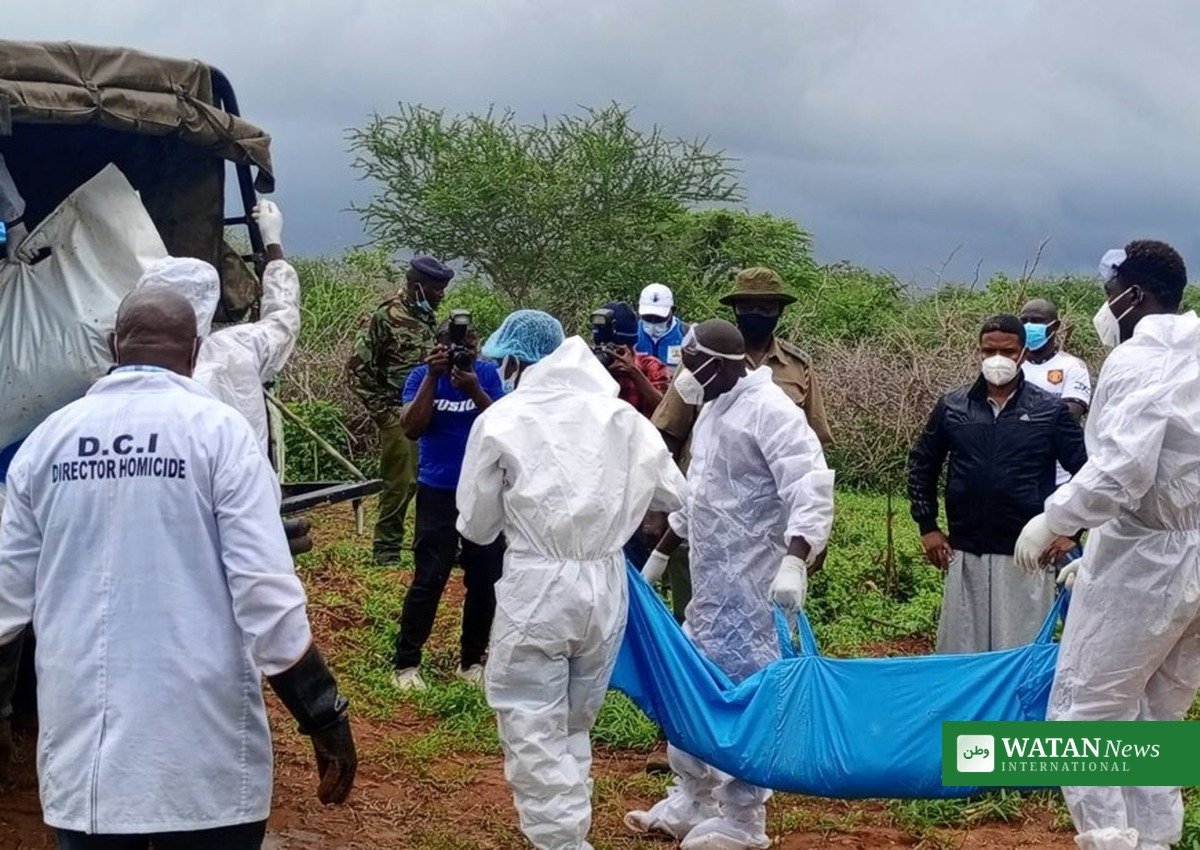
The tragedy came to light in April 2023, when shallow graves were discovered in Shakahola forest. Workers in protective gear have since exhumed more than 400 bodies, many badly decomposed and still unidentified. Two of the accused, Kelvin Saudi Asena and Edison Safari Mnyambo, died during the trial, and the Director of Public Prosecutions withdrew the murder charges against them.
“A very, very important day” for grieving families
Relatives of the victims filled the courtroom for the verdict; the court received 68 victim impact statements. Francis Wanje, who lost eight family members including two grandchildren, told reporters: “This is a very, very important day,” according to Deutsche Welle, which credits AFP. Stephen Mwiti told the BBC: “All six of my children died in Shakahola forest.”
The case has also put Kenya’s institutions under scrutiny. Kenya’s ombudsman cited “a gross dereliction of duty” by officials who ignored warnings between 2021 and 2023, and President William Ruto said in 2023 that government agencies should have been able to prevent the deaths, taking responsibility as president. The conviction is expected to intensify calls for tougher regulation of religious organisations in Kenya.
What happens next
Probation officers must prepare pre-sentence reports for each convict by October 30, followed by defence mitigation submissions, before the court hands down sentences on November 6. Mackenzie’s separate cases — including the terrorism-related charges and the Kwa Binzaro case over 52 further deaths — are expected to continue, and investigators are still searching the Shakahola forest as more graves are uncovered. Follow continued world coverage on the Watan News world desk.