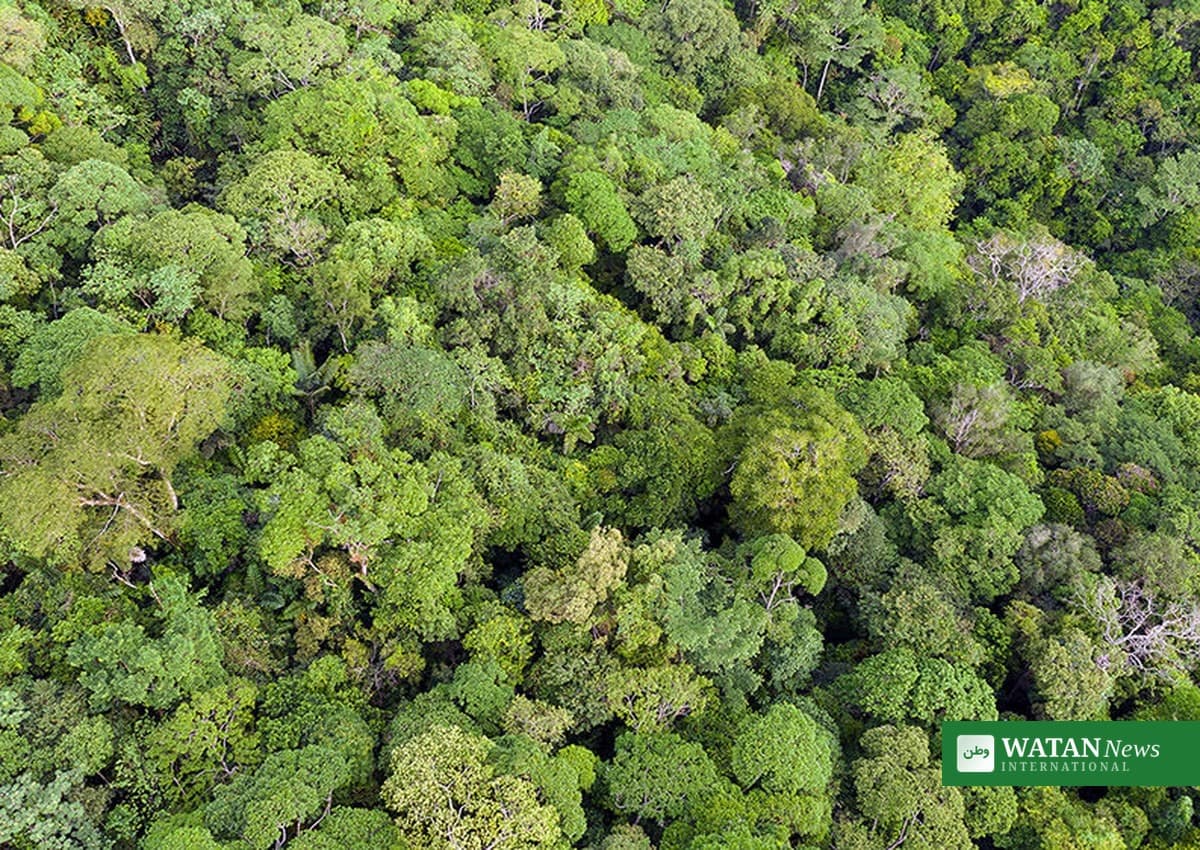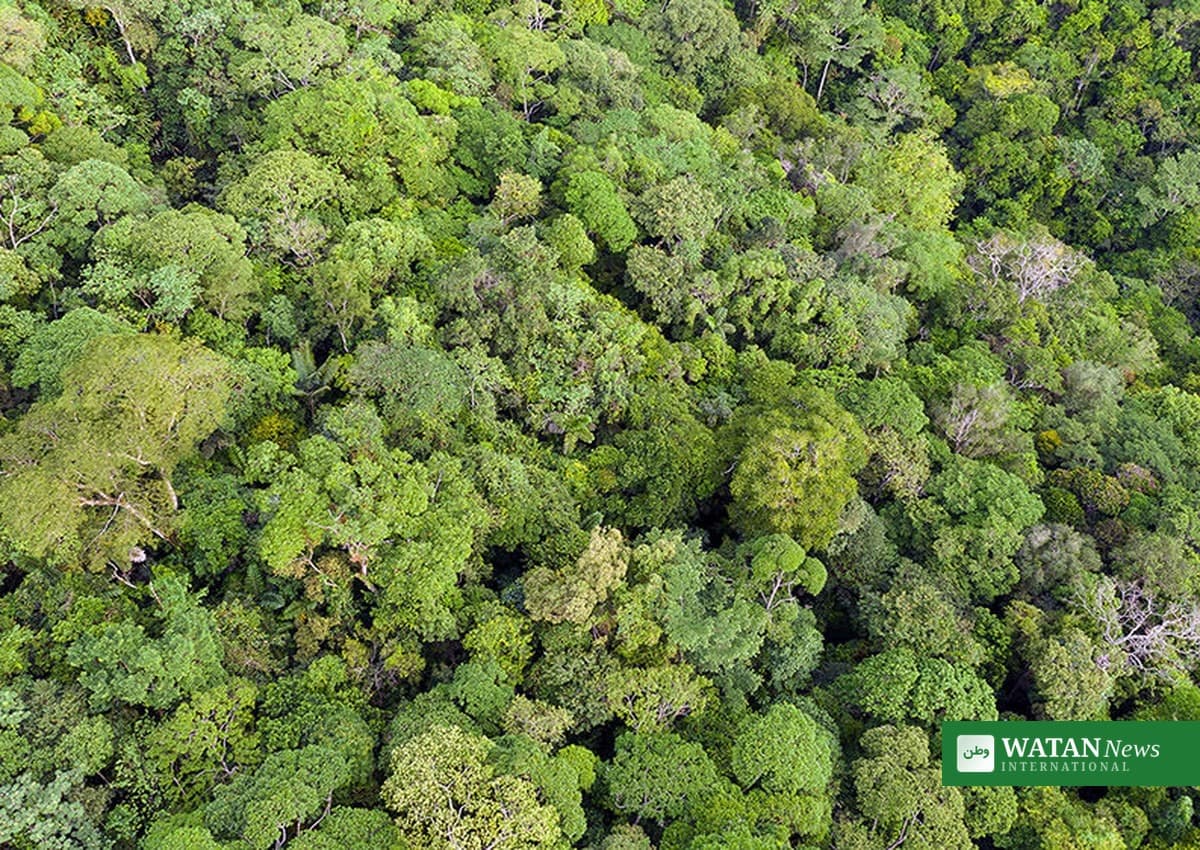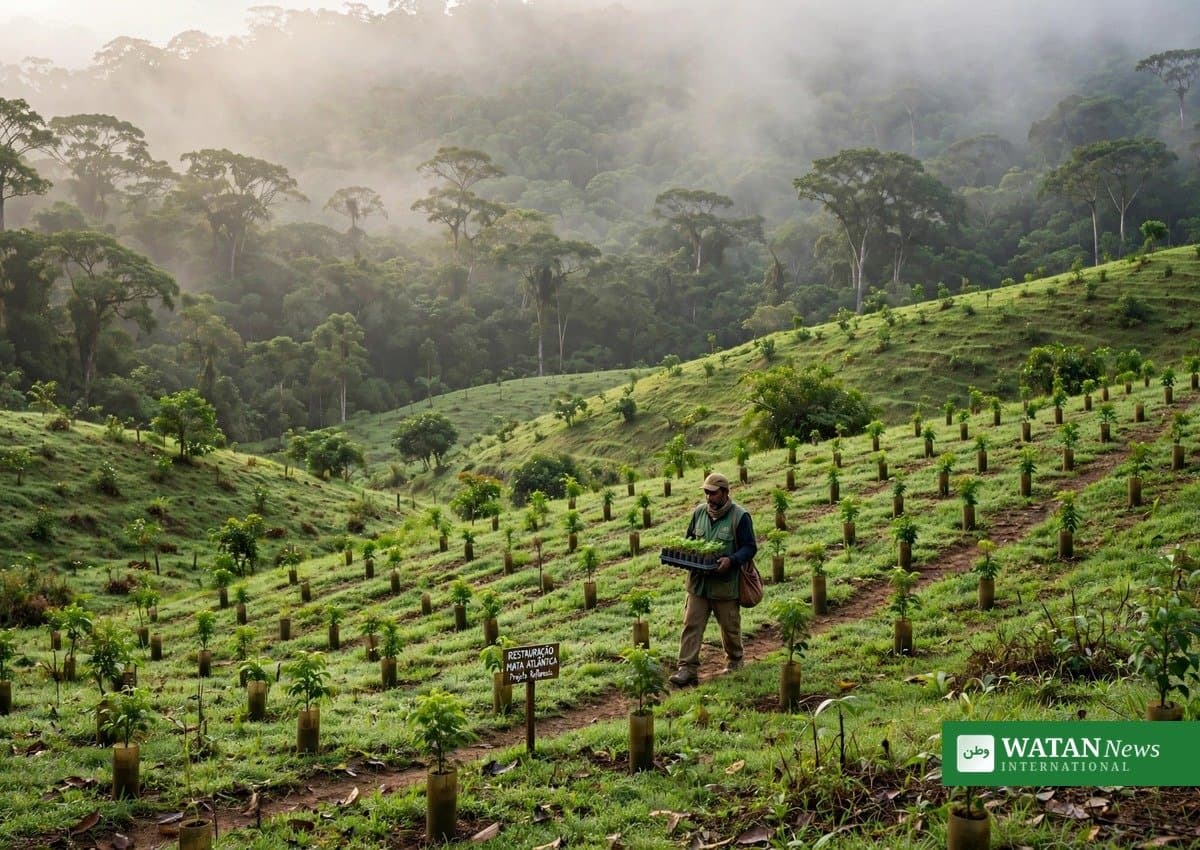
Washington, D.C. — More than one million native trees now stand across 1,089 hectares of Brazil’s Atlantic Rainforest after Forest Trends and the Arbor Day Foundation completed the first phase of the Arboredo Project, a community-led restoration initiative that has turned some of the region’s most degraded landscapes into a working model for how forests — and the people who live in them — recover together.
According to the announcement on 13 October 2026, well over one million trees — 1,015,594 — have been planted across the Ribeira and Paraíba Valleys of São Paulo State since 2023, an area roughly 3.7 times the size of the City of London. The project exceeded its original planting target while leaving behind four fully operational community nurseries, trained local teams and monitoring protocols capable of supporting future reforestation.
FAKTA
- 1,015,594 native trees planted since 2023 across 1,089 hectares in São Paulo State’s Ribeira and Paraíba Valleys.
- 379 families, 40 organizations and four community nurseries engaged; 110 jobs created linked to forest recovery and food production.
- Seedling emergence 48% above projections, monitored with technical support from São Paulo State University, Registro Campus.
- 229 native species used, including varieties with nutritional, medicinal and economic value for communities.
- Next step: the proposed Arboredo EntreVales Project across four landscapes.
A milestone for the Atlantic Forest
The Atlantic Rainforest is a global biodiversity hotspot and home to 70 percent of Brazil’s population. Brazil’s leaders have committed to restoring 12 million hectares of land by 2030, and the Atlantic Forest alone offers restoration potential of up to 17 million hectares. Against that backdrop, the Arboredo Project’s first phase is one of the most ambitious community-led restoration efforts completed in the region to date.
More than 1.7 million Brazilian Reales flowed through the local restoration economy — through the purchase of native seeds and seedlings, tools, labor and the consultation of local experts — grounding the climate and biodiversity gains in real local income. You can follow more of Watan News’ climate reporting on our climate page.
Communities at the centre
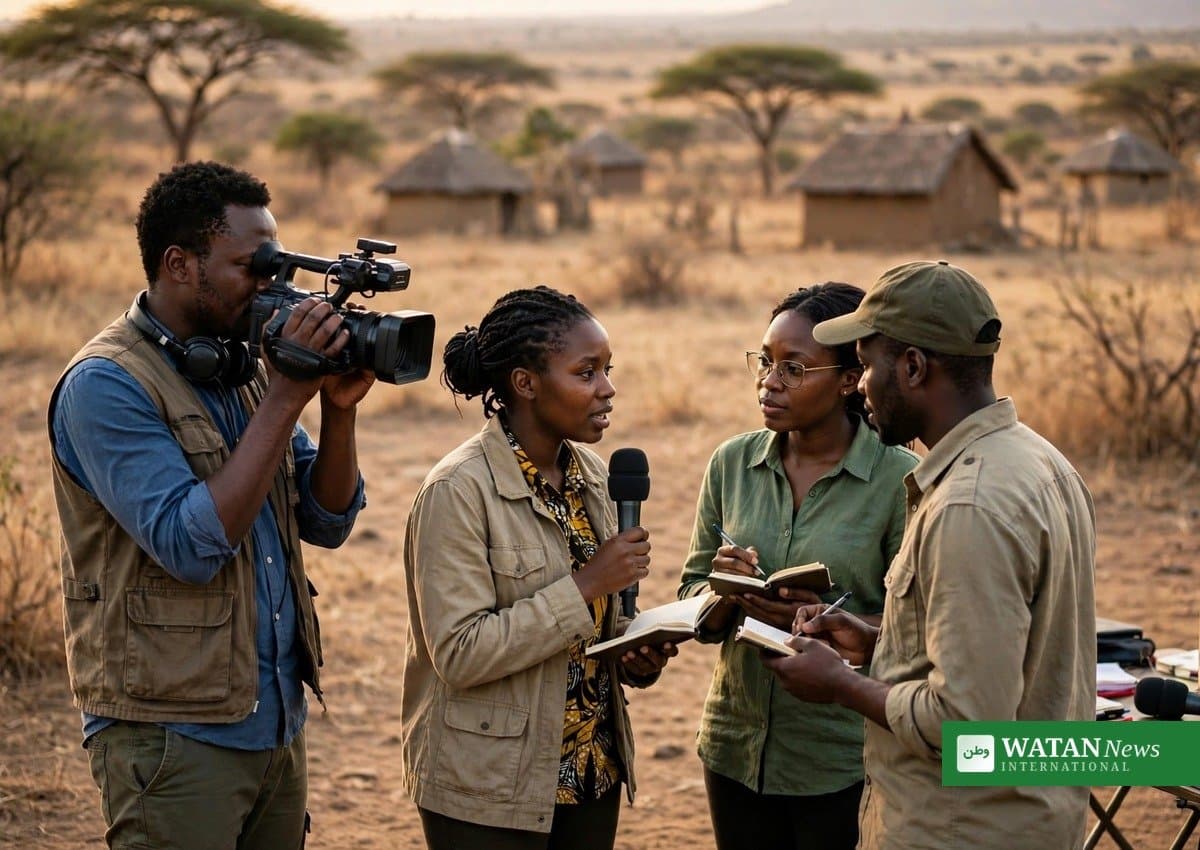
The project was built with local Guarani, quilombola and family farming communities from the start. Implementation on the ground was led by the local cooperative Cooperativa Para A Bioeconomia (COOBIO) in the Ribeira Valley and Akarui in the Paraíba Valley — groups, as Forest Trends puts it, “not just implementers” but “the authors of this work.”
The social footprint is as deliberate as the ecological one: 56 percent of participants were women or youth, and quilombola communities played a central role in local seed supply chains, connecting traditional knowledge of native species with the demands of large-scale replanting. Of the 18,000 kilograms of seeds purchased across both territories, about 44 percent came directly from local community seed networks, keeping money in the hands of local seed collectors.
“Planting trees is only meaningful if the people planting them have reasons to protect and manage those forests for decades to come,” said Beto Borges, Director of Forest Trends’ Communities and Territorial Governance Initiative. “Arboredo showed that when communities lead, the environmental and social results reinforce each other.”
The muvuca method
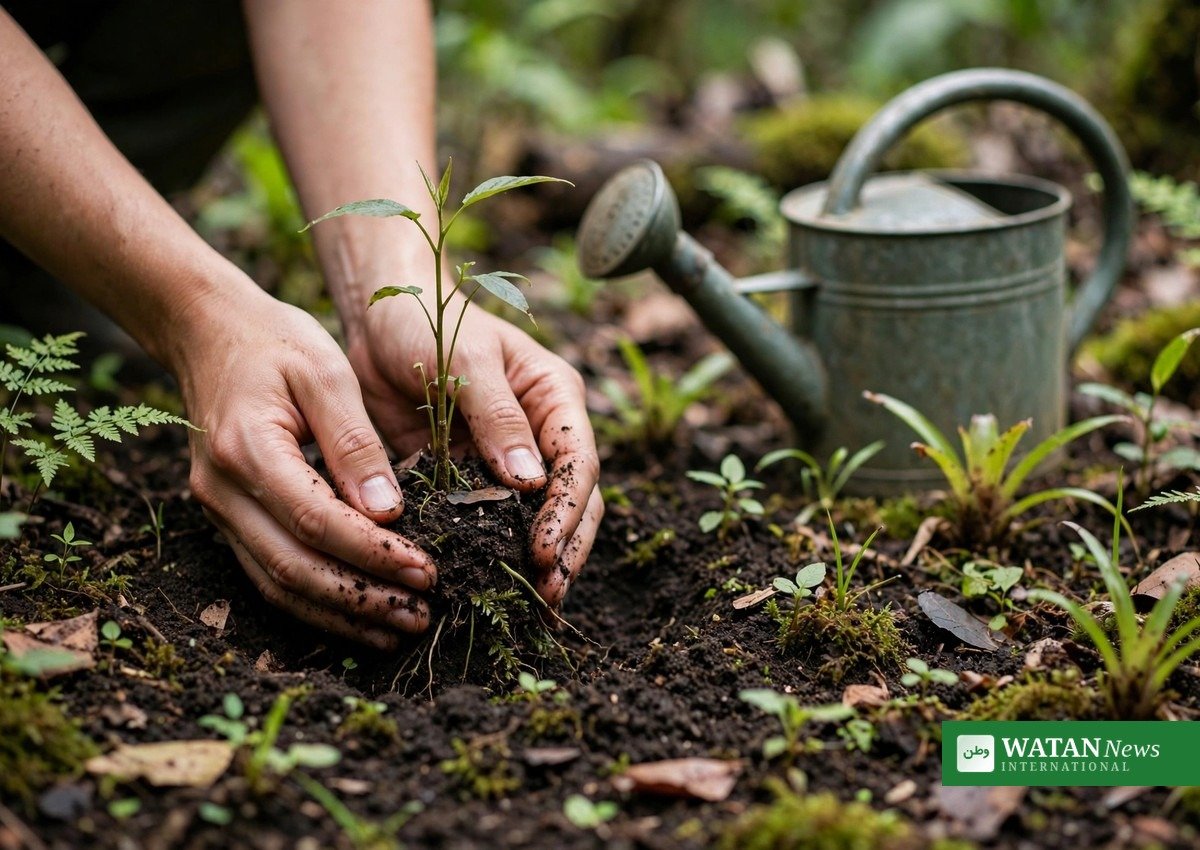
At the heart of the planting work is the muvuca-rara direct-seeding method: seeds are sown directly by hand or with farm equipment, using a diverse mix of species selected for each territory. Some seeds sprout quickly while others take years — staggered timing designed to mimic how a forest actually grows.
Monitoring carried out with technical support from São Paulo State University’s Registro Campus found seedling emergence rates 48 percent above projections — a strong signal, the project says, that the muvuca method could suit other replanting efforts across the Atlantic Forest.
Beyond seeding, eight experimental agroforestry plots were established across five communities in the Paraíba Valley, letting farmers combine forest recovery with food production and diversified income. Native nurseries produced tens of thousands of seedlings from up to 40 species, and the Vale do Paraíba Agroecology Network — 24 partner organizations — has grown into a regional hub for planning and collective action. The Entre Serras e Vales Alliance, developed in the project’s final phase, extends the model into a broader landscape stewardship strategy across the Paraíba Valley, Serra do Mar and Serra da Mantiqueira.
What comes next
The proposed Arboredo EntreVales Project would connect restoration efforts across four landscapes, translating the Arboredo Project’s experience into a larger-scale strategy to strengthen community and landscape resilience in the region.
Conclusion
The Arboredo Project’s lesson is structural, not sentimental: it treats biodiversity and climate outcomes as inseparable from the economic resilience, climate resilience and food security of the communities doing the work. A million trees planted is the headline; the lasting result may be the nurseries, networks and livelihoods that can plant the next million.