England’s schools are to be told to stop teaching GCSE courses to pupils before Year 10, under a curriculum overhaul announced by the government on Sunday, 8 November 2026. Education Secretary Lucy Powell said the move will end the spread of early GCSE teaching, which she warned risks turning secondary schools into “early exam factories” and is driving pupils away from learning.
Read this story on Watan News: England to End Early GCSE Teaching in Schools in Curriculum Overhaul
FAKTA
- The Department for Education announced on Sunday, 8 November 2026, that Key Stage 3 will be restored as a distinct three-year phase covering Years 7 to 9, as part of a major review of the National Curriculum in England.
- The new curriculum will say schools should not start GCSE specifications early for large cohorts, should not routinely require pupils to narrow their subject choices earlier than necessary, and should not routinely enter pupils early for exams.
- Teachers will keep the flexibility to stretch high-achieving pupils, or groups who are ready to go further, without narrowing their options.
- Research by Public First Global for the International Baccalaureate, cited by the department, found that more than half of teachers say GCSE courses are dominating the first three years of secondary school, despite the content not being intended to begin until Year 10, with some schools starting GCSE teaching as early as Year 7.
- The department said the proportion of pupils persistently absent from school almost doubles between Years 7 and 9, to one in four children, and that persistent absence is one of the strongest predictors of a young person becoming not in education, employment or training.
- For white working-class children, persistent absence rates are 75 percent higher in secondary school than in primary school, according to the department.
- The government also plans to slim down GCSE content so courses can be taught comfortably within the official two years, Years 10 and 11.
- The Department for Education says the full new National Curriculum will be published later this year, while The Guardian reports publication is expected in early 2027.
The Case Against Early GCSE Teaching
Many secondary schools in England now introduce GCSE-level material in Year 9, a year before the courses officially begin in Year 10, as a way of spreading the workload across three years rather than two. Some schools start even earlier, in Year 7. Powell argues the habit has gone too far, narrowing what younger teenagers study and pushing them towards high-stakes exams before they have grasped the fundamentals.
“The early years of secondary school should be a time when children are excited to go to school and engage in the specialist and much broader teaching on offer, and where they find their passion and develop a love of learning,” Powell said in the department’s announcement. “The pressures of GCSEs and an overcrowded curriculum are resulting in too many children receiving a narrower offer during Key Stage 3 and being rushed towards exams without grasping the fundamentals or developing deeper understanding. I’m putting a stop to that.”
The announcement responds to three reviews: the Milburn Review, the White Working Class Education Inquiry and the Becky Francis Curriculum and Assessment Review. All three pointed to disengagement in the early teenage years, when pupils move from primary to secondary school, as a critical point affecting attendance, attainment and later life chances.

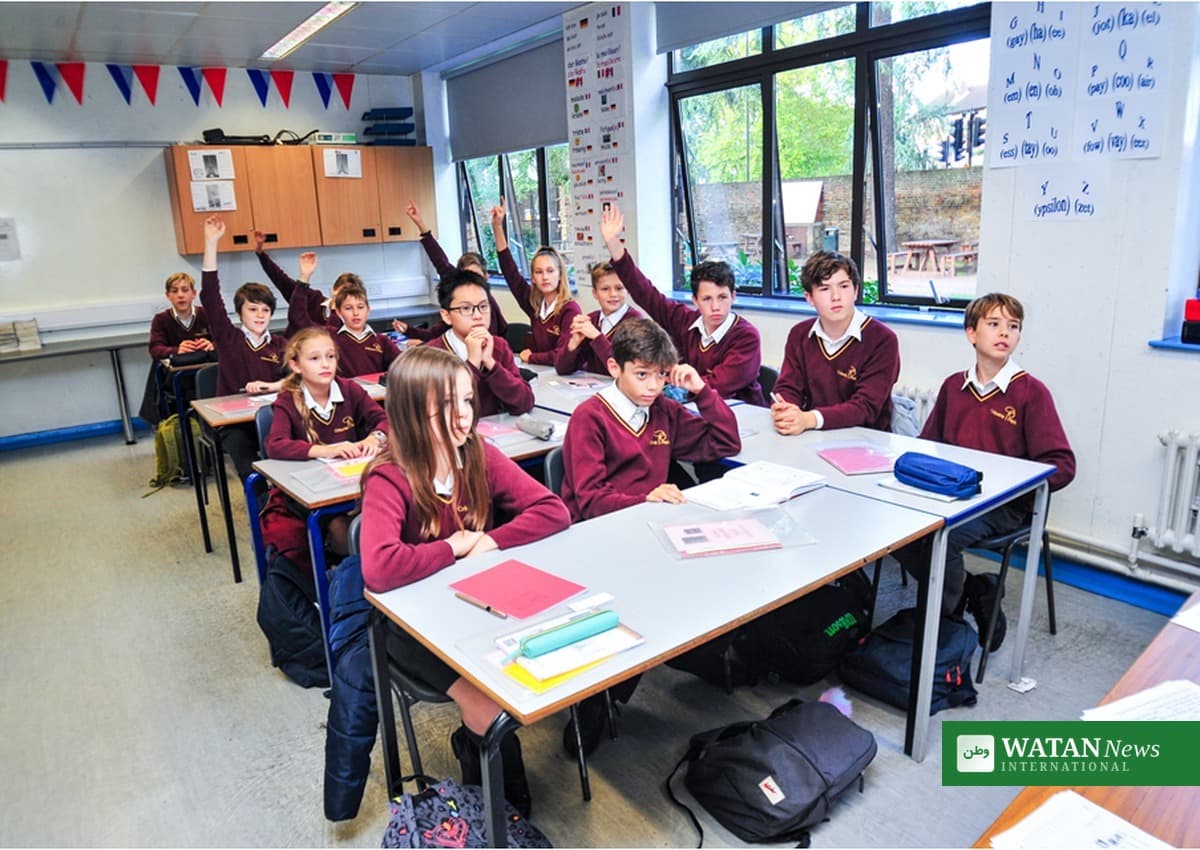
Secondary school pupils in a classroom in England. The government says GCSE courses are dominating the first three years of secondary school in many schools.
What the New Curriculum Will Change
Under the plans, the first three years of secondary school will count as a phase in their own right, with a broader and more engaging offer. The department promises more time for deeper understanding, richer experiences and subjects that have seen declining uptake, including drama, physical education, music and modern foreign languages, alongside technical and digital skills.
There will also be higher expectations on core knowledge and skills, including oracy and confident speaking, reading fluently and reading for pleasure, and numeracy. A new enrichment framework will help schools make more space for learning beyond the classroom, from practical experiments to debate.
The reforms are designed to tackle three linked problems: disengagement from school, the disadvantage gap between pupils from richer and poorer backgrounds, and the rising number of young people who end up not in education, employment or training. The department linked the changes to falling engagement in the early teenage years and to the sharp rise in persistent absence between Years 7 and 9.
Support From School Leaders
School leaders welcomed the focus on Key Stage 3. Becks Boomer-Clark, chief executive of Lift Schools and co-chair of the KS3 Alliance, said the first three years of secondary school had for too long been treated as little more than a preparation ground for GCSEs, adding that protecting those years could transform the educational trajectories of pupils most at risk of becoming disengaged.
Sir Hamid Patel, co-chair of the Independent Inquiry into White Working Class Educational Outcomes, said it was welcome that the government was showing real commitment to renewing the phase, after the inquiry found huge challenges in Key Stage 3 for white working-class children.
Timeline: How the Announcement Unfolded
| Date | Development |
|---|---|
| 8 November 2026 | Department for Education announces Key Stage 3 will be restored as a distinct three-year phase and schools told to stop early GCSE teaching |
| 8 November 2026 | Education Secretary Lucy Powell tells the Sunday Times she opposes schools becoming “early exam factories” |
| 9-10 November 2026 | The Guardian and other outlets report the plans, including that the policy will not be compulsory for individual pupils judged able to cope |
| Later in 2026 or early 2027 | Full new National Curriculum due to be published; the department says later this year, The Guardian reports early 2027 |
What Happens Next
Schools will see the full detail when the new National Curriculum is published. The department says that will happen later this year, although The Guardian reports publication is expected in early 2027, so the exact date remains to be confirmed. Once published, schools will plan their courses against the detailed curriculum, including the expectation that GCSE specifications wait until Year 10 for large cohorts.
The government has also promised to cut the amount of content in GCSE specifications, so the courses fit more easily into the two official years. How far that slimming goes, and which subjects change most, will only become clear when the full curriculum is published.
Conclusion
The end of early GCSE teaching is one of the biggest changes to England’s classrooms in a generation, and it cuts against years of practice in which exam preparation crept ever earlier into school life. Its success will depend on what the full curriculum actually says, and on whether schools use the freed-up time in Years 7 to 9 to broaden what pupils learn rather than simply shifting the same pressure elsewhere. For now, the message from the government is clear: the first three years of secondary school should belong to learning, not to exams.
Related Articles
- US Reading Scores Keep Sliding, but Harvard Experts Say the Literacy Crisis Is Fixable
- GEMS Modern Academy Coimbatore Launches Dual-Curriculum Campus for 2027-28
- Beijing Names 50 Model Schools to Lead Its AI Push in Classrooms
- Philippines Puts Climate Literacy in Every Classroom, From Kindergarten to High School