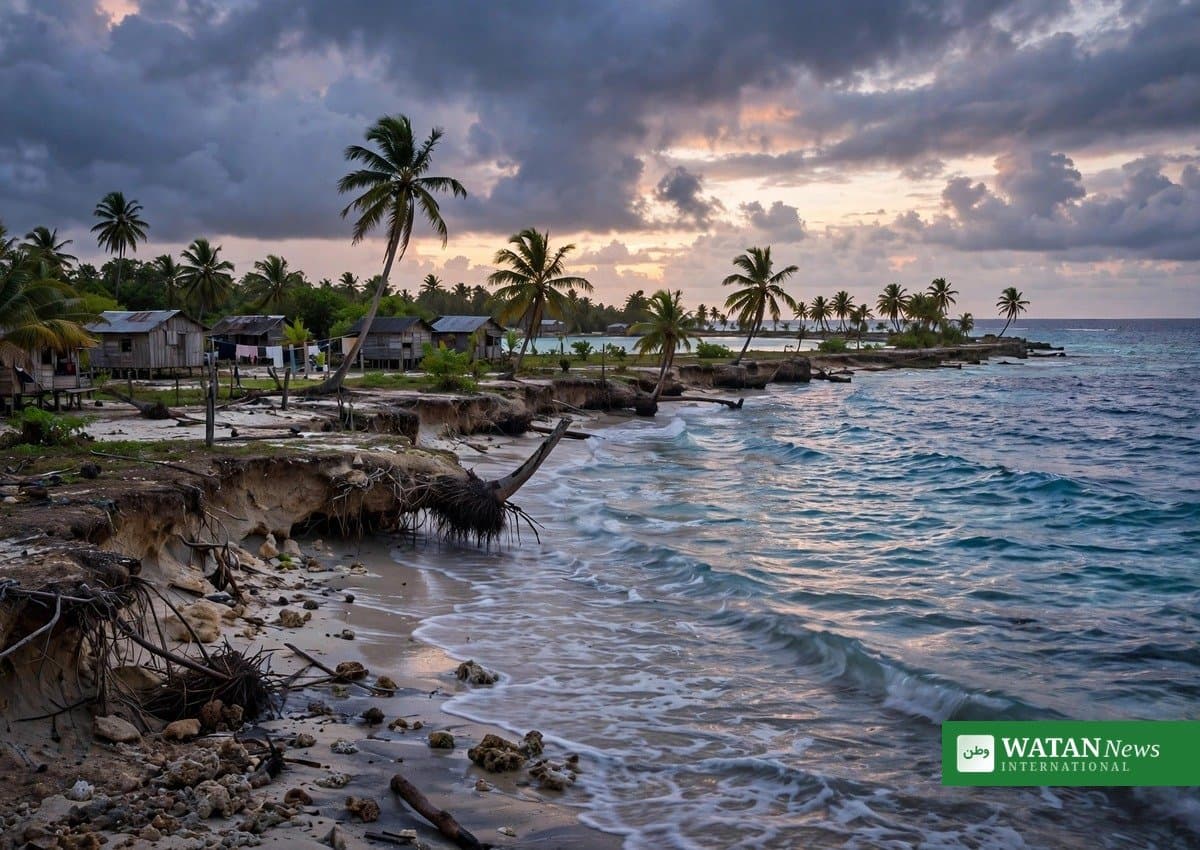
World leaders have backed the first UN Declaration on Sea-Level Rise, a political text affirming that countries threatened by rising oceans keep their statehood, sovereignty, UN membership and established maritime zones even if their territory disappears beneath the waves.
The declaration was approved by consensus on 24 September 2026 at a high-level plenary meeting held on the margins of the UN General Assembly’s annual general debate, with delegates approving the draft with a view to sending it to the Assembly for formal adoption. It is a political declaration, not a binding treaty, and it creates no new funding on its own.
FAKTA
- The UN Declaration on Sea-Level Rise is the first UN declaration devoted to sea-level rise, adopted at a high-level plenary on 24 September 2026 during the 81st General Assembly session.
- It establishes a presumption in favour of continued statehood: a country’s legal existence does not automatically end if its land is submerged.
- Maritime zones established under the UN Convention on the Law of the Sea (UNCLOS) remain stable even as coastlines retreat — protecting fishing, mineral and energy rights measured from coastal baselines.
- The declaration calls for scaled-up, predictable and accessible adaptation finance, especially for small island developing States and least developed countries — but contains no new financial pledge.
- Global mean sea level reached a record high in 2024; the rate of rise has roughly doubled, from about 1 mm per year in 1993–2002 to 4.7 mm per year in 2015–2024.
- Around 770 million people — nearly one-tenth of humanity — live less than five metres above the high-tide line, according to the World Meteorological Organization.
- Member States agreed to hold a further high-level meeting on sea-level rise before the end of the General Assembly’s 84th session.
Sea-level rise declaration answers the statehood question
The declaration addresses a long-standing legal dilemma: if traditional statehood requires territory, and rising seas erase that territory, do the state, its citizens’ nationality and its ocean rights disappear too? Its answer is no. Opening the session, UN Secretary-General António Guterres warned that sea levels rose by almost six millimetres in 2024, the largest annual increase ever recorded, and that “its price is measured in millions of shattered lives, uprooted communities, and stolen futures.”
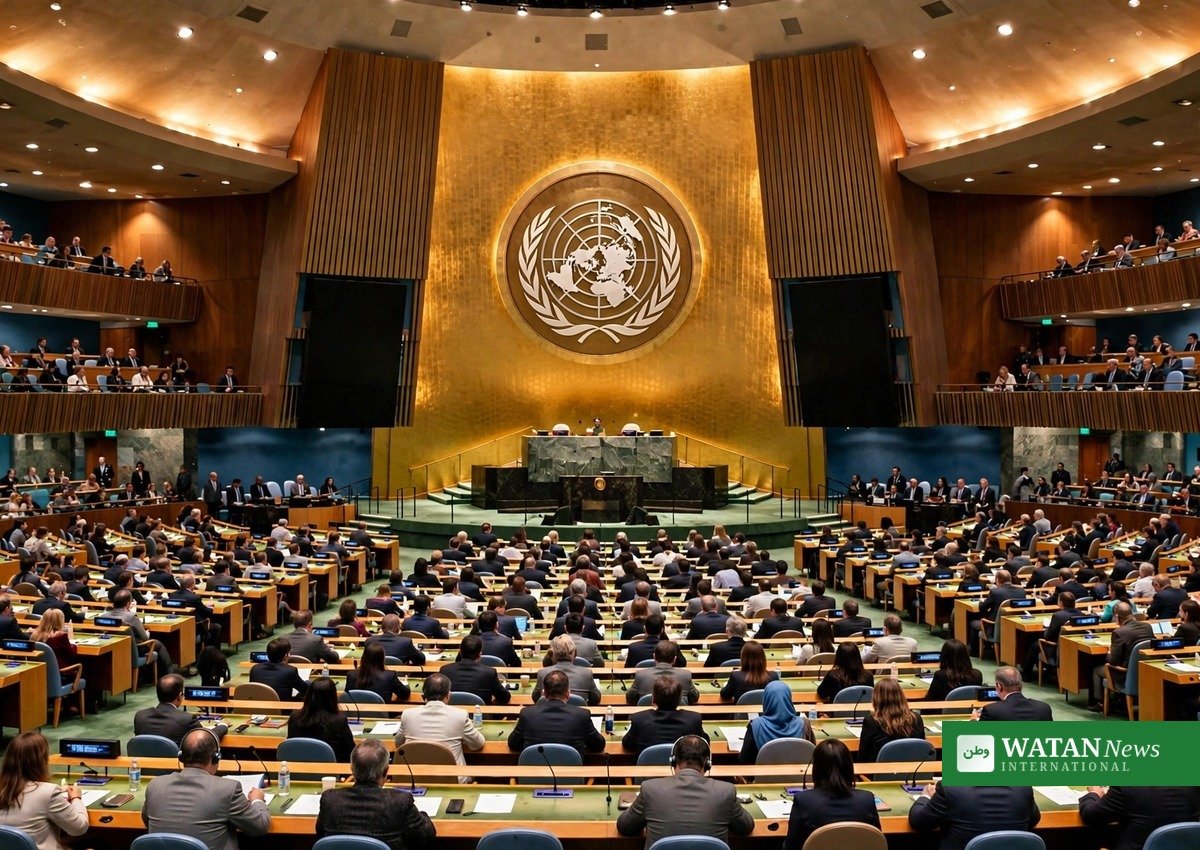
The text covers four areas: science and data, with better observation and early-warning systems; finance and resilience, with more predictable funding for the most vulnerable; livelihoods and culture, protecting coastal livelihoods and heritage; and international law, the presumption of continued statehood and stable maritime zones.
Island nations secure legal ground, but finance lags
For low-lying nations such as Fiji, Tuvalu and Vanuatu — which negotiate collectively as the Alliance of Small Island States (AOSIS) — the declaration is a vital affirmation that their nationhood, international standing and rights do not disappear with their land. It builds on years of work, including the UN International Law Commission’s study of sea-level rise and international law from 2019 to 2025.
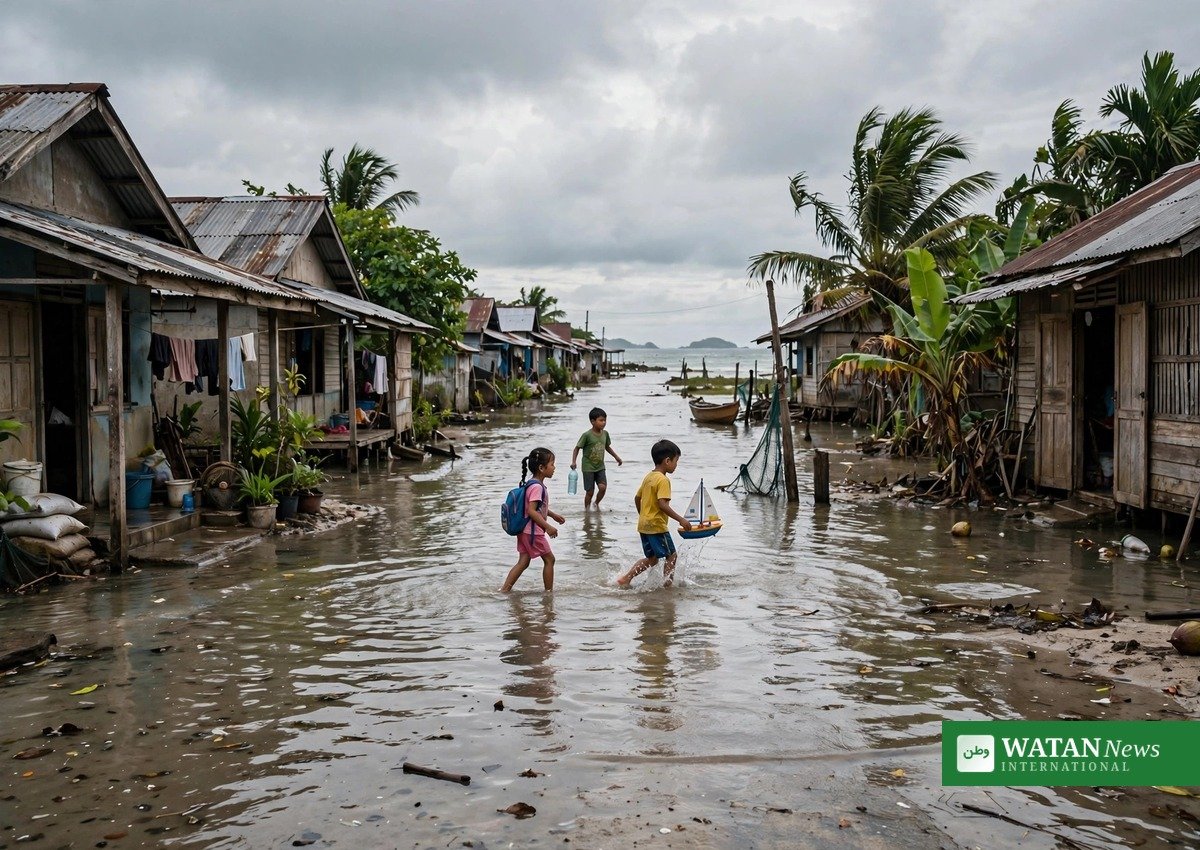
Civil society welcomed the legal protection but cautioned that legal rights do not keep saltwater out of drinking wells. The full story is also available on Watan News International’s main site.