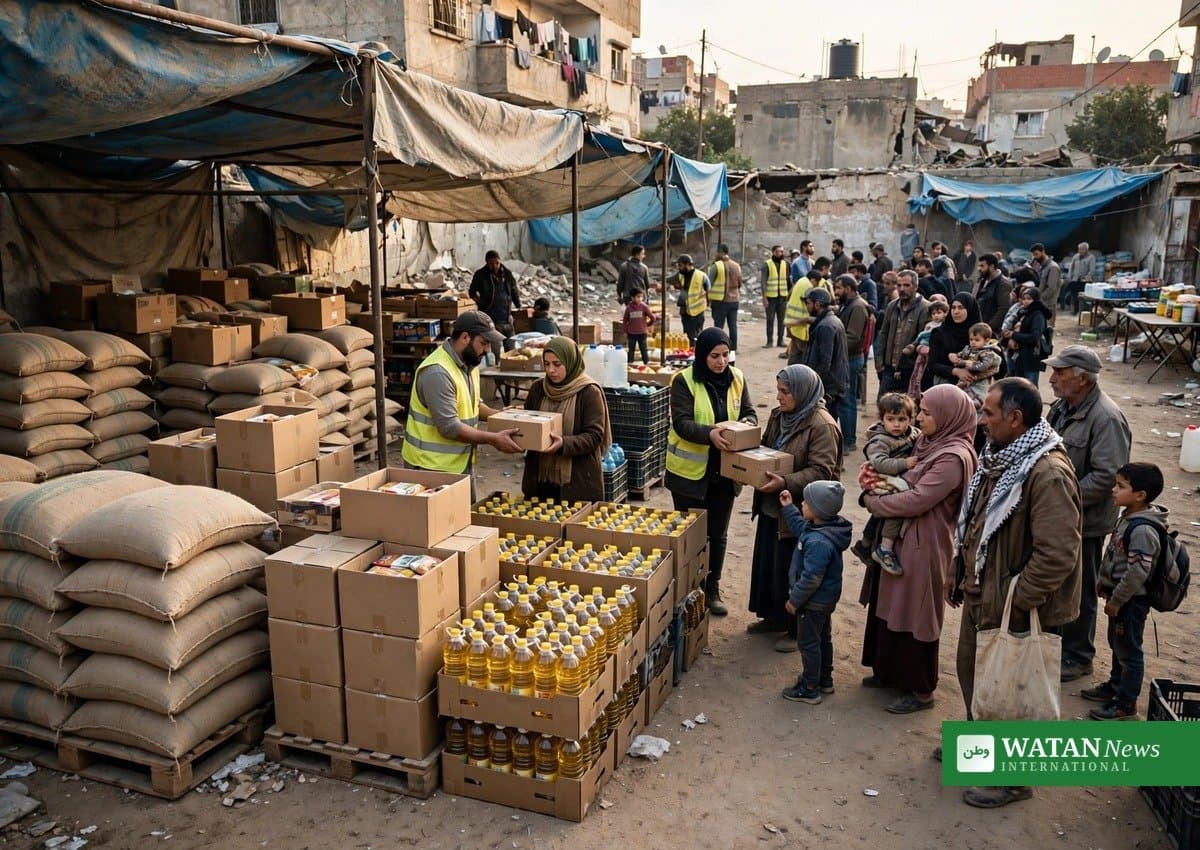
The United Nations World Food Programme is slashing its monthly food assistance in Gaza because of a severe shortage of funds, leaving roughly 500,000 Palestinians without the regular food support they depend on. The agency warned that the cuts will deepen one of the world’s worst hunger crises, in a territory where nearly two in three people already struggle to get enough to eat.
Key Facts
- The WFP Gaza food aid cuts reduce monthly recipients from 1.6 million people to 1.1 million, cutting off about 500,000 people.
- Food rations have been halved, and cash assistance has been withdrawn for 75,000 families.
- Daily hot meals for people unable to cook have fallen from 250,000 to 150,000, with some families in hard-to-reach areas now receiving a hot meal only every other day.
- Around 1.4 million people — two-thirds of Gaza’s population — face crisis levels of food insecurity or worse, including roughly 200,000 people in emergency conditions.
- The WFP says it urgently needs $450 million over the next six months to maintain critical operations in Gaza and the West Bank.
What the WFP Gaza Food Aid Cuts Mean on the Ground
The cutbacks are a direct result of the agency’s funding shortfall. With donor money running low, the World Food Programme is now doing both — cutting the number of people it helps and cutting what each person receives. Monthly assistance will reach 1.1 million people instead of 1.6 million, while those who remain on the programme will see smaller rations and, in many cases, no cash support at all.
The reductions extend across the agency’s main lifelines: food distributions, cash aid, and hot meals served through community kitchens. For families with no income and no way to buy or cook food, those kitchens are often the only source of a daily meal. Aid workers say the cuts will force already stretched organisations to spread thinner resources across more desperate families.
A Brutal Winter Ahead
The timing of the cuts could hardly be worse. The agency’s acting executive director, Carl Skau, told Reuters during a visit to Gaza that conditions remain harsh a year after a US-brokered ceasefire agreement: shelters are scarce, basic services barely function, and safety is far from guaranteed for ordinary families.
Skau said the reductions are landing just as Gaza faces its fourth winter, calling past winters “absolutely brutal” for people living in tents and damaged buildings. Little progress has been made toward the ceasefire deal’s promised reconstruction, leaving communities exposed to both the cold and a deepening hunger emergency.
A $450 Million Appeal
The WFP is now appealing for $450 million over the next six months to keep its critical operations running in Gaza and the West Bank. “We tell the world: now is not the time to look away,” Skau said, urging donors to step up support so the agency can protect the progress already made and push for early recovery.
For more coverage of international humanitarian stories, visit the Watan News English desk.