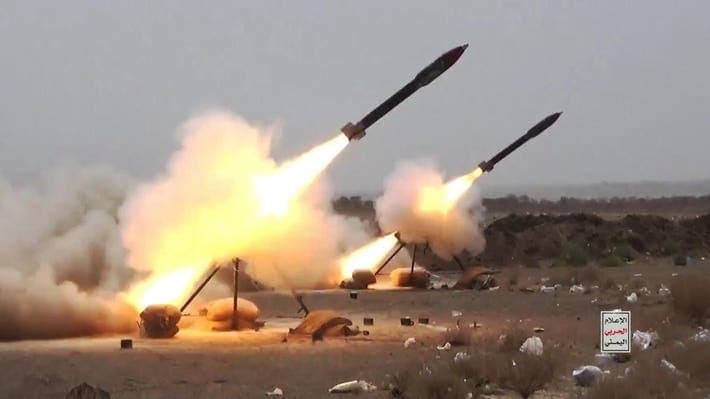
A Houthi missile strike near Yemen’s Taiz has killed at least four civilians and injured nine others, according to Yemen’s state-run Saba news agency. The attack targeted a gathering of civilians along the strategic Heijah al-Abd road, south of Taiz city, and comes amid heavy fighting across key front lines in the Taiz and Hodeidah governorates.
The escalation follows reports from Yemeni government forces that they have retaken several key positions on the Haifan front, also south of Taiz. A military source from the 4th Hazm Brigade told Saba that government troops captured several strategic heights, including al-Wathra, Saeed Taha, Dhiban, al-Khadira, and al-Najdain.
- At least four civilians killed in Houthi missile strike
- Nine others injured in the attack
- Heavy fighting across key front lines in Taiz and Hodeidah governorates
- Yemeni government forces retake several key positions on the Haifan front
Houthi Rebels’ Push for the Red Sea
The Houthis are pushing towards Bab al-Mandeb, and gaining territory towards the city and Red Sea port city of al-Makha [Mocha], according to Al Jazeera’s Yousef Mawry. Military experts say control over the Red Sea coastline is a main goal for the Houthis, which requires securing ground across southern Hodeidah and western Taiz.
Strategic Importance of the Red Sea Coastline
The Red Sea coastline is a crucial strategic location, with the Bab al-Mandeb Strait connecting the Red Sea to the Gulf of Aden. The Houthis controlled the port city of al-Makha before being driven out in 2017 by government forces and Saudi-led coalition.
Humanitarian Crisis Unfolding
The sudden surge in violence has triggered yet another humanitarian crisis. The UN Office for the Coordination of Humanitarian Affairs (OCHA) said the renewed fighting has forced nearly 1,800 families to flee their homes in less than 48 hours.
Impact on Civilians
“The goal for government forces is not so much to gain territory, but to recapture the areas that have fallen under the control of the Houthis,” said Yousef Mawry. The humanitarian crisis is unfolding rapidly, with heavy shelling in the Maqbanah and Jabal Habashi districts of Taiz completely emptying several villages.
Government Response
Reinforcements from the government side are already on the way, according to Mawry. The government military officials confirmed that Houthi rebels have managed to make some advances of their own, including taking over a strategic military base in western Taiz.
For more news and updates, visit Watan News.
Conclusion
The Houthi missile strike near Yemen’s Taiz has resulted in significant civilian casualties and a rapidly unfolding humanitarian crisis. The conflict is complex, with multiple parties involved, and a peaceful resolution seems distant.
Q1: What led to the Houthi missile strike near Yemen’s Taiz?
A1: The Houthi missile strike was part of the escalated fighting across key front lines in the Taiz and Hodeidah governorates, as the Houthis push towards Bab al-Mandeb and the Red Sea coastline.
Q2: Who are the key parties involved in the conflict?
A2: The key parties involved in the conflict are the Houthi rebels, the Yemeni government forces, and the Saudi-led coalition. The conflict is complex, with multiple parties involved, and a peaceful resolution seems distant.
Q3: What is the strategic importance of the Red Sea coastline?
A3: The Red Sea coastline is a crucial strategic location, with the Bab al-Mandeb Strait connecting the Red Sea to the Gulf of Aden. Control over the coastline is a main goal for the Houthis, which requires securing ground across southern Hodeidah and western Taiz.
Q4: How many civilians have been affected by the conflict?
A4: According to the UN Office for the Coordination of Humanitarian Affairs (OCHA), the renewed fighting has forced nearly 1,800 families to flee their homes in less than 48 hours. The humanitarian crisis is unfolding rapidly, with heavy shelling in the Maqbanah and Jabal Habashi districts of Taiz completely emptying several villages.
Q5: What is the current situation on the ground?
A5: The situation on the ground is complex and rapidly changing, with both the Houthis and government forces making advances and suffering losses. The conflict is ongoing, and a peaceful resolution seems distant.