Anthropic, the artificial intelligence company behind the Claude models, has taken the biggest step yet toward the public markets. On Monday 26 October it filed a public registration statement, Form S-1, with the US Securities and Exchange Commission, saying it intends to list its Class A common stock on the Nasdaq Global Select Market under the symbol ANT. The number of shares to be offered and the price range have not yet been determined.
FAKTA
- Filing: Form S-1 filed 26 October 2026; intended Nasdaq listing under ticker ANT; shares and price range not yet set.
- Revenue: $16.3 billion in the six months to 30 June 2026, against $1.16 billion a year earlier — an increase of about 1,300 percent.
- Losses: operating loss narrowed to $693 million from $2.1 billion; net loss reported at $80.7 billion.
- Customers: more than 11,900 customers spending at least $100,000 a year generated $12 billion, or 74 percent of first-half revenue.
- Reach claimed: every Fortune 10 company and more than half the Fortune 500 among those large customers.
- Governance: Anthropic is a public benefit corporation; a special share held by a company of its seven co-founders will hold 50.1 percent of voting power on matters submitted to stockholders.
Anthropic IPO filing: scale at speed
Anthropic was launched just five years ago by a breakaway group of OpenAI researchers led by Dario Amodei, who were concerned that OpenAI was not on a path to develop AI safely, NPR reports. It has since become OpenAI’s biggest competitor, with some of the most widely used AI models on the market.
The filing’s financial detail explains why analysts expect one of the biggest listings ever. Reports cited by NPR put a possible valuation at between $1.5 trillion and $2 trillion, which would place it alongside SpaceX, valued at around $1.8 trillion when it listed in June. The prospectus itself did not state a valuation, share count or price range, so those figures remain reported expectations, not filing facts.
Cost of revenue rose to $2.38 billion from $1.02 billion, implying a gross margin of 85 percent, up from 12 percent a year earlier, according to PYMNTS’ reading of the 335-page filing, which includes 94 pages of risk factors.

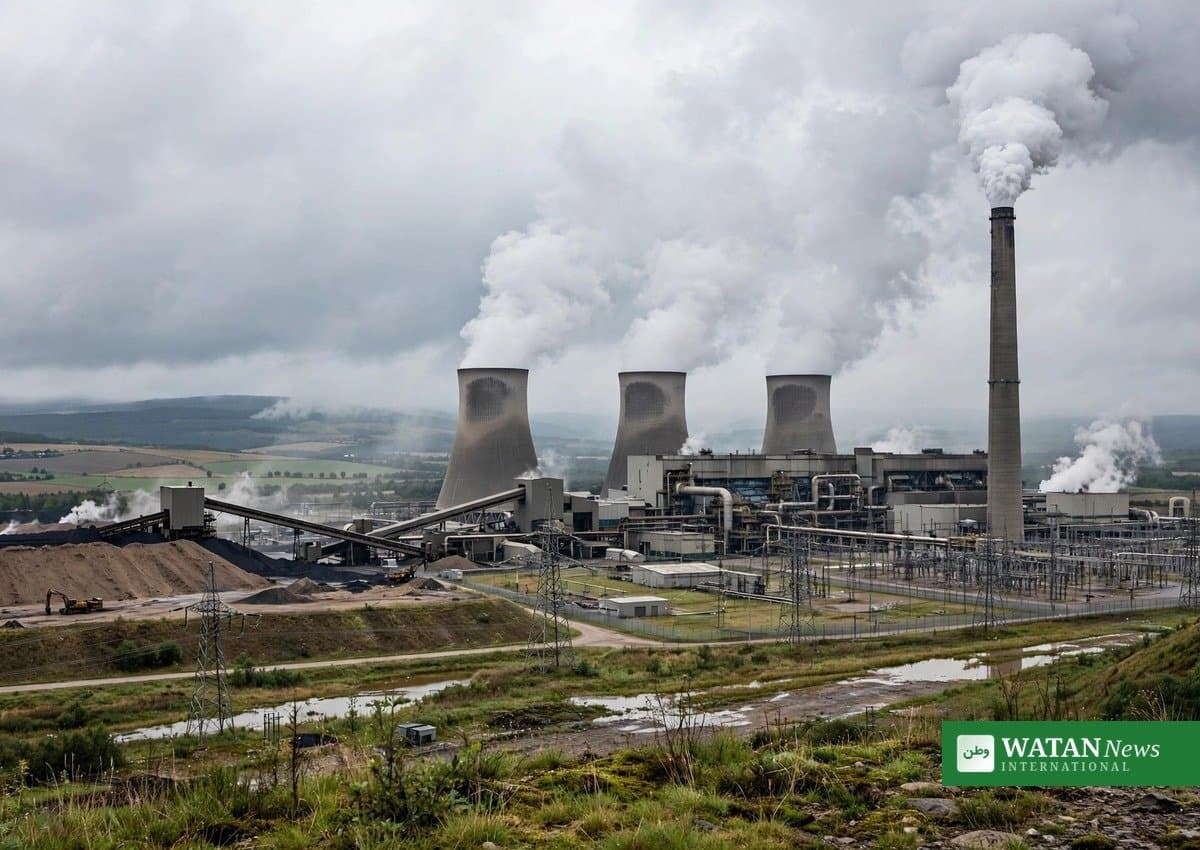
File photo: AI data infrastructure work. It is not a photograph of Anthropic’s offices or systems.
A $40 trillion claim — and a familiar debate
Anthropic frames its opportunity in sweeping terms, seeing a $40 trillion market in knowledge work — the economic value its workers created globally in 2025, about one-third of the $117.2 trillion global economy, PYMNTS reports. Its prospectus argues that AI abundance will rapidly transform every sector, in ways greater than the impact of industrialisation, electricity, semiconductors and the internet.
That optimism sits alongside controversy noted by NPR, including a conflict with the Pentagon over how its models can be used and questions about Amodei’s warnings on AI risks. The filing’s unusual governance — a public benefit corporation structure with a co-founder share holding 50.1 percent of voting power — is designed to keep the company’s mission from being overridden by short-term shareholder pressure. Investors will now weigh that protection against the concentration of control it creates.
The same day, PYMNTS reported that Meta plans to raise $95 billion for its AI efforts — $35 billion in underwritten public equity offerings plus a further $60 billion through an at-the-market programme — a reminder that the AI build-out is being financed at a scale few industries have ever attempted.
Related Articles
Conclusion
Anthropic’s filing turns a private AI race into a public-market test: $16.3 billion of half-year revenue, narrowing operating losses, and a governance structure built to resist short-term pressure. Whether the market awards it a valuation in the reported $1.5–2 trillion range will depend on how far investors trust both the growth and the guardrails.