Anthropic’s stock market filing is far more than a fundraising document: it lays bare a company growing at extraordinary speed, carrying $265 billion in future compute commitments, and structured so that its founders keep control even after going public. Here is what the S-1, filed publicly on 26 October, actually reveals.
The Claude maker has applied to list Class A shares on the Nasdaq under the ticker “ANT”. The document is a preliminary prospectus: the price range and the number of shares are still blank, the registration is not yet effective, and no shares can be sold until it becomes effective. Goldman Sachs and Morgan Stanley lead a group of 22 underwriters.

Explosive revenue, paper losses
Revenue was $41 million in 2023, $386 million in 2024 and $4.585 billion in 2025 — then $16.286 billion in just the first half of 2026, against $1.163 billion a year earlier. The June quarter alone brought in $11.56 billion, up 1,368 percent year on year. The company has separately told investors that third-quarter revenue reached $16.8 billion, though that figure is not part of the filed accounts, which run to 30 June.
The headline $80.748 billion first-half net loss is mostly accounting, not cash burn: $72.388 billion of it is a non-cash fair-value charge on convertible notes, derivative liabilities and SAFEs, whose paper value rose as Anthropic’s valuation climbed. Strip that out and the half year shows a $693 million operating loss — and the second quarter alone delivered a $974 million operating profit, the company’s first, with positive operating cash flow of $3.929 billion.
A $265 billion compute bill
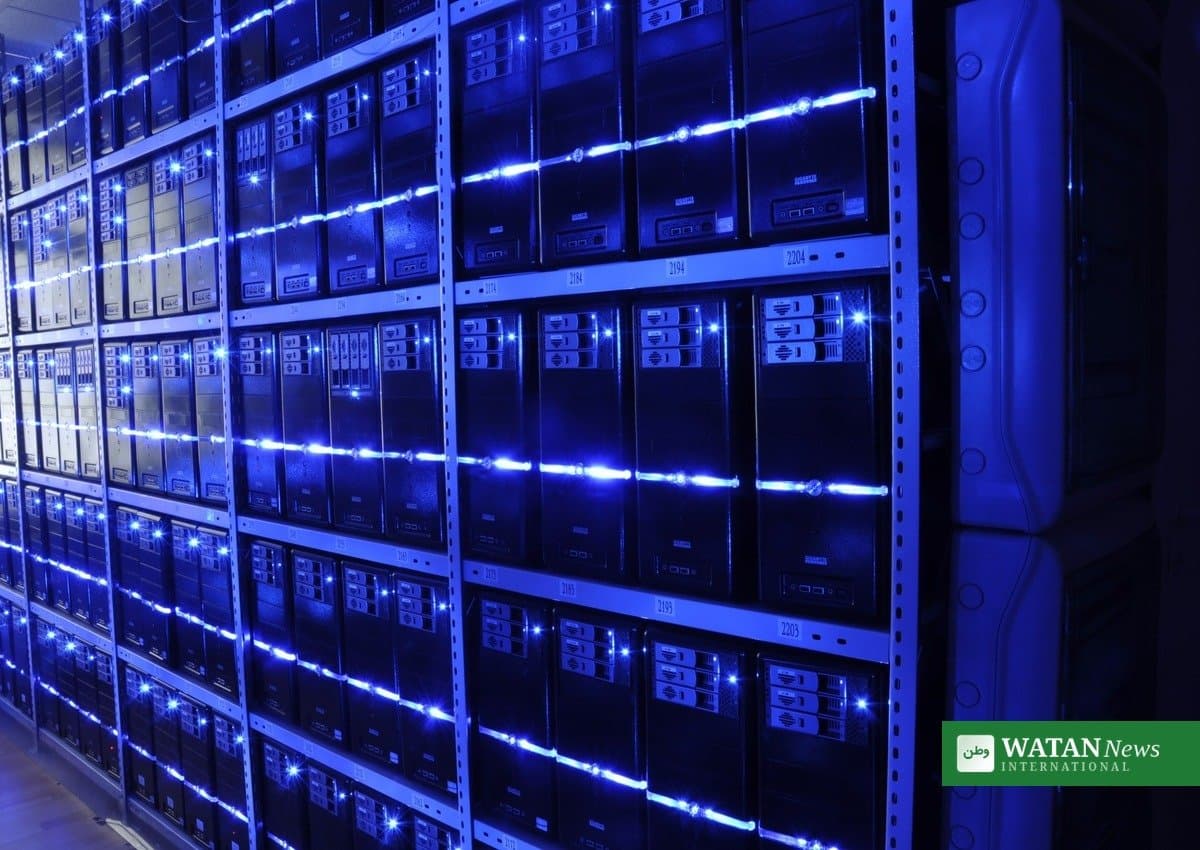
The filing’s most striking commitment is compute: about $265.6 billion in future purchase commitments at 30 June 2026. A separate note describes $417 billion of future minimum payments on new or amended agreements signed after 31 December 2025, plus an estimated $125–150 billion on other expanded agreements. The notes cover different scopes and dates, so they cannot simply be added together — but together they show a company locking in infrastructure on a scale few businesses have ever attempted.
Control stays with the founders
A founder share holds a fixed 50.1 percent of the vote, so control will not pass to public shareholders. The filing also records a 10-for-1 stock split on 17 September 2026, and grants Google an option to buy up to $10 billion of Class N non-voting shares in a private placement at the IPO price. Some shares in the offering will be sold by existing holders, including co-founders, and Anthropic says it will not receive any proceeds from those sales; its own share of the money is earmarked for general corporate purposes, including compute, infrastructure and hiring.
No ads, by design
Anthropic has never sold an advertisement, and the filing gives no sign that it intends to: revenue comes from metered use of its models and from subscriptions, with no ad tier, sponsored answers or audience product. The last confirmed valuation is $965 billion, from a $65 billion private round in May 2026; reporting has put IPO expectations between roughly $1.5 trillion and $2 trillion, with a raise of up to $100 billion — but the filing itself sets no price.
FAKTA
- Anthropic filed its S-1 publicly on 26 October 2026, seeking a Nasdaq listing under the ticker “ANT”; price range and share count remain blank.
- Revenue reached $16.286 billion in the first half of 2026, against $1.163 billion a year earlier; the June quarter alone was $11.56 billion, up 1,368 percent year on year.
- The $80.748 billion first-half net loss includes a $72.388 billion non-cash fair-value charge; the second quarter produced a $974 million operating profit.
- Future compute purchase commitments total about $265.6 billion at 30 June 2026, with further large minimum payments disclosed separately.
- A founder share holds a fixed 50.1 percent of the vote; Google holds an option to buy up to $10 billion of non-voting Class N shares.
- The filing contains no advertising business: revenue comes from metered model use and subscriptions.
Conclusion
Read closely, the S-1 describes a company that is already enormously profitable on an operating basis in its latest quarter, yet committed to spending hundreds of billions on computing power while keeping control firmly with its founders. Investors must now decide whether that bet — and that governance — justifies what could be one of the largest listings in history.