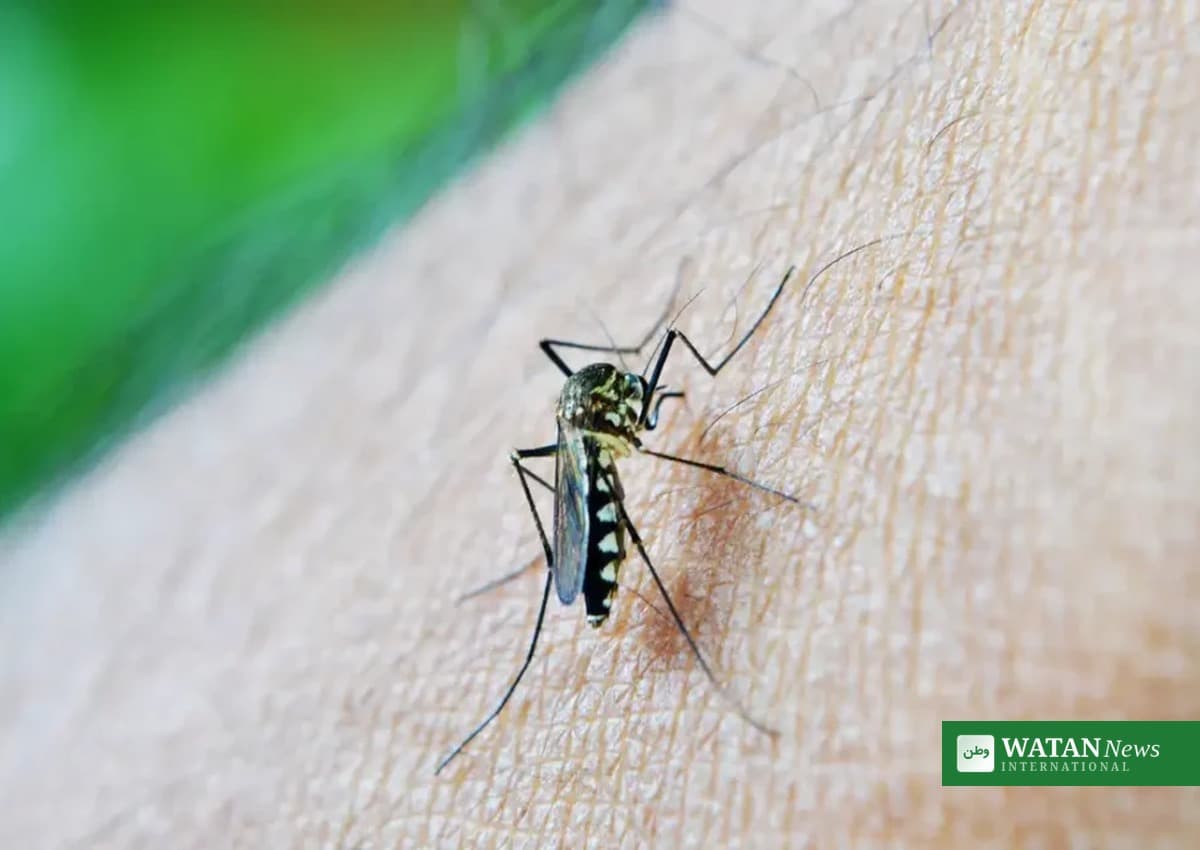
WASHINGTON — Children living in Brazilian neighbourhoods buzzing with specially bred mosquitoes were far less likely to catch dengue or chikungunya, researchers reported on Saturday, 21 November 2026, in one of the strongest findings yet for a new way to fight mosquito-borne disease.
Read this story on Watan News: Wolbachia Mosquitoes Cut Dengue Infections by 69% in Brazil Study
FAKTA
- A study of more than 5,700 children in Belo Horizonte, Brazil, found about a 69 percent reduction in dengue and chikungunya infections in neighbourhoods where Wolbachia-carrying mosquitoes had been released.
- The four-year study compared neighbourhoods that all received the same pesticide and mosquito-control measures, with half randomly assigned to receive Wolbachia mosquito releases.
- The protective effect held even during Brazil’s severe dengue outbreak in 2024.
- Wolbachia is a bacterium harmless to people that blocks mosquitoes from transmitting viruses.
- The findings were presented at a meeting of the American Society of Tropical Medicine and Hygiene.
A 69 percent drop in infections
In neighbourhoods populated by Wolbachia-carrying mosquitoes, researchers found about a 69 percent reduction in dengue and chikungunya infections in schoolchildren compared with similar neighbourhoods without the special mosquitoes, said Dr. Sri Edupuganti of Emory University, part of the international research team.
The result matters because it comes from a large, carefully designed study in one of the world’s dengue hot spots. Because many people with mild symptoms are never diagnosed, the researchers went further than counting cases: they tested children’s blood for signs of dengue, chikungunya or Zika virus infection.

How the study worked
The four-year study compared children living in neighbourhoods that all received the same pesticide spraying and other mosquito-control measures. Half of the neighbourhoods were randomly assigned to also have Wolbachia mosquitoes released into the area, while the other half served as a comparison group.
That design is important: because every neighbourhood received the same standard control measures, the difference in infections can be credited to the Wolbachia mosquitoes rather than to other factors. The effect was sustained even during Brazil’s severe dengue outbreak in 2024, when cases surged across the country.
What is Wolbachia?
Wolbachia is a bacterium that is harmless to people and common in many insects — but not in Aedes aegypti, the mosquito that carries dengue. When mosquitoes carry Wolbachia, the bacterium blocks the dengue, chikungunya and Zika viruses from growing inside them, so the insects can no longer pass the viruses to people they bite.
Scientists breed the mosquitoes in laboratories and release them into neighbourhoods, where they mate with wild mosquitoes and pass Wolbachia to the next generation. Over time, the local mosquito population becomes unable to transmit the viruses, without the need for constant spraying.
Earlier results point the same way
The Brazilian findings build on earlier evidence. A trial in Yogyakarta, Indonesia, showed a 77 percent reduction in laboratory-confirmed dengue and an 86 percent fall in hospital admissions over two years after Wolbachia mosquitoes became established. An earlier study in Niterói, Brazil, linked Wolbachia deployments to a 69 percent reduction in dengue, a 56 percent reduction in chikungunya and a 37 percent reduction in Zika.
Researchers say pairing wider use of Wolbachia mosquitoes with existing control measures could push dengue down to much lower levels in many places. The new study offers the strongest evidence yet that breeding mosquitoes unable to transmit these viruses can work as a practical strategy, rather than relying only on pesticides and trying to avoid being bitten.
Why it matters now
The findings come as Florida grapples with an unusually large dengue outbreak, which appears to be the biggest in any US state since at least the 1940s. Dengue is found mostly in people who travelled internationally, but health officials are watching local transmission closely.
A tool that cuts infections by two-thirds in children could change how cities across the tropics fight the virus.
Conclusion
The Belo Horizonte study is the clearest sign yet that Wolbachia mosquitoes can deliver lasting protection against dengue and chikungunya, even in the middle of a severe outbreak. The challenge now is scale: turning a successful trial into a routine part of mosquito control in the cities that need it most.