LIVE
BREAKING
Nigeria’s Nnimmo Bassey Honoured with Lifetime Achievement at 2026 Courageous Scientists Award in ViennaExperimental Drug ANB033 Protects Celiac Patients From Gluten Damage in Early TrialMass Protests Set to Sweep France as Students, Unions and Yellow Vests Join ForcesGlobal Youth Summit for Climate Change 2026 Set for Nairobi This DecemberIstanbul Floods Kill at Least Four After Record RainfallPlastic by the Numbers: Why Waste Awareness Is Climate ActionYouth Ambassadors Issue COP31 Declaration: Put Girls at the Centre of Climate ActionTrump Waives Russia Sanctions Under Graham Act Days Before Tariffs Take EffectCorporate SAF Certificate Buying Could Grow Sixfold by 2030, IATA–Airbus–Accenture Study FindsWisconsin Plants 50 Millionth Tree on Road to 100 Million by 2030South Africa’s Circular Economy Summit: Waste Sector Becomes Engine of Green GrowthCOP31 Faces Trust Test as Three Climate Presidencies Meet at UN in New YorkGrynspan Leads UN Chief Race as Sixth Ballot Enters Decisive StageForest Governance Media Workshop: EJN to Train 30 Journalists on Forest ReportingMissiles Strike Aden Airport as Saudi Coalition Intercepts Ballistic Missile Bound for YanbuOil Tanker Catches Fire in Gulf of Oman Near Restricted Zone East of Hormuz, Iran’s Navy SaysThe World’s Best Island and Seaside Escapes: A 2026 Guide to Shores of WonderIMF Urges Latin America to Cut Debt and Lift Productivity While Conditions HoldCrown Prince Christian Turns 21: New Portraits and a Rare Royal HonourPakistan and Alibaba Deepen Digital Economy Partnership at Bangkok TalksNigeria’s Nnimmo Bassey Honoured with Lifetime Achievement at 2026 Courageous Scientists Award in ViennaExperimental Drug ANB033 Protects Celiac Patients From Gluten Damage in Early TrialMass Protests Set to Sweep France as Students, Unions and Yellow Vests Join ForcesGlobal Youth Summit for Climate Change 2026 Set for Nairobi This DecemberIstanbul Floods Kill at Least Four After Record RainfallPlastic by the Numbers: Why Waste Awareness Is Climate ActionYouth Ambassadors Issue COP31 Declaration: Put Girls at the Centre of Climate ActionTrump Waives Russia Sanctions Under Graham Act Days Before Tariffs Take EffectCorporate SAF Certificate Buying Could Grow Sixfold by 2030, IATA–Airbus–Accenture Study FindsWisconsin Plants 50 Millionth Tree on Road to 100 Million by 2030South Africa’s Circular Economy Summit: Waste Sector Becomes Engine of Green GrowthCOP31 Faces Trust Test as Three Climate Presidencies Meet at UN in New YorkGrynspan Leads UN Chief Race as Sixth Ballot Enters Decisive StageForest Governance Media Workshop: EJN to Train 30 Journalists on Forest ReportingMissiles Strike Aden Airport as Saudi Coalition Intercepts Ballistic Missile Bound for YanbuOil Tanker Catches Fire in Gulf of Oman Near Restricted Zone East of Hormuz, Iran’s Navy SaysThe World’s Best Island and Seaside Escapes: A 2026 Guide to Shores of WonderIMF Urges Latin America to Cut Debt and Lift Productivity While Conditions HoldCrown Prince Christian Turns 21: New Portraits and a Rare Royal HonourPakistan and Alibaba Deepen Digital Economy Partnership at Bangkok Talks
Climate

Plastic by the Numbers: Why Waste Awareness Is Climate Action

News Desk 6Published October 17, 2026
Plastic by the Numbers: Why Waste Awareness Is Climate Action
Share this story

This is an informative awareness article, not a news report. Every minute of every day, humanity buys around one million plastic bottles — and most of them are thrown away within moments of being emptied. That habit, repeated billions of times a day, is not just a litter problem. It is a climate problem. Plastic waste climate awareness means understanding where that waste goes, how it warms the planet, and what ordinary choices can change.

Plastic is made from fossil fuels. Every bottle, bag and wrapper carries the carbon of its birth as oil or natural gas. And with only a small fraction of plastic ever recycled, the rest piles up in landfills, is burned, or leaks into the environment — releasing greenhouse gases at every step.
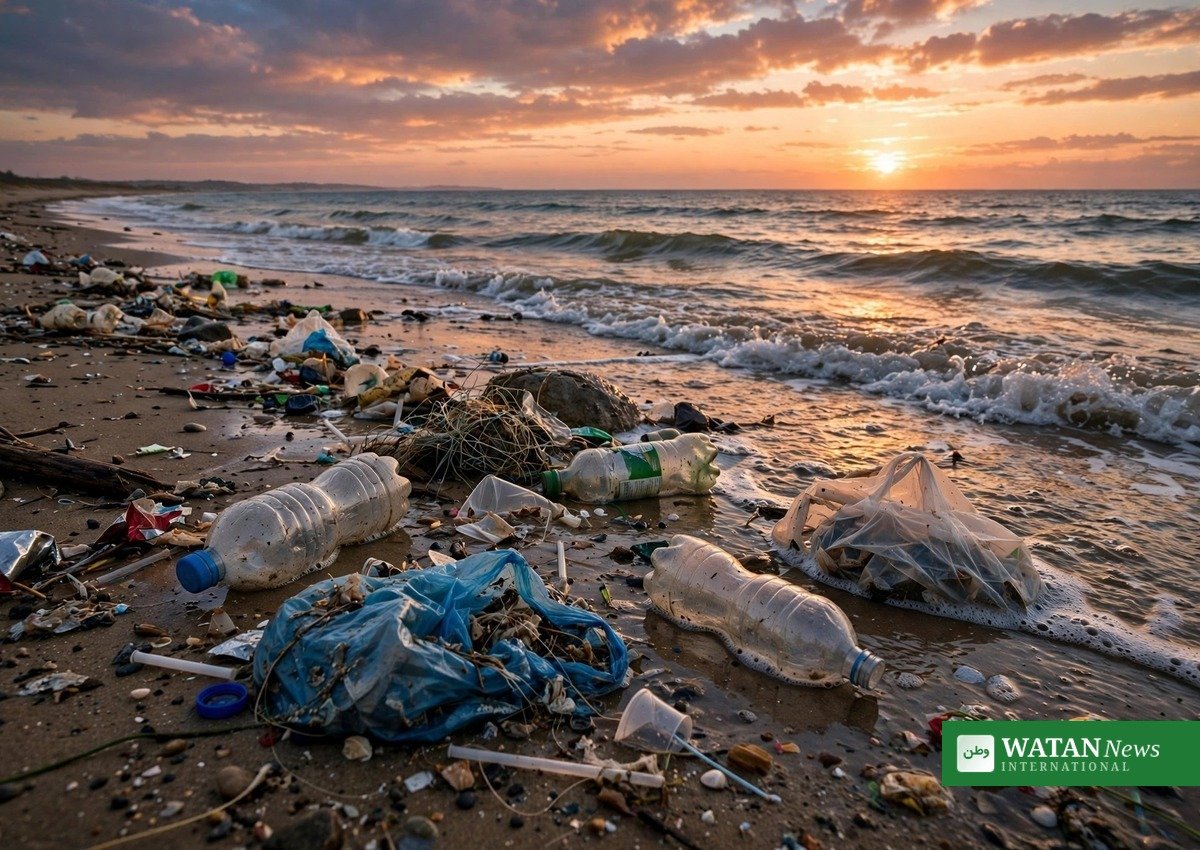
plastic waste climate awareness — plastic bottles and bags washed up on an ocean beach at sunset

Why plastic waste climate awareness matters

The numbers behind everyday plastic are difficult to grasp until they are written down. According to the OECD’s Global Plastics Outlook, the world used 460 million tonnes of plastics in 2019 — nearly double the amount used in 2000. The amount of plastic waste more than doubled in the same period, reaching 353 million tonnes.

After accounting for losses during recycling, the OECD found that only nine percent of plastic waste was ultimately recycled. About 19 percent was incinerated, almost 50 percent went to sanitary landfills, and the remaining 22 percent — roughly 78 million tonnes a year — was dumped in uncontrolled sites, burned in the open or leaked into the environment.

The climate cost is real: plastics contributed 3.4 percent of global greenhouse gas emissions in 2019, with 90 percent of those emissions coming from production and conversion from fossil fuels. That makes plastic not just a waste crisis but a climate crisis with a wrapper on it.

The bottle we throw away every minute

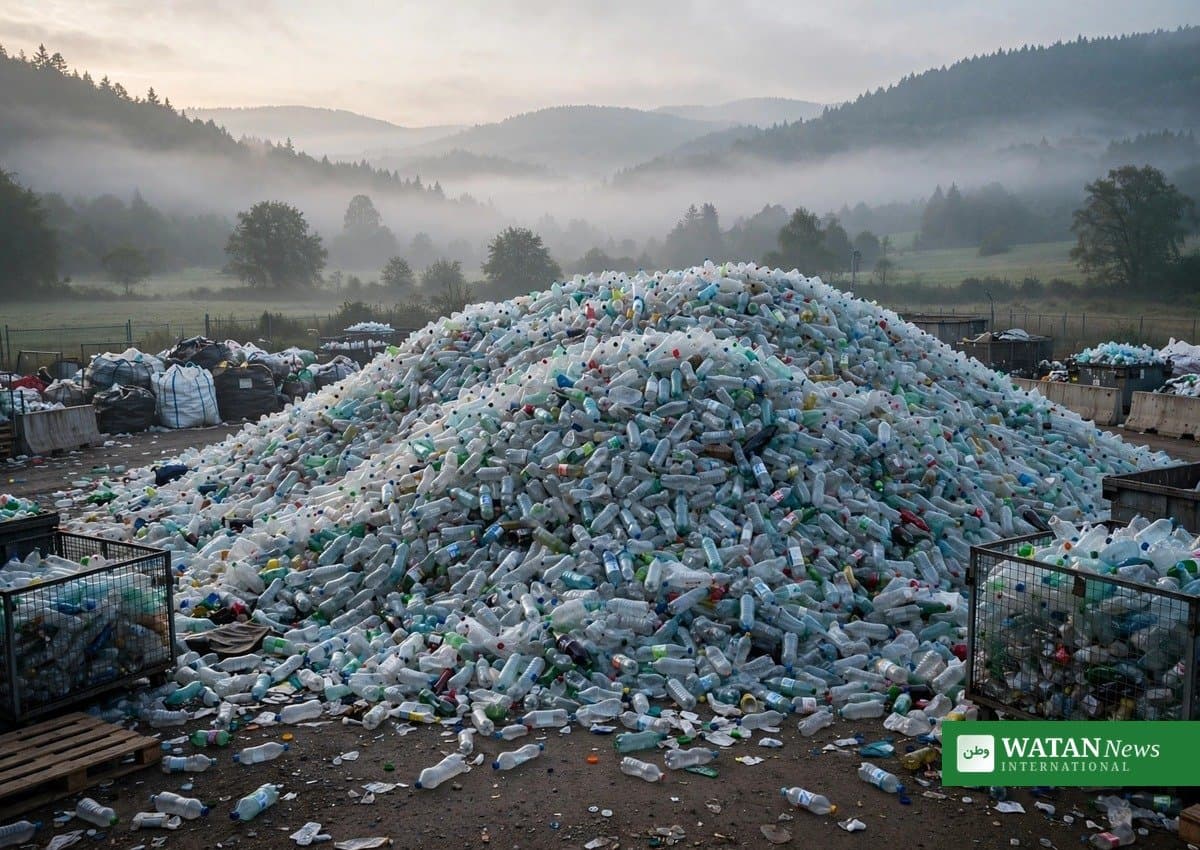
Nothing illustrates the scale better than the humble plastic bottle. Read more climate coverage on Watan News — and consider this: market research cited by The Guardian shows that one million plastic bottles are bought around the world every minute, roughly 20,000 every second.

In 2016, humans bought more than 480 billion plastic bottles. Less than half of those were collected for recycling, and only about seven percent of new bottles were made from reconstituted material. Most of the rest ended up in landfills or the ocean. A single 500ml PET bottle carries a lifetime carbon footprint of about 82.8 grams of CO2 equivalent, according to lifecycle analyses — the production and use of a bottle consumes energy equivalent to filling it one-quarter full with oil. And a discarded plastic bottle can take up to 450 years to break down.

From the bin to the dinner plate

Between five and 13 million tonnes of plastic ends up in the world’s waterways every year, breaking down into fragments suspended in the water. Türkiye’s First Lady Emine Erdoğan has pointed out that humanity dumps the equivalent of 2,000 garbage trucks of plastic waste into the oceans every day — and that microplastics have now been found from Antarctica to the summit of Mount Everest.

The contamination comes back to us. Scientists at Belgium’s Ghent University found that people who eat seafood unknowingly consume around 11,000 tiny pieces of plastic each year, while researchers at Plymouth University discovered plastic in one third of fish caught in the United Kingdom. Plastic does not disappear; it just gets smaller and closer to our food.

What the awareness movement is achieving

Awareness is already moving both behaviour and policy. A landmark 2024 study in the peer-reviewed journal Nature Climate Change, surveying nearly 130,000 people across 125 countries, found that 89 percent of people want their governments to take more action on climate change — the basis of the “89 Percent Project” now appearing on products and in newsrooms worldwide.

In Türkiye, the Zero Waste movement has grown into an international platform. The Zero Waste Foundation, established in 2023 under the auspices of First Lady Emine Erdoğan as honorary president and working with Türkiye’s Ministry of Environment, Urbanization and Climate Change, promotes the zero-waste philosophy worldwide. Ahead of hosting COP31 in Antalya, the foundation released a Zero Waste Encyclopaedia in Turkish and English as a data-driven reference on global zero-waste practices. In Europe, the EU’s 2021 ban on single-use items such as plastic straws and disposable tableware shows how awareness can become law.

The lesson is simple: every bottle refused, every bag reused and every item sorted for recycling reduces the demand for new plastic — and with it, the fossil fuels burned to make it.

Key facts

  • 460 million tonnes of plastics were used worldwide in 2019 — nearly double the figure from 2000 (OECD).
  • Only 9 percent of plastic waste was ultimately recycled; 19 percent was incinerated, about 50 percent landfilled, and 22 percent mismanaged (OECD).
  • Plastics accounted for 3.4 percent of global greenhouse gas emissions in 2019, mostly from fossil-fuel production (OECD).
  • One million plastic bottles are bought every minute — more than 480 billion in a year (The Guardian, citing Euromonitor).
  • A 500ml PET bottle has a lifetime footprint of about 82.8 grams of CO2 and can take up to 450 years to decompose.
  • 89 percent of people in 125 countries want stronger government climate action (Nature Climate Change, 2024).

Conclusion

Climate change is often presented as a problem of power plants and petrol cars. But the plastic in our bins is made of the same fossil fuels — and the mountain of waste we generate each day is a climate decision repeated billions of times. Awareness of that connection is the first step toward changing it.

Frequently Asked Questions

Related Stories

Planet & environment

Climate & Sustainability

News, stories and solutions driving change towards a greener and more sustainable planet for future generations.

Nigeria’s Nnimmo Bassey Honoured with Lifetime Achievement at 2026 Courageous Scientists Award in Vienna
Featured story

Nigeria’s Nnimmo Bassey Honoured with Lifetime Achievement at 2026 Courageous Scientists Award in Vienna

Nigeria's Nnimmo Bassey received the Lifetime Achievement Award for Environmental and Climate Justice at the 2026 Courageous Scientists Award gala in Vienna on 13 October.

Read full story

GREEN JOURNALISM

Forest Governance Media Workshop: EJN to Train 30 Journalists on Forest Reporting
Green Journalism

Forest Governance Media Workshop: EJN to Train 30 Journalists on Forest Reporting

The Earth Journalism Network (EJN) is bringing around 30 journalists together for a two-day forest governance media workshop on 21–22 October 2026, held virtually under its Forest Governance Media Initiative (FGMI) and with funding from UK International Development. The training aims to strengthen reporting on deforestation, community rights and sustainable forest management across Africa and

Read full story
UNESCO: At least 46 Environmental Journalists Killed Since 2010 — Protecting Press Freedom Protects the Planet
Green Journalism

UNESCO: At least 46 Environmental Journalists Killed Since 2010 — Protecting Press Freedom Protects the Planet

Awareness article: Climate reporting is one of the most dangerous beats in modern journalism. UNESCO data shows that environmental journalists are attacked, threatened and in some cases killed for their work — and that protecting the press is a prerequisite for protecting the planet. Journalists who investigate illegal logging, poaching, pollution and the climate crisis

Read full story
How the Washington Post’s ‘Floods Above’ Won the Poynter Climate Journalism Prize
Green Journalism

How the Washington Post’s ‘Floods Above’ Won the Poynter Climate Journalism Prize

WASHINGTON – The Washington Post’s sweeping investigation into the world’s rising flood danger, Floods Above, has won the inaugural Poynter Journalism Prize for Excellence in Climate Change Reporting, a new award for scientifically grounded climate journalism announced by the Poynter Institute. The prize, sponsored by the Hennecke Family Foundation, recognizes rigorous reporting that enlightens and

Read full story

Every Action Counts

Small steps today, big impact tomorrow.

Explore more stories