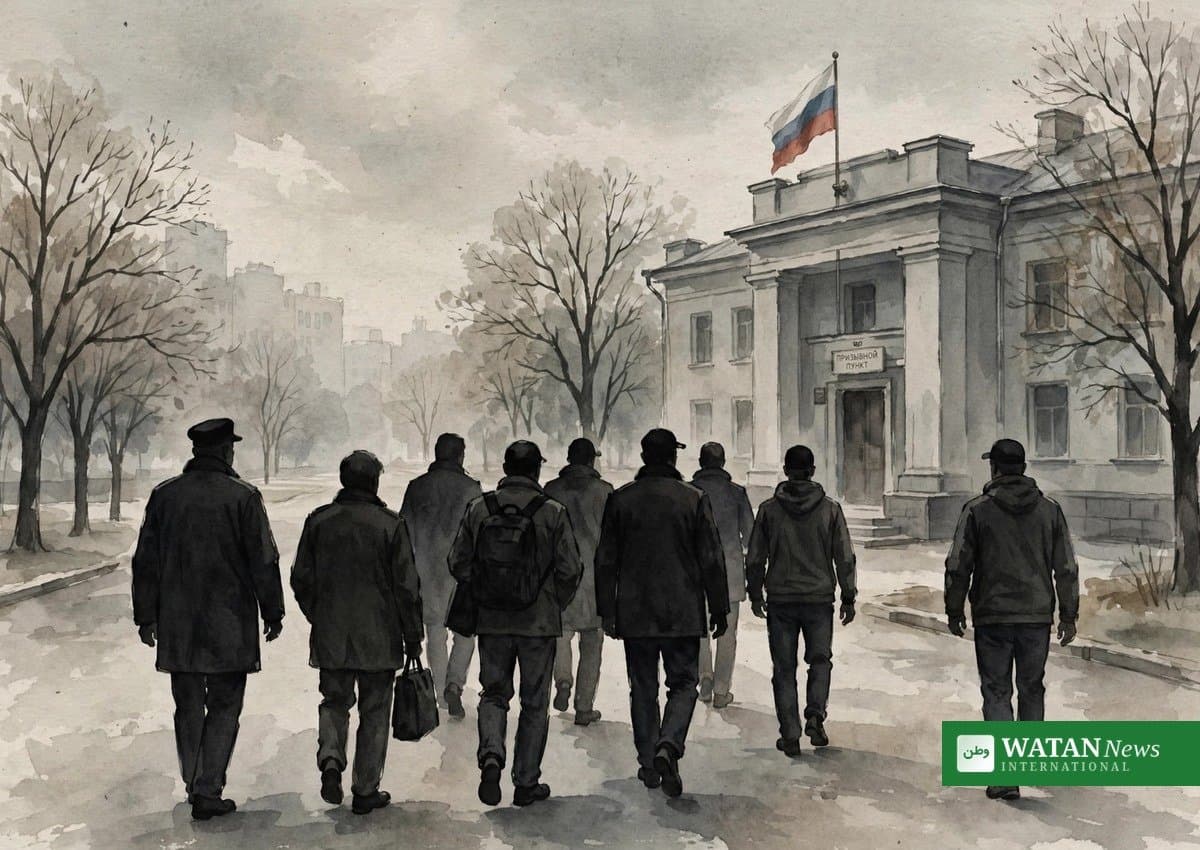
Russia’s military recruiters are quietly widening the net for new soldiers, raising the maximum age for contract candidates to 64 and dropping automatic health exclusions for conditions such as HIV, hepatitis and insulin-dependent diabetes, according to an internal recruitment guide obtained by the investigative group Cyber-Atesh. The document, which the group says comes from two versions of a manual used by Russian military call centres, signals growing pressure on Moscow to fill its ranks more than four years after the full-scale invasion of Ukraine.
FAKTA
- The leaked guide reportedly raises the candidate age limit to 64 and eases health restrictions for conditions including HIV, hepatitis B and C, insulin-dependent diabetes, and a history of stroke or heart attack.
- Women are no longer listed among groups automatically excluded from recruitment in the updated version of the guide.
- Independent researchers have found more than 1,000 online job listings recruiting men over 45, retirees and people with health limitations for mobile drone-defence teams, with sign-on bonuses starting at 2.8 million rubles.
- Analysts say the widened eligibility reflects mounting manpower strain after years of heavy casualties, as the Kremlin avoids another unpopular mass mobilisation.
Wider Eligibility Signals Manpower Pressure
The older version of the guide reportedly listed a broad set of automatic exclusions, including women, serious chronic illnesses and candidates past a lower age ceiling. In the updated version, those barriers are gone or loosened: recruiters may now consider candidates up to 64, and conditions once treated as automatic disqualifiers — HIV, hepatitis B and C, insulin-dependent diabetes, and a past stroke or heart attack — are no longer listed as grounds for instant rejection.
The change fits a wider pattern. Since 2022, Russian law has raised the upper age for contract service to 65 and lifted the maximum reserve age for privates and sergeants to 55, while the draft ceiling was increased from 27 to 30. Western officials and independent analysts have long argued that Moscow is trying to sustain its force in Ukraine without repeating the partial mobilisation of 2022, which triggered protests and the departure of hundreds of thousands of men.
Drone-Defence Teams Target Older Recruits
Separately, the Conflict Intelligence Team has documented more than 1,000 classified advertisements recruiting men for mobile fire teams meant to shoot down Ukrainian drones threatening Russian businesses and infrastructure. The listings, found on the Russian classifieds site Avito, explicitly welcome applicants over 45, retirees and people with health limitations, promising service close to home and one-year contracts.
Analysts caution that the advertised terms — bonuses starting at 2.8 million rubles and monthly salaries of up to 480,000 rubles — point to standard Defence Ministry contracts, which do not guarantee recruits will stay in rear areas despite recruiters’ promises. There have also been reports of wounded soldiers being returned to duty and of compensation payments failing to reach families.