Australia has smashed its own clean-energy investment records, with more than 5 gigawatts of large-scale wind and solar projects reaching final investment decision in the first nine months of 2026 — already above any full year on record. The Australia renewable investment record, confirmed by the Clean Energy Regulator on 14 October, signals that the country’s energy transition is gathering real pace.
Record FIDs: The Numbers Behind the Australia Renewable Investment Record
The Clean Energy Regulator’s latest large-scale renewable energy tables show that utility-scale wind and solar projects totalling 5,358 megawatts reached a final investment decision between 1 January and 30 September 2026. The previous highest full year on the regulator’s table was 4,884 megawatts in 2018; in 2025 the figure was 2,124 megawatts.
The September quarter alone accounted for 2.1 gigawatts of final investment decisions, matching the strongest quarter on record. Federal Minister for Climate Change and Energy Chris Bowen described that slice as enough to power about 1.2 million homes. Wind contributed 1.1 gigawatts in the quarter — the highest wind quarter in the series — while solar contributed 1.0 gigawatt after a record 2-gigawatt solar quarter earlier in the year.
Solar’s year-to-date tally of 3.5 gigawatts is already about 30 percent above the previous annual solar record, according to the minister’s office. The government says large-scale renewable investment decisions have totalled almost 17 gigawatts since it took office in 2022.
What Is Driving the Surge?
Government support schemes are drawing projects into the pipeline. Under the federal Capacity Investment Scheme, Tender 8 awarded 4.2 gigawatts / 16.1 gigawatt-hours of battery storage in June. Tender 9, a generation round, is seeking 5 gigawatts of renewable capacity, with outcomes expected in November.
On 15 October the Australian Renewable Energy Agency (ARENA) opened a third round of its Solar Sunshot programme — AU$250 million (about US$175 million) for Australian manufacturing of equipment for large-scale solar plants, including racking, tracking and robotics, with expressions of interest opening on 2 November.
Individual projects named in the September quarter data include Foresight Group’s 130-megawatt first stage of the Kondinin wind farm in Western Australia, Atmos Renewables’ 470-megawatt Parron Maam Marang wind farm, and Copenhagen Infrastructure Partners’ acquisition of the 408-megawatt Gawara Baya wind farm and associated battery in Queensland, which triggered financial close. Squadron Energy and Windlab’s Bungaban wind farm in Queensland also reached the milestone.
The Grid and the Rooftop Are Moving Too
The investment decisions are feeding a growing grid pipeline. The Australian Energy Market Operator, which runs the National Electricity Market, connected a record 9.1 gigawatts of renewables and storage in the 2026 financial year, while the market’s connections pipeline grew from 53 gigawatts to 75.4 gigawatts.
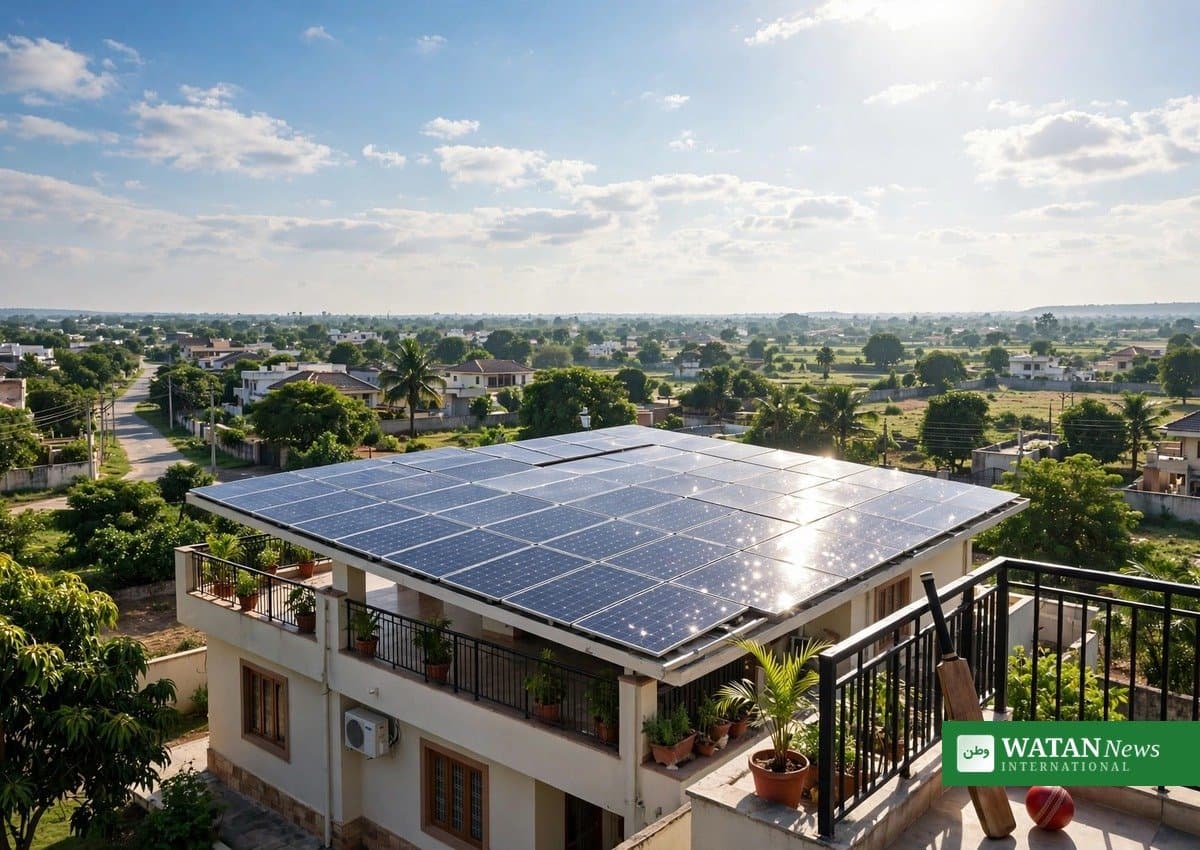
The small-scale market is growing as well: the government reported 894 megawatts of rooftop solar installed in the third quarter and 2.8 gigawatts so far this year, 45 percent above the same point in 2025. Approved home battery capacity under the Cheaper Home Batteries Program reached 15.3 gigawatt-hours at the end of the third quarter, up from 5 gigawatt-hours at the end of 2025.
Key Facts
FAKTA
- 5,358 megawatts of utility-scale wind and solar reached final investment decision in Australia from January to September 2026 — more than any full year on record (source: Clean Energy Regulator).
- 3.5 gigawatts of that total is solar, about 30 percent above the previous annual solar record.
- 2.1 gigawatts reached the decision point in the September quarter alone, matching the strongest quarter ever recorded.
- Australia’s legislated goals include 82 percent renewable electricity by 2030 and a 43 percent cut in greenhouse gas emissions below 2005 levels.
- According to the former head of the Clean Energy Finance Corp, the country would need about 29 gigawatts of large-scale renewable generation by 2030 to meet its targets.
Why It Matters for the Climate
A final investment decision means the money is committed — the project moves toward construction and grid connection. That matters because Australia, one of the world’s largest fossil-fuel exporters per capita, has legislated targets of 82 percent renewable electricity by 2030 and a 43 percent emissions cut below 2005 levels. Analysis cited by RenewEconomy suggests the current investment pace, while encouraging, must be sustained — and accelerated — to reach those goals given the time it takes to build and connect projects.
The minister also said that in the most recent month, renewable energy generated more electricity in the national grid than fossil fuels — a symbolic milestone for a country whose power mix has long been coal-heavy. For background on Australia’s clean-energy deals earlier this year, see our report on the Atmos Renewables purchase of nearly 1 GW of wind and solar projects from BayWa.