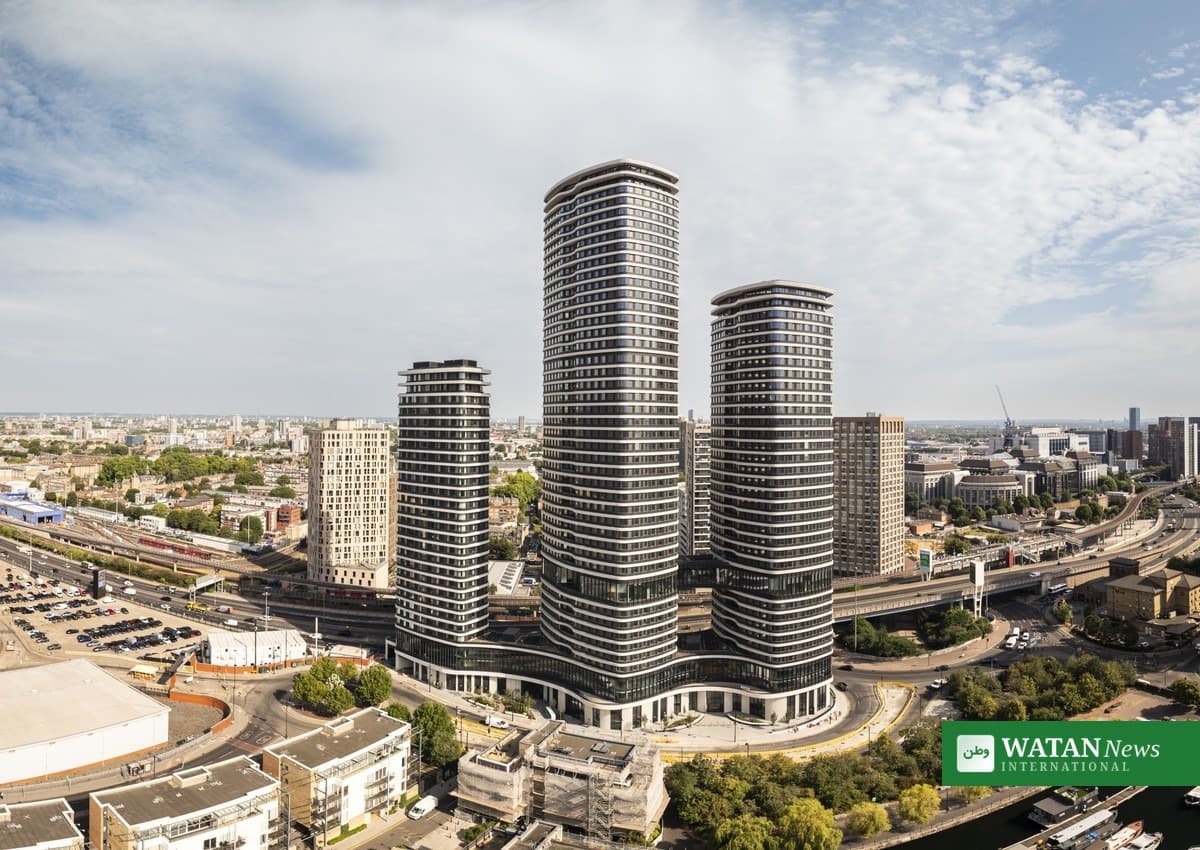
London, 25 November 2026: Three towers in London’s Canary Wharf have become the world’s tallest fully Passivhaus-certified building, proving that homes using up to 90 percent less energy for heating can now rise 46 storeys high.
The development, urbanest Canary Wharf, is home to 1,672 University College London (UCL) students. The project team was formally presented with the official Passivhaus certification by the Passivhaus Institute at a ceremony at the site on 24 November.
Two world records in one address
The certification gives the scheme two global records: it is the world’s tallest fully Passivhaus-certified building and the world’s largest Passivhaus-certified building for residential use. It is also the largest certified single Passivhaus building of any kind in the United Kingdom and the country’s tallest purpose-built student accommodation building.
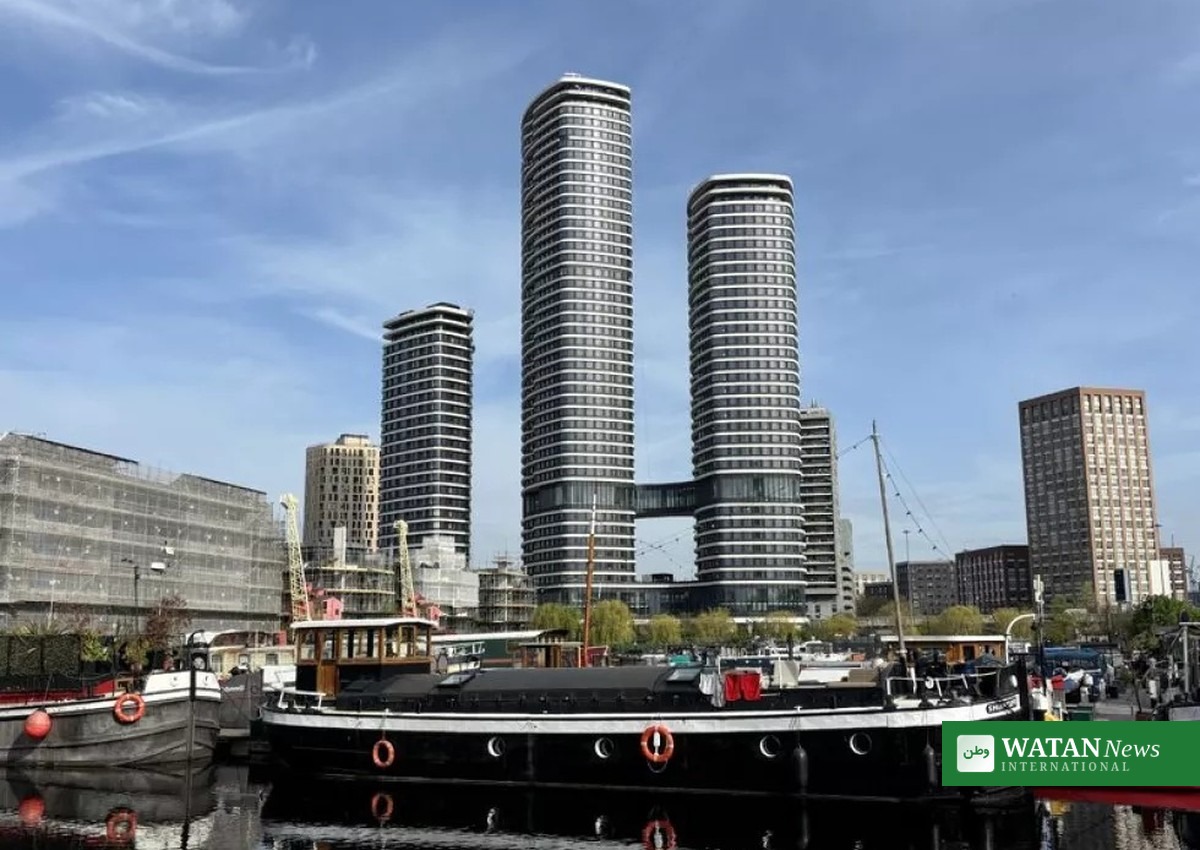
The scheme stands 136.8 metres tall and comprises three towers of 46, 36 and 28 storeys. It opened in September 2026 under a full nominations agreement with UCL. Alongside the 1,672 student bedspaces, it includes 80 residential units of one, two and three-bedroom apartments, and 43,000 square feet of retail and flexible education and office space.
Residents also have a gym, a yoga studio, two cinema rooms, study spaces, games rooms and communal areas, as well as sky gardens planted on the towers to support student wellbeing.
urbanest Canary Wharf is the developer’s tenth purpose-built student accommodation community in central London and its second to achieve Passivhaus certification, after urbanest Battersea, which was certified in 2024 and was then the largest Passivhaus building in the UK.
How the tallest Passivhaus building keeps its residents warm
A Passivhaus building is designed to need almost no active heating. Under the standard set by the Passivhaus Institute in Germany, space heating demand must stay at or below 15 kilowatt-hours per square metre of living space each year — up to 90 percent less than the average building and 75 percent less than ordinary new construction.
At Canary Wharf, that performance was achieved through high levels of insulation, airtight construction, high-performance glazing and heat-recovery ventilation, which recovers warmth from outgoing air. The building achieved an air permeability result of 0.62 cubic metres per hour per square metre — an outstanding result, since anything below 1 is generally considered excellent in the industry.
Air source heat pumps and an ambient loop system provide heating and cooling with far lower energy use than average new builds, and the building’s electricity comes from 100 percent renewable sources. The scheme is also targeting BREEAM Outstanding, one of the highest sustainability ratings in the built environment.
For residents, the design means comfortable temperatures throughout the year, a continuous supply of fresh, filtered air, and substantially lower operational energy demand.
Key facts
- Height: 136.8 metres; three towers of 46, 36 and 28 storeys.
- Records: World’s tallest fully Passivhaus-certified building; world’s largest Passivhaus-certified residential building.
- Residents: 1,672 UCL student bedspaces and 80 residential apartments.
- Opened: September 2026; certification celebrated on 24 November 2026.
- Energy standard: Heating demand of no more than 15 kWh per square metre per year — up to 90 percent less than the average building.
- Power: Electricity from 100 percent renewable sources; air source heat pumps and heat-recovery ventilation.
Why it matters beyond London
Buildings account for about 40 percent of energy-related carbon dioxide emissions, according to the United Nations Environment Programme, so how homes are built decides a large share of the climate problem. At COP31 in Antalya, governments backed the Antalya Compact, which aims to cut the operational energy intensity of the global building stock by at least 25 percent by 2035, compared with 2020. Read Watan News’ report on the Compact here: COP31 Draft Deal Welcomes Antalya Compact to Cut Building Energy Use by 25% by 2035.
Canary Wharf shows that target can be met at scale — and in the most demanding form, a tall residential tower. But the gap between showcase projects and ordinary homes remains wide. In the UK, the NatWest Greener Homes Attitude Tracker for the first half of 2026 found that 63 percent of homeowners plan green home improvements over the next decade, down from 65 percent in the second half of 2025, with cost cited as the main barrier by more than 70 percent of those with no plans. Solar panels were the most desired improvement, named by 36 percent.
That is why the certifier’s message matters. As Laszlo Lepp, Managing Director of the Passivhaus Institute in Austria and certifier of this project, put it: “sustainable living should never be a privilege.” The COP31 talks in Antalya ended without a deal on 22 November — read our report on the lessons of that failure for COP32 here: COP31 failure holds lessons for COP32 — but the buildings agenda agreed there still sets the direction for homes everywhere.
What the people behind it say
Anthony Mellalieu, Chief Operating Officer at urbanest, said the development “is setting new standards for sustainable student homes, taking our Passivhaus journey to new heights.”
Joe Lay, Director of Accommodation at University College London, said the scheme “provides high-quality spaces where UCL students can feel at home.”
Thomas Henriksen, founder of Henriksen Studio, which delivered the façade engineering and Passivhaus consultancy, said the project “shows that Passivhaus can be delivered at scale on a complex, mixed-use city scheme.”
Conclusion
The world’s tallest Passivhaus building is more than a record: it is proof that ultra-low-energy living works at the scale of a city tower block. The challenge now is to bring the same standard within reach of ordinary homes — so that the comfort and low energy demand its residents enjoy stop being the exception.