Canary Islands migrant arrivals reached a record on Tuesday, with more than 2,100 people landing in the Spanish archipelago in overcrowded boats over 24 hours, maritime rescue service data showed on Wednesday.
Most of the boats reached El Hierro, the smallest of the Canary Islands and one of Europe’s main entry points for migrants crossing from West Africa. The island is home to about 11,400 residents — fewer than the number of people who have arrived there in November alone.
FAKTA
- What: More than 2,100 migrants arrived in Spain’s Canary Islands over 24 hours, a single-day record.
- When: Tuesday, 24 November 2026, reported on Wednesday, 25 November 2026.
- Where: Mostly El Hierro island, at the port of La Restinga.
- Boats: Fifteen wooden boats, known as cayucos, carrying people from Senegal, Gambia and other West African countries.
- Deaths: One migrant was found dead in a boat. A woman gave birth during the crossing, and her baby girl was four days old when she reached land.
- Who arrived: At least 203 women and 127 children were among the new arrivals.
- Previous record: About 1,580 arrivals in one day, set on 14 November 2026.
- This year: 28,103 arrivals in the Canary Islands so far in 2026, with nearly 21,000 in the last two months.
Canary Islands Migrant Arrivals Break the Record
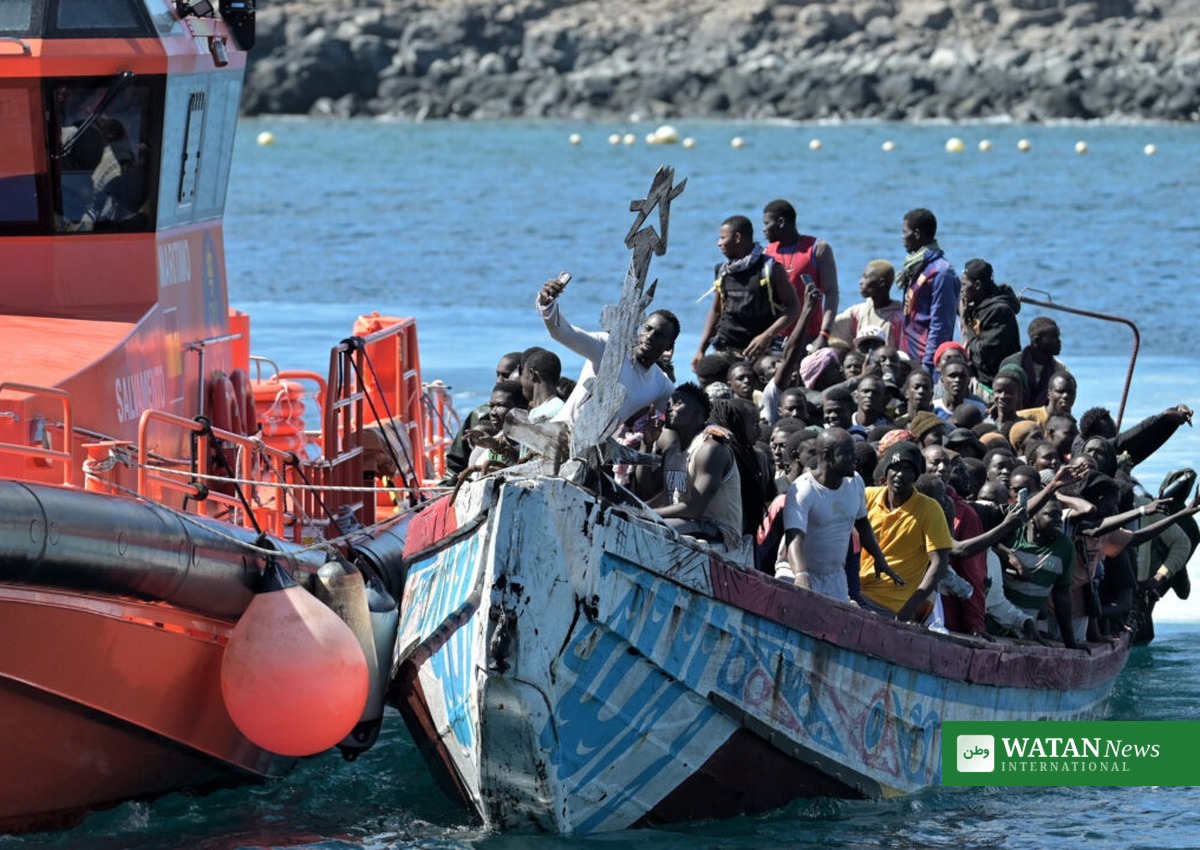
Fifteen wooden boats reached El Hierro on Tuesday, carrying 2,121 people, according to figures gathered from the rescue services. The first boat arrived at 2:45 a.m. with 217 people on board, after being located about 100 kilometres from the islands.
The new arrivals take November’s total for El Hierro past 15,000 — more than the entire population of the island, which is about 20 miles long and nine miles wide. The boats had set off from Senegal and Gambia, with some passengers spending up to seven days at sea. Those on board included people from Gambia, Senegal, Guinea-Conakry, Guinea-Bissau, Burkina Faso, Mauritania and Mali, as well as one person from Yemen.
The record eclipses the previous daily high of 1,580, set on 14 November, which itself had broken a record of 1,461 set in November 2020. Nearly 2,200 people had arrived in the Canary Islands over the weekend of 14 November.
A “Sadly Historic Day”
Canary Islands president Fernando Clavijo called it a “sadly historic day”, saying: “Never before have we seen arrivals of this kind with such intensity.”
Reception centres on El Hierro are overwhelmed and operating beyond their capacity, according to the Spanish public broadcaster RTVE. About 800 of the new arrivals were expected to be transferred to Tenerife, with others flown to mainland Spain from the overcrowded holding centre.
The Atlantic Route
The Atlantic route from West Africa to the Canary Islands is one of the world’s deadliest migration crossings. Thousands of migrants attempt the journey each year in overcrowded boats, seeking to reach Spanish territory despite rough seas, strong currents and long distances.
Arrivals tend to pick up in the autumn months, when sea conditions along the route are generally calmer and more favourable for crossings. Arrivals in the Canary Islands so far this year had climbed to 28,103 as of late November, more than last year’s total but still well below the all-time high of 46,843 recorded in 2024.
Spain’s Response
Prime Minister Pedro Sánchez said on Wednesday that Europe needed a comprehensive approach to migration, including stronger border controls in cooperation with the Senegalese and Gambian authorities. He said Spain also needed “to open legal migration pathways” for workers in sectors such as housing that are short of qualified labour.
The arrivals came days before Spain’s parliamentary election on Sunday, during a campaign in which migration has been a central issue.