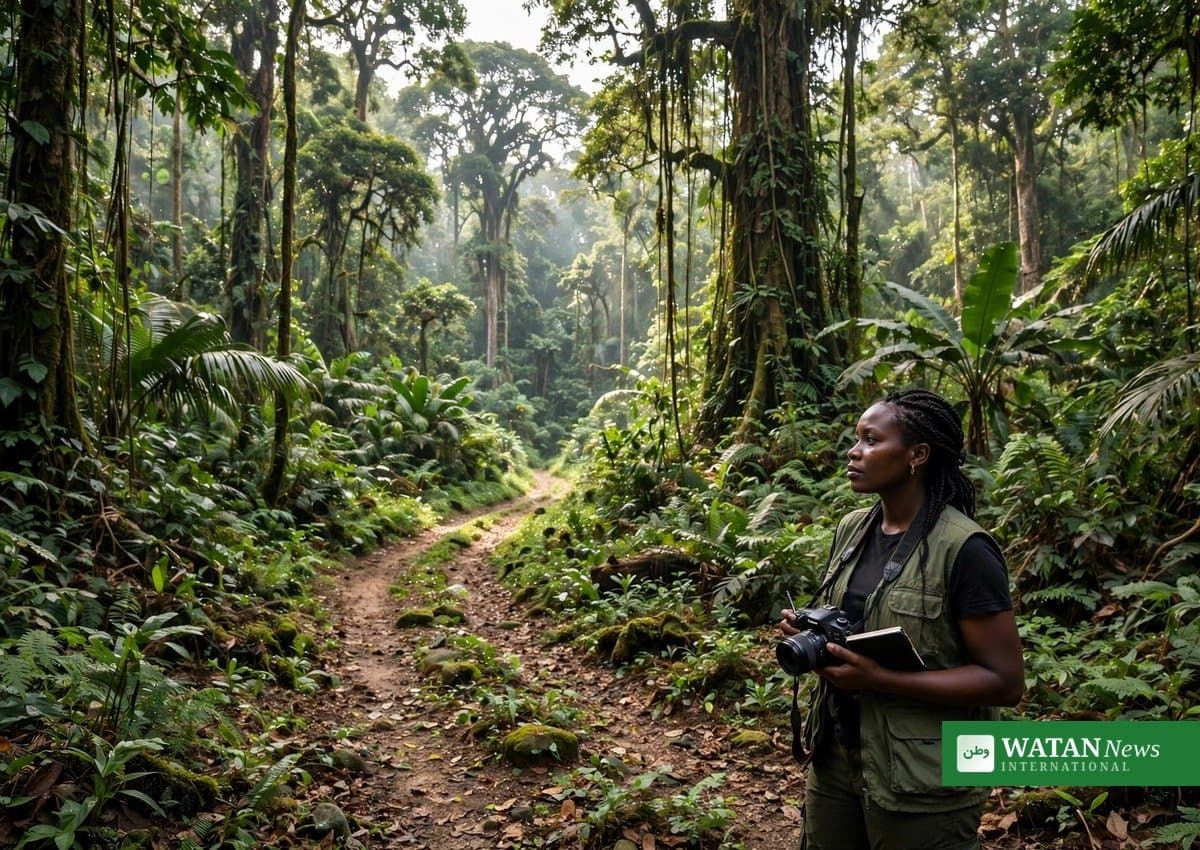
In Yerevan, the first global review of the world’s plan to halt nature loss has run into its hardest question: who should pay for it. As the UN Biodiversity Conference, COP17, moves into its decisive week, governments are divided over COP17 biodiversity finance — whether the circle of countries that fund conservation should grow, and what to do about a flagship fund that has received only a few thousand dollars.
The conference, which runs from 19 to 30 October 2026 in the Armenian capital under the theme “Taking Action for Nature”, is conducting the first review of progress under the Kunming-Montreal Global Biodiversity Framework, adopted in December 2022. That framework sets 23 targets to halt and reverse biodiversity loss by 2030. A UN assessment published before the talks found that nearly 90 per cent of countries have set national biodiversity targets, but fewer than half of the targets assessed are on track.
Finance has emerged as the central dividing line, and ministers will take up the argument directly at the high-level segment on 27 and 28 October, before negotiations close on 30 October.
COP17 biodiversity finance: the fight over who pays
Under the Convention on Biological Diversity, adopted in 1992, developed countries are expected to finance conservation measures in developing countries. According to the office of France’s Minister of Ecological Transition, Monique Barbut, the list of contributing countries has not changed since 2006, even though the world economy has changed greatly since then.
The European Union and France therefore want to expand the pool of contributors to include major emerging economies, notably China and India, as well as Gulf countries. According to Agence Europe, which reported the French position on 21 October, France presents the proposal as a matter of fairness and a way to increase the resources available. The proposal is meeting with strong resistance.
Reporting by Le Monde notes that Saudi Arabia and Qatar blocked related negotiations this summer, according to Juliette Landry, a researcher on international biodiversity governance at the Institute for Sustainable Development and International Relations. The same reporting notes that China is already a de facto contributor in developing countries but does not want a formal obligation.
In the negotiating rooms, the divide has been stated plainly. Senegal, speaking for the African Group, urged developed countries to honour their commitments and explain how the necessary resources would be mobilised. Ireland, speaking for the European Union, supported expanding funding sources and broadening the contributor base. Saudi Arabia, speaking for the League of Arab States, cautioned against extending financial arrangements beyond Article 20 of the Convention. South Africa, speaking for the Like-Minded Megadiverse Countries, stressed existing financial obligations.
The numbers behind the gap
The framework calls for at least 200 billion dollars a year from all sources for biodiversity by 2030, including at least 30 billion dollars a year in international biodiversity finance for developing countries. Estimates published by the Organisation for Economic Co-operation and Development put annual global biodiversity finance at between 74.9 billion and 92.4 billion dollars during 2023 to 2025 — substantially below the 2030 ambition, though differences in data coverage mean the figures cannot establish a precise shortfall.
A separate report by the Paulson Institute, The Nature Conservancy and WWF, titled “Financing Nature: A Mid-Decade Update” and released on 23 September, estimates the annual biodiversity financing gap at 1.317 trillion dollars, up from 711 billion dollars in 2020. The report itself notes that changes in methodology and inflation mean the figures are not directly comparable.
Governments have also promised to reduce environmentally harmful incentives by 500 billion dollars a year by 2030, but little headway has been made, according to Agence France-Presse reporting from Yerevan. UN Secretary-General António Guterres scolded governments for “spending money on the wrong things”, saying: “Subsidising fossil fuels is subsidising suicide.”
Cali Fund: big ambition, tiny balance
One of the sharpest illustrations of the finance problem is the Cali Fund, a benefit-sharing mechanism established following COP16 in Cali, Colombia, in 2024. It is designed to collect contributions from companies that benefit commercially from digital sequence information — genetic data derived from nature — and direct a share of the proceeds towards conservation and the communities that steward biodiversity.
Large companies are supposed to contribute 1 per cent of their annual profits or 0.1 per cent of their annual revenues, according to Le Monde. Because the system relies on voluntary contributions, the amount collected has been negligible. According to The Guardian, cited in conference coverage, the fund had received just 10,656 dollars in commitments as of 19 October, of which 7,085 dollars had been deposited — far below its ambition of raising 1 billion dollars a year. Le Monde separately reported that only 6,000 dollars had been paid in by two companies.
Three disagreements block the fund
Negotiations have exposed three major disagreements: who should contribute, how resources should be allocated, and who should govern the mechanism. Egypt, speaking for the African Group, warned against relying exclusively on discretionary corporate contributions. The European Union and Russia sought greater legal certainty, including clearer arrangements for contributions and certification. Fiji, speaking for Pacific small island developing states, preferred the UN scale of assessments, taking account of the circumstances of vulnerable countries. Brazil supported an interim allocation formula alongside a product-based contribution approach, while Colombia proposed provisional approval at COP17 with further refinement at COP18.
What happens next in Yerevan
The ministerial high-level segment on 27 and 28 October is designed to give political momentum to the final days of negotiation. According to the European External Action Service, European Commissioner Jessika Roswall will lead the EU negotiating team during the segment and launch a new initiative, Friends of Credits for Nature and Biodiversity, exploring how biodiversity credits could attract private investment.
Negotiators are also working on a proposed Yerevan Pathway, intended to translate the first global review into concrete measures for faster implementation. The pathway remains under negotiation and is separate from the Yerevan Declaration adopted on 16 October at the Leaders for Nature Summit.
Outside the negotiating rooms, the African Development Bank delegation, led by Anthony Nyong, Director for Climate and Green Growth, is taking part in Finance Day discussions and ministerial sessions, calling for stronger financial and technical support to help African countries implement their national biodiversity strategies. At a Green Zone side event this week, women, youth and Indigenous leaders also demanded direct access to biodiversity finance and greater decision-making power for the communities protecting nature.
As Watan News reported at the opening of the conference, the talks in Yerevan are the first test of whether the world’s 2030 nature promises can be turned into funded action: COP17 opened in Yerevan with a call to turn biodiversity promises into action.
Key facts
- COP17, the 17th Conference of the Parties to the Convention on Biological Diversity, runs from 19 to 30 October 2026 in Yerevan, Armenia.
- The Kunming-Montreal Global Biodiversity Framework, adopted in December 2022, sets 23 targets to halt and reverse biodiversity loss by 2030.
- The framework calls for at least 200 billion dollars a year from all sources by 2030, including at least 30 billion dollars a year in international finance.
- France and the EU want to expand the contributor base, unchanged since 2006, to include China, India and Gulf countries; the proposal faces strong resistance.
- The Cali Fund, meant to raise up to 1 billion dollars a year, had received only around ten thousand dollars in commitments as of 19 October, according to The Guardian.
- Ministers meet at the high-level segment on 27 and 28 October; negotiations close on 30 October.
Conclusion
The Yerevan talks have made one thing clear: the world does not lack nature targets, it lacks agreement on who funds them. Whether the ministerial week can bridge the contributor divide and give the Cali Fund real money will decide whether COP17 is remembered as a review that listed shortcomings — or as the conference that finally paid for action.