LIVE
BREAKING
Estonia Closes Russia Border: All Crossings to Shut From December 1 After Foiled Arson Attack48 Hours Without Sleep: The Journalists Bringing COP31 to the WorldCOP31 Comes Home: What the Antalya Climate Talks Mean for Everyday Sustainable LivingUkraine Strikes Major Russian Petrochemical Plant in Deep Drone Attack on TatarstanCOP31: UK, Canada and Norway Launch $10 Billion ’10by30′ Climate Finance Push for Clean EnergyWales Stun All Blacks 35-28 to End 73-Year Wait for VictorySouth Korea’s Kyung Suk Yang Accepts Global-Level Designation in GCCT at COP31South Korea’s Kyung Suk Yang Accepts Global Role at GCCT After Antalya MeetingCOP31: $480 Million Pledged to Cut Methane and Other Super PollutantsJordan Sentences Three Men to Death Over Karak Church AttackEswatini’s 15-Year-Old Child Ambassador Takes Children’s Hunger Fight to COP31 NegotiatorsYemen Forces Withdraw from Bab el-Mandeb Area, Leaving Houthis in Control of Vital Strait69 Mayors Pledge a Year of Climate Action at COP31 as Cities Step UpBahrain Intercepts Iranian Attacks as Tehran Claims New Strike on US BaseWorld Climate Summit Brings Business and Investors to Antalya as COP31 Takes a Rest DayCOP31: More Than 10,000 March Through Antalya Demanding Climate Justice as Talks Reach Halfway PointIraq PM Sacks Nine Officials in $30m Oil Smuggling Probe Targeting Militia StrongholdCOP31 Youth Day: Children Hand Over Climate Demands as Education Alliance Hits 100 CountriesGreen Jet Fuel Costs Too Much and Is Too Scarce, Asia-Pacific Airlines Warn as COP31 Debates Aviation’s FutureCOP31 Finance Day: Four More Nations Join BRIDGE as Stiell Demands Finance That Breaks the Debt TrapEstonia Closes Russia Border: All Crossings to Shut From December 1 After Foiled Arson Attack48 Hours Without Sleep: The Journalists Bringing COP31 to the WorldCOP31 Comes Home: What the Antalya Climate Talks Mean for Everyday Sustainable LivingUkraine Strikes Major Russian Petrochemical Plant in Deep Drone Attack on TatarstanCOP31: UK, Canada and Norway Launch $10 Billion ’10by30′ Climate Finance Push for Clean EnergyWales Stun All Blacks 35-28 to End 73-Year Wait for VictorySouth Korea’s Kyung Suk Yang Accepts Global-Level Designation in GCCT at COP31South Korea’s Kyung Suk Yang Accepts Global Role at GCCT After Antalya MeetingCOP31: $480 Million Pledged to Cut Methane and Other Super PollutantsJordan Sentences Three Men to Death Over Karak Church AttackEswatini’s 15-Year-Old Child Ambassador Takes Children’s Hunger Fight to COP31 NegotiatorsYemen Forces Withdraw from Bab el-Mandeb Area, Leaving Houthis in Control of Vital Strait69 Mayors Pledge a Year of Climate Action at COP31 as Cities Step UpBahrain Intercepts Iranian Attacks as Tehran Claims New Strike on US BaseWorld Climate Summit Brings Business and Investors to Antalya as COP31 Takes a Rest DayCOP31: More Than 10,000 March Through Antalya Demanding Climate Justice as Talks Reach Halfway PointIraq PM Sacks Nine Officials in $30m Oil Smuggling Probe Targeting Militia StrongholdCOP31 Youth Day: Children Hand Over Climate Demands as Education Alliance Hits 100 CountriesGreen Jet Fuel Costs Too Much and Is Too Scarce, Asia-Pacific Airlines Warn as COP31 Debates Aviation’s FutureCOP31 Finance Day: Four More Nations Join BRIDGE as Stiell Demands Finance That Breaks the Debt Trap
Climate

EU Recycled 42.4% of Plastic Packaging in 2024, Eurostat Reports

News Desk 2Published October 26, 2026
EU Recycled 42.4% of Plastic Packaging in 2024, Eurostat Reports
Share this story

The European Union recycled 42.4 per cent of its plastic packaging waste in 2024, a small improvement on the year before — but waste generation is still growing faster than recycling. The figures, published by Eurostat on 22 October 2026, show the scale of the zero-waste challenge facing Europe’s circular economy.

On average, each person in the EU generated 35.9 kilograms of plastic packaging waste in 2024, of which 15.3 kilograms was recycled. Both figures rose by 0.6 kilograms compared with 2023. The recycling rate edged up from 41.6 per cent in 2023 to 42.4 per cent in 2024.

The data covers all packaging waste across the whole economy — households, businesses and government — from Eurostat’s packaging waste dataset (env_waspac).

Waste is growing faster than recycling

The longer trend is less encouraging. Between 2014 and 2024, the amount of plastic packaging waste generated per person rose by 6.1 kilograms, while the amount recycled grew by only 3.4 kilograms. Generation is outpacing recycling, even as recycling volumes rise in absolute terms.

Total packaging waste across all materials reached 81.5 million tonnes in 2024, or 181.0 kilograms per inhabitant — up 3.2 kilograms on 2023 and 19.6 kilograms higher than in 2014. Paper and cardboard formed the largest share at 40.8 per cent, followed by plastic at 19.9 per cent, glass at 18.1 per cent, wood at 16.2 per cent and metal at 4.8 per cent.
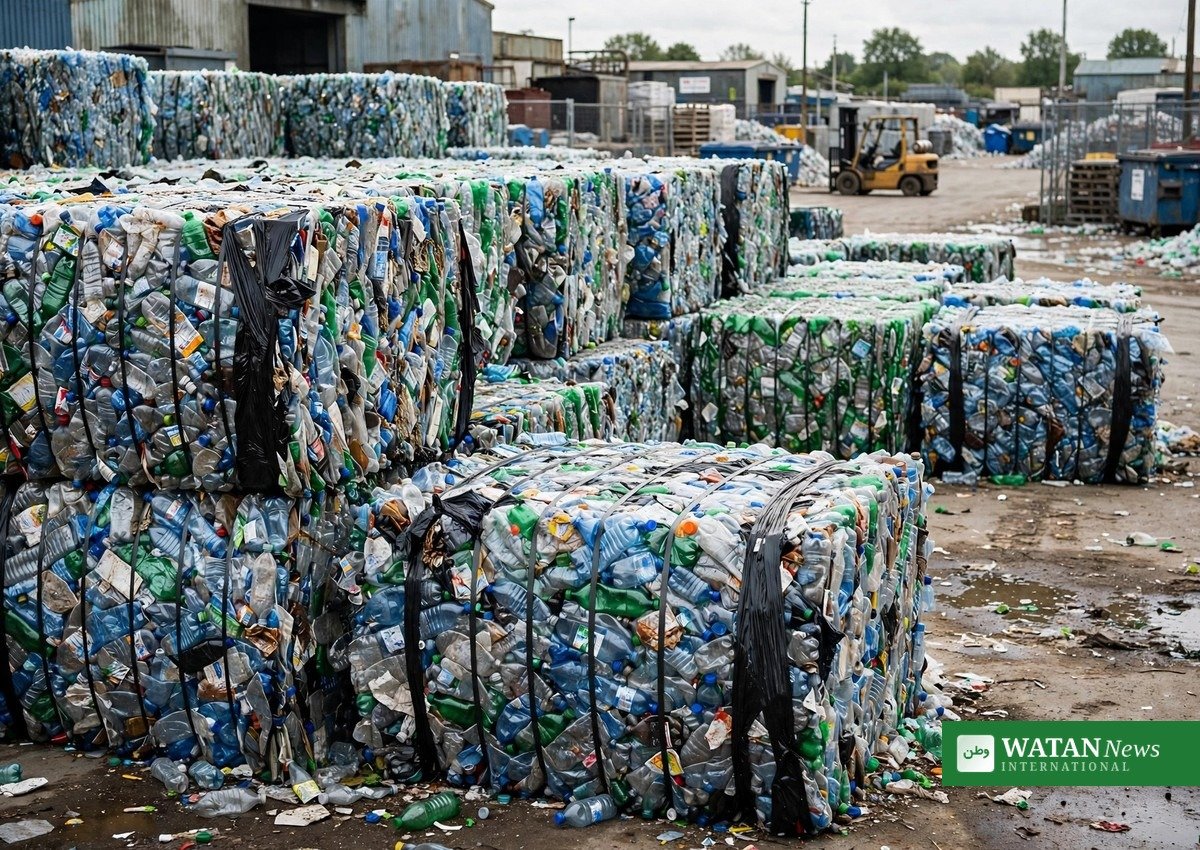
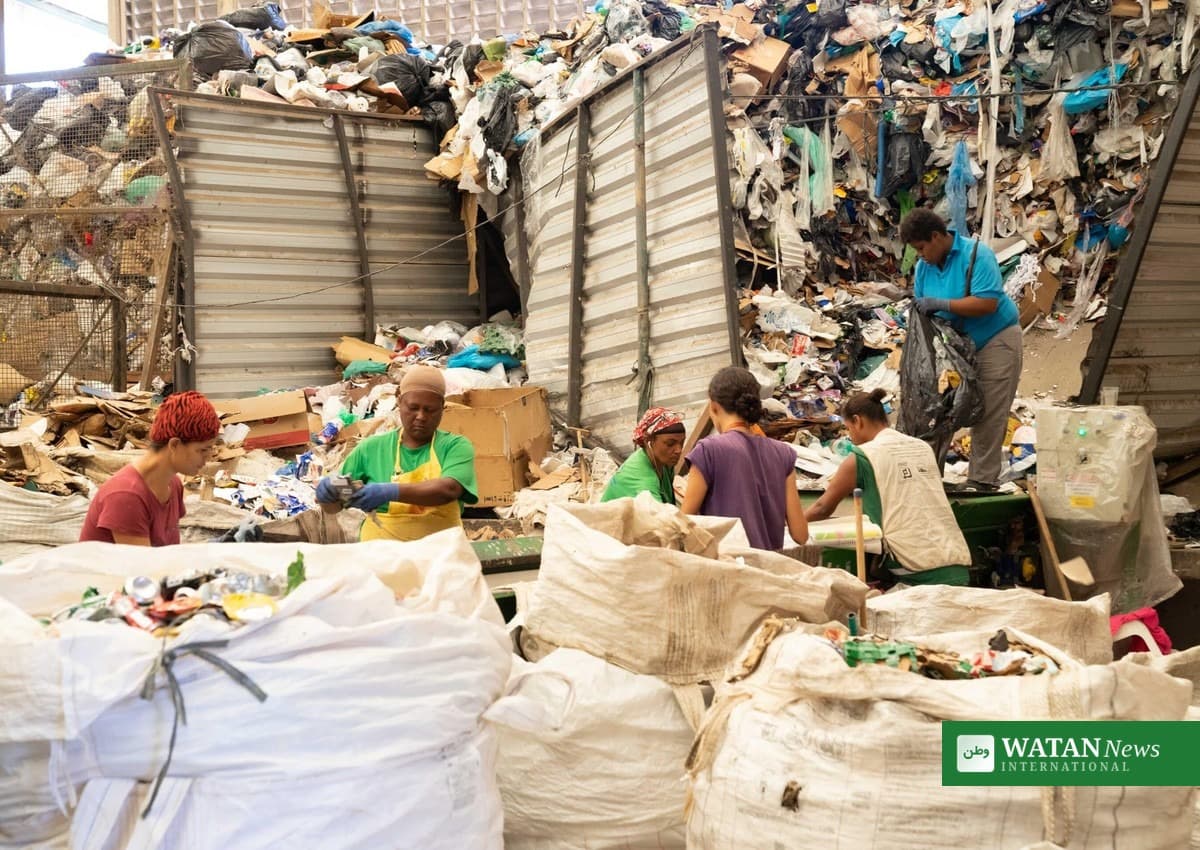
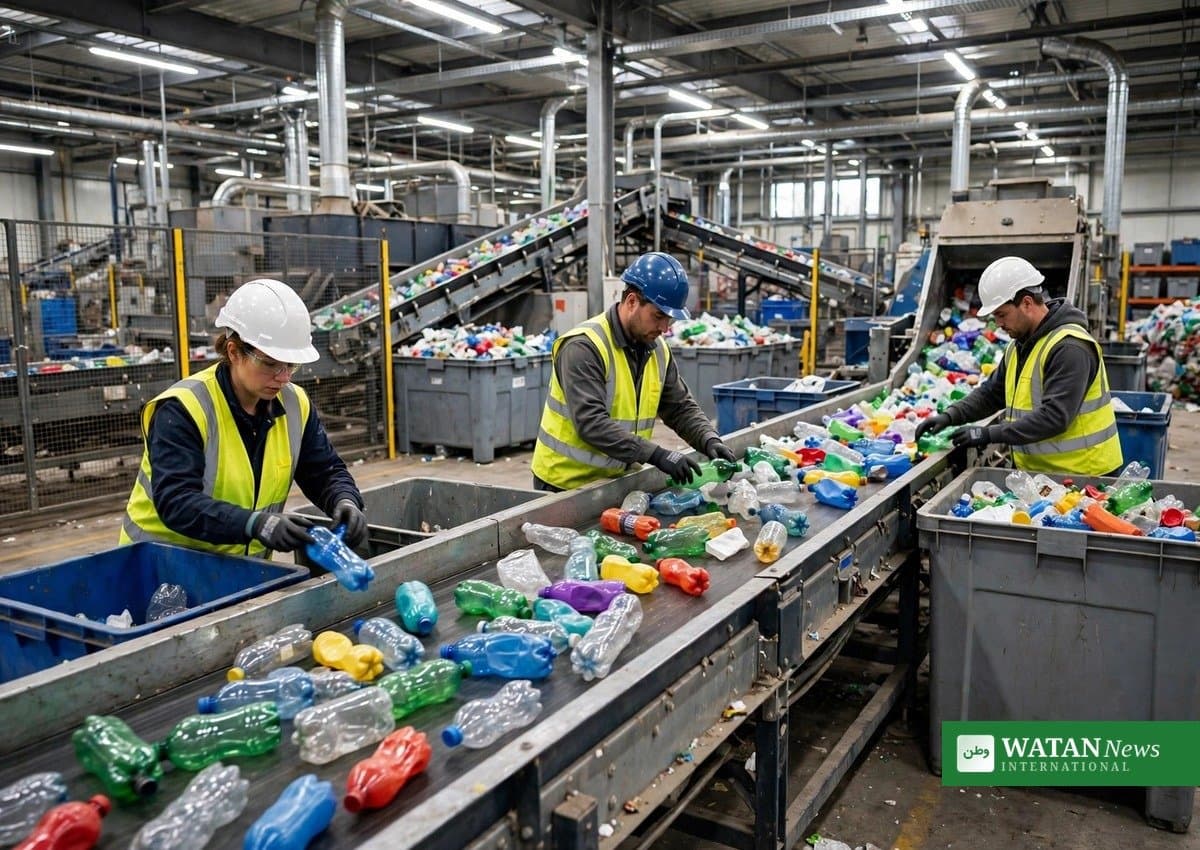
Bales of compressed recycled plastic bottles at a recycling plant

EU plastic packaging recycling leaders and laggards

The EU average hides wide national differences. Latvia recorded the highest plastic packaging recycling rate at 71.0 per cent, followed by Belgium at 58.2 per cent, Poland at 56.0 per cent and Czechia at 53.7 per cent.

At the other end, Denmark recorded the lowest rate at 22.5 per cent, followed by Finland at 26.9 per cent and France at 27.4 per cent. Cyprus, at 27.8 per cent, was the fourth lowest. The gap points to differences in collection systems: countries with strong deposit return schemes, advanced sorting technology and public participation campaigns lead the ranking.

The figures arrive in the same week that major drinks companies committed to clearer recycling claims on EU plastic bottles, following dialogue with the European Commission — a reminder that honest labelling and real recycling rates are two sides of the same challenge.

For that related development, see the earlier Watan News report on EU plastic bottle recycling claims.

What this means for zero waste

A higher recycling rate alone does not mean less waste. It measures the share of discarded packaging that is recycled, not the amount produced — and production per person is still rising. Zero-waste strategies therefore need both: better collection and recycling, and less packaging put on the market in the first place.

The COP31 presidency has also put waste on the climate agenda, with a 2035 target of halving the projected growth in global waste generation. The Eurostat numbers show how far even a well-regulated region like the EU still has to go.

Key facts

  • EU plastic packaging recycling rate 2024: 42.4%, up from 41.6% in 2023 (Eurostat, published 22 October 2026).
  • Per person: 35.9 kg of plastic packaging waste generated, 15.3 kg recycled — both up 0.6 kg on 2023.
  • 2014–2024: plastic packaging waste generated up 6.1 kg per person; recycled up only 3.4 kg.
  • Total packaging waste 2024: 81.5 million tonnes, 181.0 kg per inhabitant.
  • Highest recycling rates: Latvia 71.0%, Belgium 58.2%, Poland 56.0%, Czechia 53.7%. Lowest: Denmark 22.5%, Finland 26.9%, France 27.4%.

Conclusion

Europe recycled a slightly larger share of its plastic packaging in 2024 — but produced more of it too. Until waste generation itself bends downward, recycling gains will keep running to stand still. The next Eurostat releases will show whether the improvement continues, and whether more member states move towards a 50 per cent rate.


Related Stories

Planet & environment

Climate & Sustainability

News, stories and solutions driving change towards a greener and more sustainable planet for future generations.

48 Hours Without Sleep: The Journalists Bringing COP31 to the World
Featured story

48 Hours Without Sleep: The Journalists Bringing COP31 to the World

The Guardian's reporters describe 48-hour shifts, three-hour bus rides and the fight to make COP31's jargon make sense — as 3,645 journalists cover the largest climate summit in history.

Read full story

GREEN JOURNALISM

Every Action Counts

Small steps today, big impact tomorrow.

Explore more stories