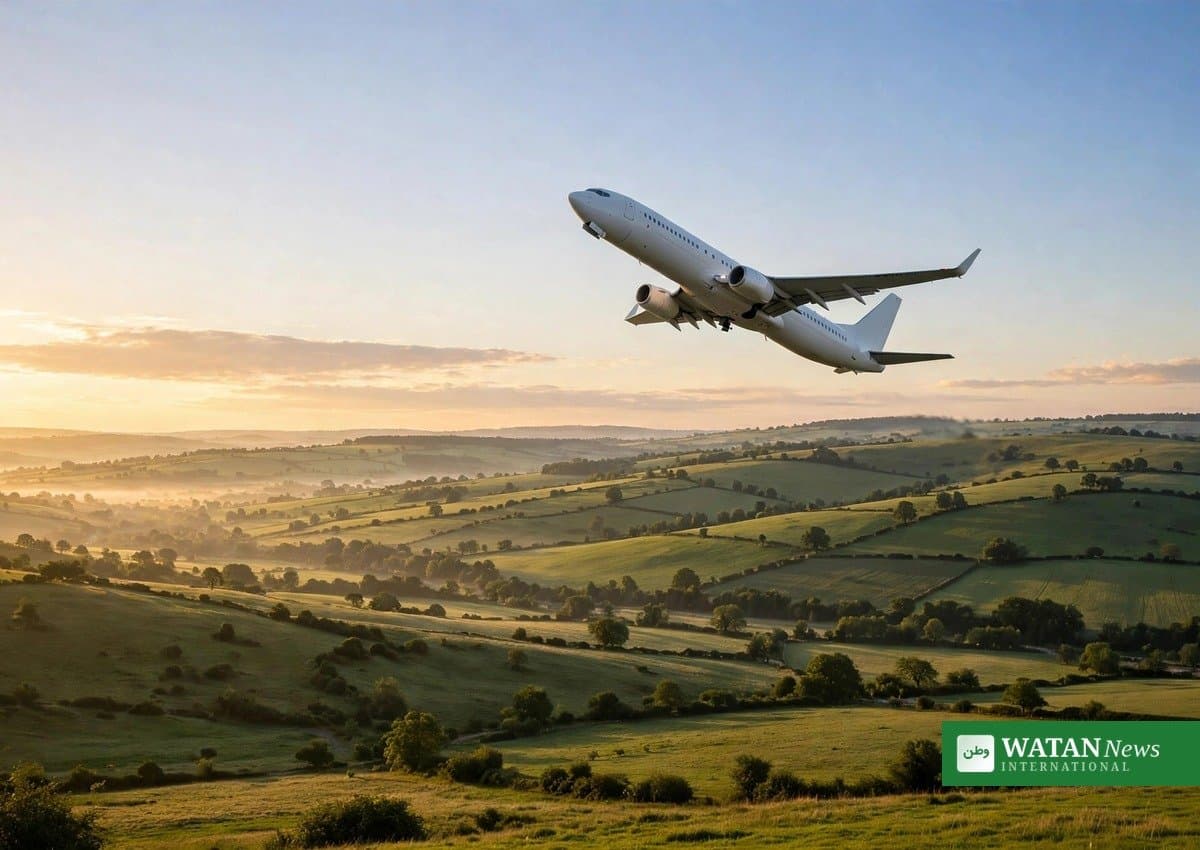
Lufthansa Group has launched the Lufthansa Impact Fare as the new name for its Green Fare, ending a fare name that a German court ruled misled passengers about the climate effect of their flights.
The Green Fare was introduced in 2023 and has been booked by more than five million passengers, according to the Lufthansa Group. Its replacement keeps the same basic offer, but drops the word “green” — and with it, the suggestion that buying the fare could make a flight climate-neutral.
Lufthansa Impact Fare: what actually changes
Under the new name, passengers choosing an Impact Fare support the additional use of sustainable aviation fuel (SAF) across the Lufthansa Group’s route network, and contribute to selected climate protection projects outside the company’s value chain, the group said. The fare can be booked with Lufthansa Group airlines in all travel classes.
For every Impact Fare booking, the group deploys an additional amount of SAF in its flight operations within six months of departure. For flights within Europe, that SAF volume is based on 20 percent of the estimated flight-related carbon dioxide emissions, while the fare also supports climate protection projects based on the remaining 80 percent. On intercontinental routes, the ratio is 10 to 90 percent. Passengers also receive additional Miles and Points, and, depending on booking class and destination, more flexible or fee-free rebooking options.
The group says it pursues five approaches to lower-emission aviation: modernising its fleet, improving fuel efficiency, using SAF, expanding intermodality, and offering customers ways to support additional sustainability measures. It also notes it has been engaged in global climate and weather research for more than 30 years.
The court case behind the new name
The rename follows a March 2025 ruling by the Regional Court in Cologne in a lawsuit brought by Environmental Action Germany (Deutsche Umwelthilfe). The court found that consumers choosing the “offset flight” option were left in the dark about the extent of the airline’s climate compensation in relation to the flight they had specifically booked, and that it remained unclear what exactly was to be offset, and to what extent.
The court also found that buying sustainable aviation fuel gave passengers the impression that their contribution related to their own flight, and it banned Lufthansa from advertising that passengers could “offset CO2 emissions by contributing to climate protection projects”. Aviation press covering the ruling reported the court found the suggestion that a passenger could fly climate-neutral by booking a Green Fare was indisputably not true.
“The court confirms our criticism and addresses how one of the world’s largest airlines systematically deceives customers and pretends that air travel is climate-neutral in exchange for additional fees,” said Jürgen Resch, head of Environmental Action Germany, after the ruling.
The ruling was not immediately legally binding, so Lufthansa was free to keep marketing Green Fares while it reviewed the decision. The rename, about 19 months later, is the visible result. Climate advocates also note a deeper problem the case exposed: according to the non-profit atmosfair, the airline’s offset calculator showed customers only a fraction of their flight’s climate footprint, concealing the largest part — the non-CO2 effects such as nitrogen oxides, soot and the formation of contrails and cirrus clouds at high altitude.
Part of a wider crackdown on green claims
Lufthansa is not the only airline to have its climate marketing struck down. In 2024, a court in Amsterdam ruled that Dutch airline KLM had misled consumers with vague and general adverts about reducing aviation’s environmental impact, including an overly rosy picture of measures such as reforestation and SAF. In 2022, the UK’s Advertising Standards Authority banned a Lufthansa advert carrying the slogan “Connecting the world. Protecting its future.”
Consumer groups have kept up the pressure: in 2023, the European consumer organisation BEUC filed a complaint with the European Commission accusing major airlines of greenwashing, and the Commission later opened a probe into 20 airlines that remains ongoing. Meanwhile, the European Union’s new anti-greenwashing rules for consumer claims have begun to apply — read more about what they mean for travel here: the EU’s anti-greenwashing rules now apply to travel’s eco-friendly claims.
For travellers, the Lufthansa case is a practical lesson: a fare label is not evidence. What matters is what the money actually funds, in what proportion, and over what period — and whether the full climate effect of the flight, including non-CO2 effects, is counted at all.
FAKTA
- Lufthansa Group renamed its Green Fare to Impact Fare on 23 October 2026, citing new regulatory requirements for environmental communication.
- More than five million passengers had booked the Green Fare since its launch in 2023.
- Impact Fare mechanics: SAF deployed within six months of departure; the SAF volume is based on 20 percent of estimated emissions in Europe and 10 percent on intercontinental routes, with climate projects covering the remaining 80 and 90 percent.
- In March 2025, the Regional Court in Cologne ruled in favour of Environmental Action Germany, finding the Green Fare’s advertising misleading.
- The ruling was not immediately legally binding; Lufthansa continued marketing Green Fares while reviewing the decision.
Conclusion
The end of the Green Fare name does not end the questions around flying and climate. It does, however, mark a shift: airlines can no longer dress up a partial contribution as a climate-neutral flight, and regulators and courts are willing to test the words on the ticket. For passengers who want their money to make a difference, the Impact Fare’s clearer split — fuel here, projects there, within six months — is at least a claim that can be checked.