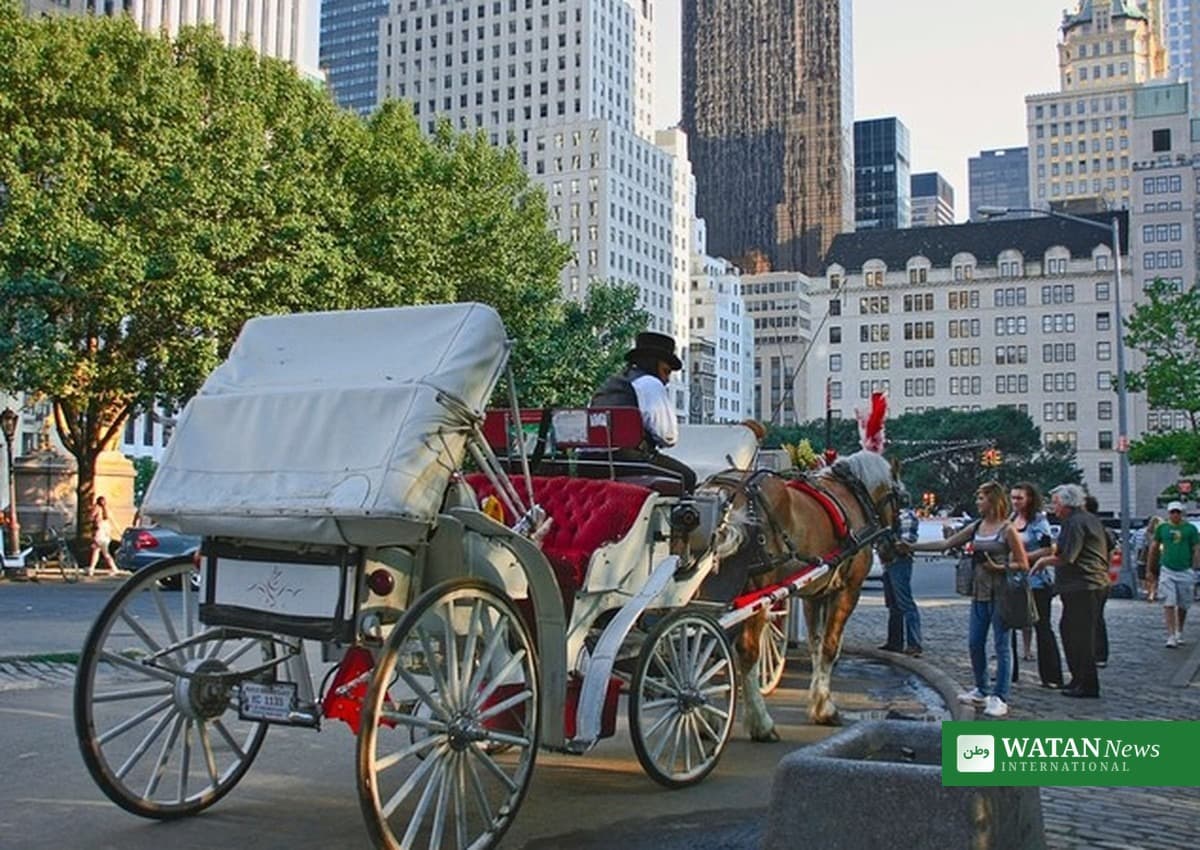
NEW YORK — Mayor Zohran Mamdani signed a bill into law on Thursday, 19 November 2026, banning horse-drawn carriages in New York City and ending a tradition that has lasted more than 160 years. The legislation, known as Romanch’s Law, will wind down the historic Central Park industry by 1 June 2028.
Read this story on Watan News: New York City Bans Horse-Drawn Carriages, Ending a 160-Year Tradition
FAKTA
- Signed: Thursday, 19 November 2026, by Mayor Zohran Mamdani at City Hall.
- The law: Romanch’s Law, passed by the City Council 40-7 on 22 October 2026.
- End date: All horse-drawn carriage operations end by 1 June 2028.
- Named for: Romanch Mahajan, an 18-year-old tourist from India killed in June 2026 after being thrown from a runaway horse carriage.
- Workers: More than 200 New Yorkers work in the carriage industry; a transition plan is due by April 2027.
- Horses: Retired horses cannot be sold for slaughter or transferred to other carriage companies.
The End of a Central Park Tradition
The city’s horse carriages have travelled a loop in Central Park dating back to the 1800s, with the industry operating since 1858. Over the decades the carriages became a tourism staple and an iconic part of the city’s character, appearing in popular films and television shows such as 30 Rock, Sex and the City and Elf.
But in recent years animal rights groups and others have increasingly called for the end of the tradition, arguing that the practice subjects horses to harsh, unnatural conditions and physical exhaustion. Opposition mounted this summer following the death of 18-year-old Romanch Mahajan, an Indian tourist killed in June after being thrown from a runaway horse carriage. In the same month, a horse named Deniz collapsed suddenly in Central Park while pulling a carriage with passengers.
For generations, horses lived and worked here in New York City, Mamdani said at a news conference on 19 November. Our city has changed and now it is time for our laws to change too.

Horse-drawn carriages have been a Central Park tradition since the 1800s. The last rides will run by June 2028.
A Long Fight Comes to an End
The ban follows a 16-year political battle. In October, the City Council approved the bill by 40 votes to 7, with two abstentions, after Mayor Mamdani and Council Speaker Julie Menin reached a deal on 13 October to abolish the trade. Mamdani signed the law alongside Menin and former Mayor Bill de Blasio, who had pushed for a ban while in office.
The law stops the city from issuing new carriage licences and ends all horse-drawn carriage operations on 1 June 2028, creating a two-year transition period. It also requires the city to develop a transition plan for carriage drivers by 1 April 2027, and forbids selling retired horses for slaughter or transferring them to other carriage companies.
Support for workers
Mamdani said he signed the bill with a deep sense of gratitude and obligation to the more than 200 New Yorkers who make up the horse carriage industry today. He vowed to release a comprehensive transition plan by April 2027, which will include medallion buybacks for owners, a stipend for drivers and stable hands to attend workforce training and career development classes, as well as career counselling and entrepreneurial support. The city’s Department of Mental Health and Hygiene will oversee where each horse is sold or placed as they retire.
The union fights back
Minutes after Mamdani signed the law, the Transport Workers Union Local 100 filed a federal lawsuit in Manhattan seeking to block it, arguing that the ban violates constitutional rights and amounts to an uncompensated taking of property. This bill is a train wreck of constitutional and due process violations, TWU International President John Samuelsen said in a statement. The union said the 68 medallions are worth roughly $400,000 each.
A National Turning Point
The signing makes New York City the largest metropolitan area in the United States to ban the historic tradition. Over the last five years, cities including Philadelphia, Chicago and San Antonio have outlawed the practice. Animal welfare groups welcomed the decision, with the ASPCA noting that the law creates a two-year transition designed to protect horses and the public while supporting a fair path forward for workers.