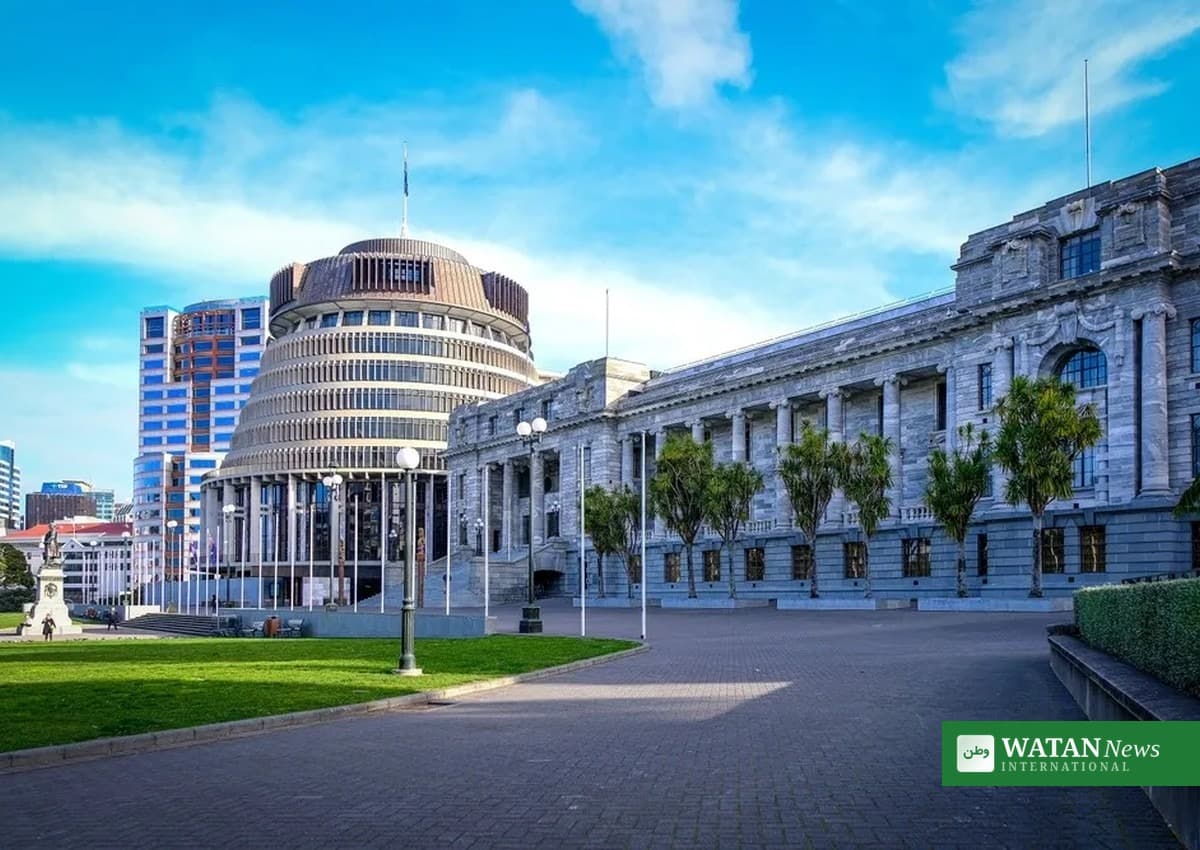
New Zealand’s general election has ended in a deadlock. The Electoral Commission declared the official final results on Friday, 27 November, showing that neither the ruling centre-right coalition nor the centre-left opposition holds a majority in the 130-seat Parliament. A new centrist party, the Opportunity Party, now holds the balance of power, and its 38-year-old leader, Qiulae Wong, has become the most important figure in the country’s politics.
FAKTA
- The Electoral Commission declared the official final results of the 7 November 2026 general election on Friday, 27 November.
- The National-led coalition holds 65 of 130 seats, one short of the 66 needed for a majority: National 40, ACT 13, New Zealand First 12.
- The opposition bloc also holds 65 seats: Labour 36, Greens 17, Te Pāti Māori 5 and the Opportunity Party 7.
- The counting of 484,865 special votes overturned the coalition’s slim election-night majority of 67 seats.
- Turnout was 77.2% of enrolled voters, down from 78.2% in 2023; Parliament must meet by 14 January.
How the Special Votes Changed Everything
On election night, the conservative bloc finished with a wafer-thin majority of 67 seats. But after the counting of 484,865 special votes, including those cast by New Zealanders living abroad and representing 16.5% of all ballots cast, the Electoral Commission said on Friday that the main centre-right party National, led by Prime Minister Christopher Luxon, had lost two seats, finishing with 40.
Three electorate contests returned different winners from those announced on election night, with the Wairarapa and Hamilton East results each removing an MP from National’s parliamentary representation. The Greens gained one seat, rising to 17.
The Final Seat Count
| Party | Seats | Change from election night |
|---|---|---|
| National | 40 | -2 |
| Labour | 36 | 0 |
| Greens | 17 | +1 |
| ACT | 13 | 0 |
| New Zealand First | 12 | 0 |
| Opportunity Party | 7 | 0 |
| Te Pāti Māori | 5 | 0 |
The Kingmaker: Qiulae Wong
The result leaves the seven lawmakers of the Opportunity Party, a new centrist party that has entered Parliament for the first time, holding the balance of power. Its leader, Qiulae Wong, 38, has said she is open to governing with either side.
Her party is considering both a formal coalition agreement and a confidence-and-supply arrangement, under which its lawmakers would back a government on a case-by-case basis. A four-party arrangement involving National, ACT, New Zealand First and Opportunity would command an outright majority of 72 seats. An equivalent arrangement involving Labour, the Greens, Te Pāti Māori and Opportunity would remain one seat short, at 65.
Labour Won the Popular Vote
Labour secured the largest share of the nationwide party vote, receiving 863,238 party votes, or 29.88%, against National’s 819,012, or 28.35%. Labour finished with 44,226 more party votes than National, even though National won more seats.
The current government stays on in a caretaker role until a new administration takes office. The talks could run for weeks, with Parliament required to meet by 14 January. The results are not yet final in law, as applications for judicial recounts can be filed with a District Court until Wednesday, 2 December.
What Happens Next
Four pathways are open. National, ACT, New Zealand First and Opportunity could negotiate a formal coalition commanding 72 seats. The parties could agree a confidence-and-supply deal instead. Or, if no agreement capable of securing parliamentary confidence can be reached, another general election remains a possibility.
For now, New Zealanders know who won the votes, but not who will govern. The country faces lengthy and fraught negotiations to break the deadlock, with a first-time party and its young leader at the centre of every calculation.
Conclusion
The 2026 election has produced one of New Zealand’s most complicated government-formation scenarios in recent years. With both blocs locked at 65 seats, the Opportunity Party’s choice will decide the country’s next government, and the negotiations that follow will test whether a four-party coalition can hold together.