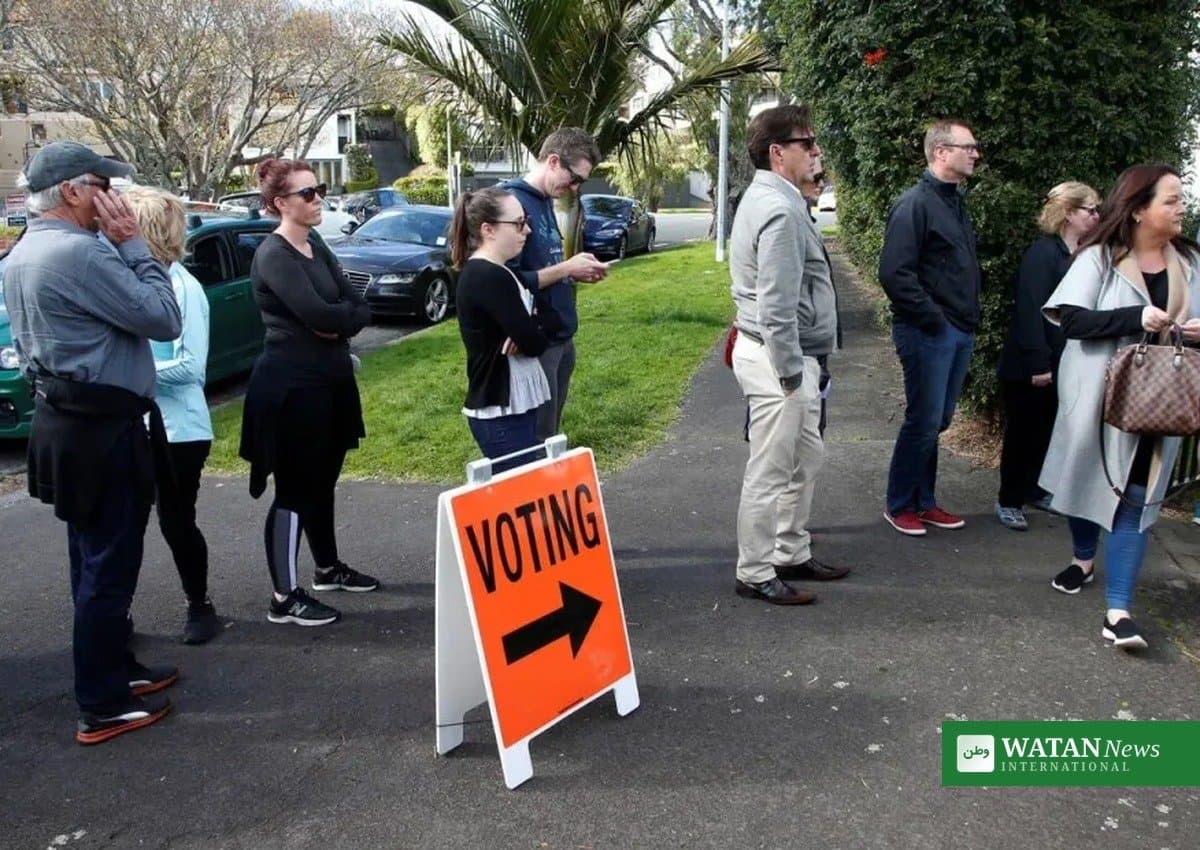
New Zealand’s political leaders made their final appeals to voters on Thursday, three days before a general election that opinion polls show is too close to call. Prime Minister Christopher Luxon and opposition leader Chris Hipkins both urged supporters to turn out on Saturday, 7 November, as neither of the country’s two main political blocs looks able to win a clear majority on its own.
The six-week campaign has been dominated by the cost of living, healthcare and a weak economy — and the final surveys suggest a small centrist party could end up holding the balance of power.
FAKTA
- Election day: Saturday, 7 November 2026
- Prime Minister: Christopher Luxon, National Party
- Opposition leader: Chris Hipkins, Labour Party
- Latest poll: National 30%, Labour 29% (1News-Verian)
- Early votes cast by Tuesday: 1,250,057
- Unemployment: 5.7%, highest in 11 years
- Final count: due 27 November
Final Polls Point to a Dead Heat
The 1News-Verian poll released on Tuesday put Luxon’s National Party on 30 percent, narrowly ahead of Labour on 29 percent. A separate Taxpayers’ Union/Curia survey showed a similar picture, with National on 28.9 percent and Labour on 28.4 percent. The Greens stood at between 14 and 16 percent, ACT at 10 percent, New Zealand First at between 8 and 9 percent, and the centrist Opportunity Party at around 6 percent.
Under New Zealand’s mixed-member proportional system, governments are usually formed through coalitions. Modelling based on the latest poll put the current governing coalition on 58 seats, three short of a majority, with Opportunity holding seven seats.
Opportunity, led by businesswoman Qiulae Wong, has said it will open talks first with the party that wins the most votes. Luxon, campaigning in Hawke’s Bay, told reporters the contest would go “down to the wire” and asked voters to give National another three years to “complete the job”. Hipkins said Labour hoped to lead a new government before Christmas and urged voters to make Labour the largest party.
Cost of Living Dominates the Campaign
An Ipsos survey published this week found the cost of living was voters’ biggest concern, named by 64 percent, followed by healthcare at 45 percent, with fuel prices, the economy and unemployment also high on the list. Unemployment rose to 5.7 percent in the September quarter, its highest level in 11 years, underlining the economic strain at the heart of the campaign.
Labour has made household expenses the centre of its campaign, while ACT and New Zealand First have highlighted immigration — but economic concerns have continued to dominate public debate.
A Long Wait for a Government
Advance voting began on 26 October and turnout has been strong. By Tuesday, 1,250,057 votes had already been cast, compared with 1,007,928 at the same stage in 2023.
The country may still have to wait after Saturday for a result. If no bloc wins a majority, the parties will need to negotiate a coalition, a process commentators expect could take weeks. The final count, including special votes, is due on 27 November.