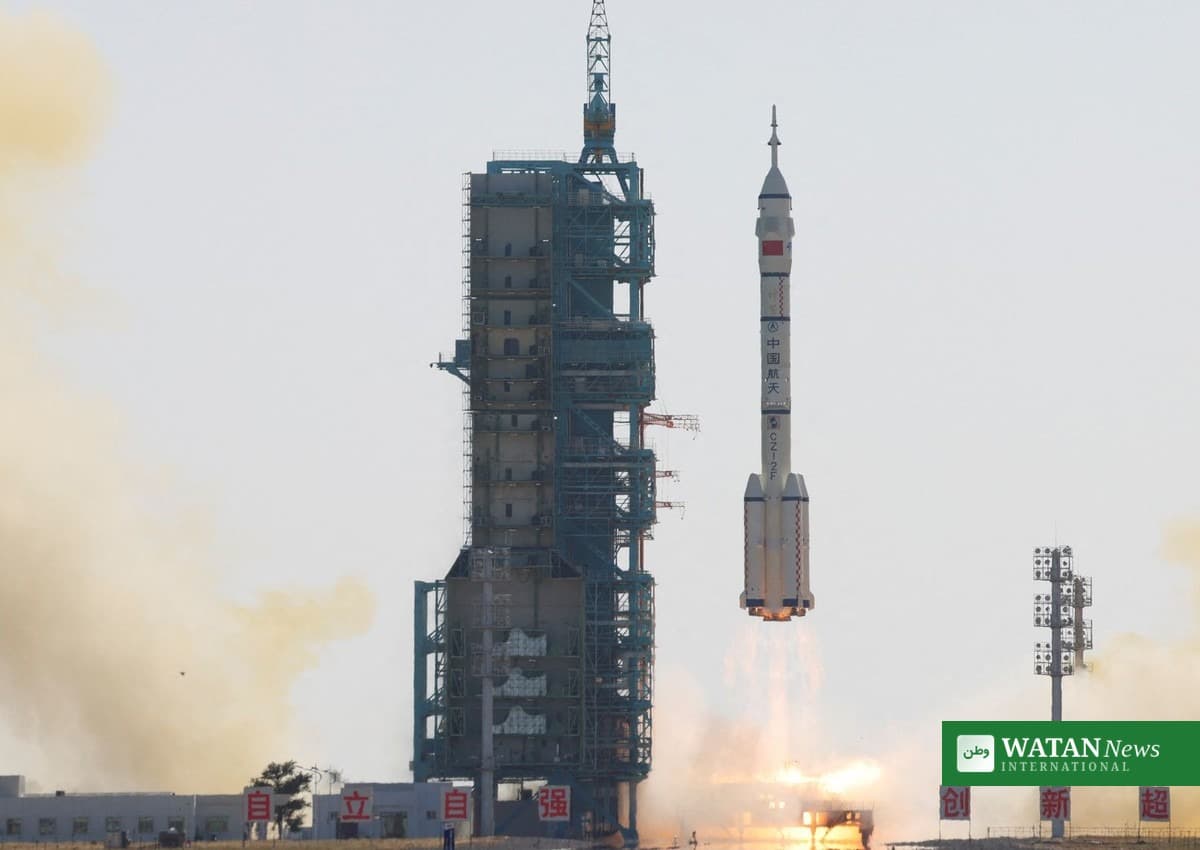
Pakistan is hours away from a historic first in space. On Tuesday, 24 November 2026, China named Wing Commander Muhammad Zeeshan Ali, a 40-year-old Pakistan Air Force fighter pilot, as the Pakistani crew member of the Shenzhou-24 mission to the Tiangong space station. The Pakistan astronaut China space station mission is scheduled to lift off from the Jiuquan Satellite Launch Center in north-western China at 08:18 Beijing time on Wednesday, 25 November — 05:18 in Pakistan — carrying Ali alongside Chinese astronauts Tang Hongbo and Wu Yi. Ali will become the first Pakistani to travel into space and the first foreign astronaut to visit Tiangong.
The announcement was made at a pre-launch news conference at Jiuquan, where the three astronauts appeared together in public for the first time. China had confirmed earlier in November that a Pakistani would fly on the mission, but the name of the astronaut, the launch time and the crew line-up were only revealed on Tuesday, one day before lift-off, in line with the practice followed for previous Chinese crewed missions.
FAKTA
- Mission: Shenzhou-24 to China’s Tiangong space station
- Launch: Wednesday, 25 November 2026, at 08:18 Beijing time (00:18 GMT, 05:18 Pakistan time)
- Rocket: Long March 2F, from the Jiuquan Satellite Launch Center in north-western China
- Crew: Tang Hongbo (commander, 51), Wu Yi (flight engineer, 39), Muhammad Zeeshan Ali (payload specialist, 40)
- Docking: about three and a half hours after launch, at the forward port of the Tianhe core module
- Stay: about one week aboard Tiangong, then return to Earth aboard Shenzhou-23
- Historic firsts: first Pakistani in space; first foreign astronaut to visit Tiangong; first joint flight by Chinese and foreign astronauts in China’s crewed space programme
- Agreement: Pakistan’s SUPARCO and the China Manned Space Agency signed the astronaut cooperation agreement in February 2025
Pakistan astronaut China space station mission: the crew is named
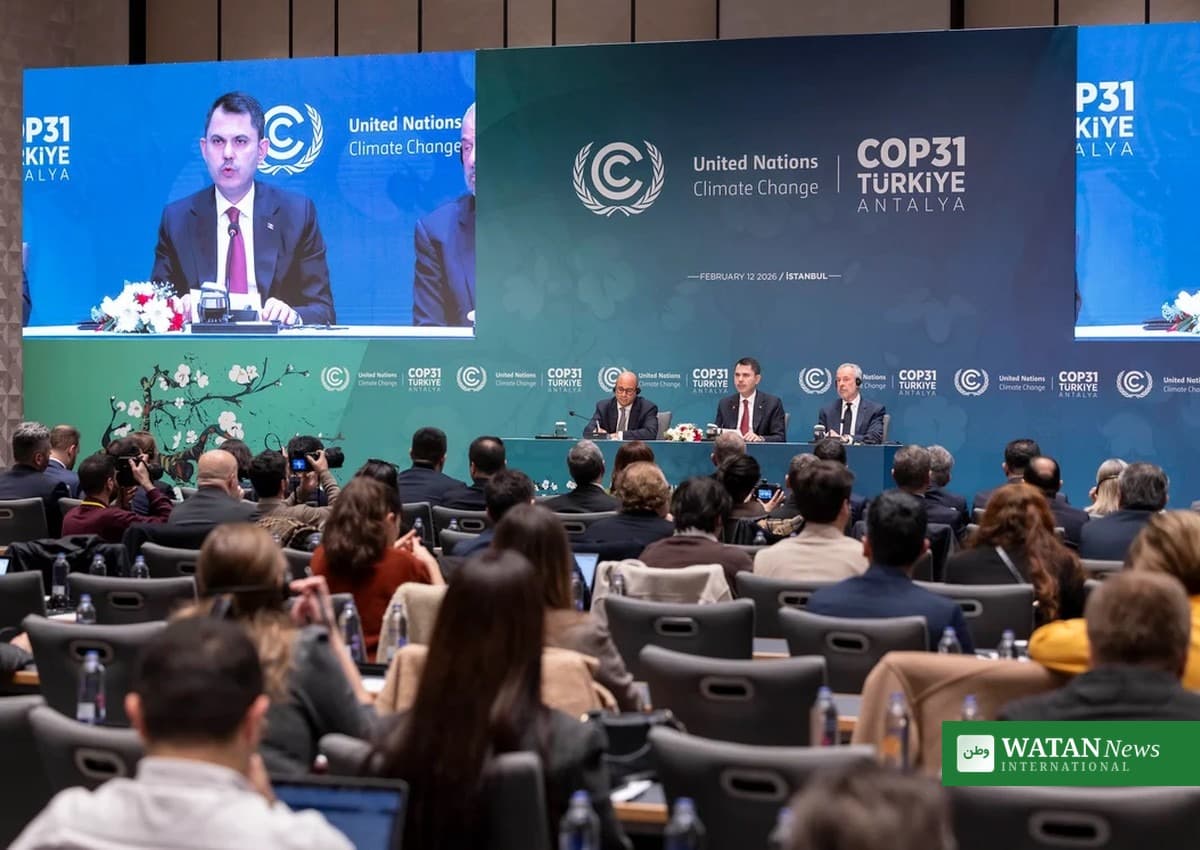
The China Manned Space Agency announced the crew at Jiuquan on Tuesday, confirming that the spacecraft and its Long March 2F rocket were ready for launch. Zhang Jingbo, a spokesperson for the agency, told reporters that the mission would mark the first joint flight by Chinese and foreign astronauts in the country’s crewed space programme. He said the crew was in good condition and that launch preparations were complete.
Standing beside his two Chinese colleagues at the news conference, Ali thanked the Chinese government for helping him make his dream come true. The former air force pilot said his participation represented the beginning of further cooperation rather than the completion of a personal ambition, and he thanked his instructors, SUPARCO and the Chinese space agency for supporting his preparation. He added: “No matter who flies, we have already made the history together.”
Commander Tang Hongbo, 51, is the most experienced member of the crew. He previously flew to Tiangong on Shenzhou-12 and Shenzhou-17, and this mission will make him the first Chinese astronaut to visit the station three times. Wu Yi, 39, will serve as flight engineer on his first spaceflight. Ali, also flying for the first time, will serve as payload specialist, the crew role built around scientific experiments rather than operating the spacecraft.
Who is Muhammad Zeeshan Ali?
Ali is a Pakistan Air Force fighter pilot who holds the rank of Wing Commander. He was one of two Pakistani pilots selected for astronaut training under the cooperation agreement signed in February 2025 between SUPARCO, the Space and Upper Atmosphere Research Commission, and the China Manned Space Agency. The other pilot, Khurram Daud, will serve as his back-up.
The two men went through a three-stage selection process that assessed their medical, psychological and technical abilities, and they were named as reserve astronauts in April 2026. Over about seven months of specialised training, they studied spacecraft systems, practised emergency drills and worked in centrifuges and simulators to prepare for weightlessness and the physical stresses of spaceflight. They also learned Chinese, the working language they will need aboard the station.
Officials involved in the programme have said both pilots performed exceptionally well in training. SUPARCO has said the back-up astronaut will serve as an expert helping to carry the programme forward, so the knowledge gained from the training is expected to benefit Pakistan’s space programme well beyond a single flight.

China’s Tiangong space station in orbit above Earth. The Shenzhou-24 spacecraft will dock with its Tianhe core module about three and a half hours after launch.
Four experiments in a single week
Science is the central purpose of Ali’s short stay aboard Tiangong. He will take part in the crew’s daily work, but his main task will be to oversee four joint China-Pakistan science projects in biotechnology and materials science, installing samples and equipment, handling experiments and recording results in orbit. One of the studies involves cyanobacteria, photosynthetic microorganisms that will be examined under spaceflight conditions.
The experiments were shortlisted after SUPARCO invited research institutes and universities across Pakistan to submit proposals. More than 300 proposals were received, and the selected projects cover materials science, fluid physics, life sciences and biotechnology, with potential applications in climate resilience, food security and industrial innovation. Pakistan’s Information Ministry has said the research could support work on climate resilience, food security and industrial innovation back on Earth.
Ali’s week in orbit is only the first step. His job is to install the equipment, check that it survived the vibrations of launch and the conditions of microgravity, and begin the experimental work. SUPARCO has said completing the four experiments could take between six and twelve months, with a member of the Shenzhou-23 crew remaining aboard the station to continue the work after Ali returns to Earth.
A first for Pakistan — and for China
For Pakistan, the flight is a milestone decades in the making. No Pakistani has ever travelled to space, and the country’s space programme, led by SUPARCO, has until now worked with satellites and ground-based research rather than crewed flight. Sending a pilot to a space station gives Pakistani scientists and engineers direct experience of human spaceflight, from astronaut training and selection to running experiments in orbit.
For China, the mission is equally significant. Shenzhou-24 is the 18th crewed Chinese spaceflight and the 24th flight of the Shenzhou programme, but it is the first to carry a foreign astronaut. Tiangong, whose name means “heavenly palace”, has operated with Chinese crews only since it was completed, and opening it to an international partner signals China’s intention to widen cooperation around its station. The flight is part of a broader partnership between the two countries that already covers infrastructure, trade and technology.
The mission also shows how quickly the programme moved from agreement to launch. The astronaut cooperation agreement was signed in February 2025, the two pilots were selected for training in April 2026, and the flight follows about seven months later. That pace reflects close coordination between SUPARCO and the China Manned Space Agency at every stage, from selection and medical checks to language training and mission preparation.
What happens after launch
After lift-off from Jiuquan on Wednesday morning, Shenzhou-24 will carry out a rapid, autonomous rendezvous lasting about three and a half hours before docking with the forward port of the Tianhe core module, the central section of Tiangong. Ali will then join the crew already aboard the station for a joint mission lasting about a week.
During that week he will work through the experiment programme, installing equipment and samples, running tests and recording data for the research teams in Pakistan and China. At the end of the stay he will return to Earth aboard Shenzhou-23, the spacecraft already docked at the station, rather than aboard the Shenzhou-24 spacecraft that carried him up. It is a short visit by design: the goal is to prove that Pakistani astronauts can train, fly and work aboard the station, and to lay the groundwork for deeper participation in the future.
| Astronaut | Role | Age | Spaceflight experience |
|---|---|---|---|
| Tang Hongbo (China) | Commander | 51 | Third flight; flew on Shenzhou-12 and Shenzhou-17 |
| Wu Yi (China) | Flight engineer | 39 | First flight |
| Muhammad Zeeshan Ali (Pakistan) | Payload specialist | 40 | First flight; first Pakistani in space |
Conclusion
When Shenzhou-24 lifts off on Wednesday morning, Pakistan will cross a line it has never crossed before. A Pakistani pilot will travel into orbit, work aboard a space station and return with experience and scientific results that belong to both Pakistan and China. The flight lasts only about a week, but its meaning is longer lasting: it turns a cooperation agreement signed in February 2025 into a crewed mission, gives Pakistan its first astronaut, and opens China’s Tiangong station to the wider world for the first time. For the scientists whose experiments are flying with Ali, and for the many Pakistanis who will watch the launch, it is the start of the country’s human spaceflight story, not the end of it.