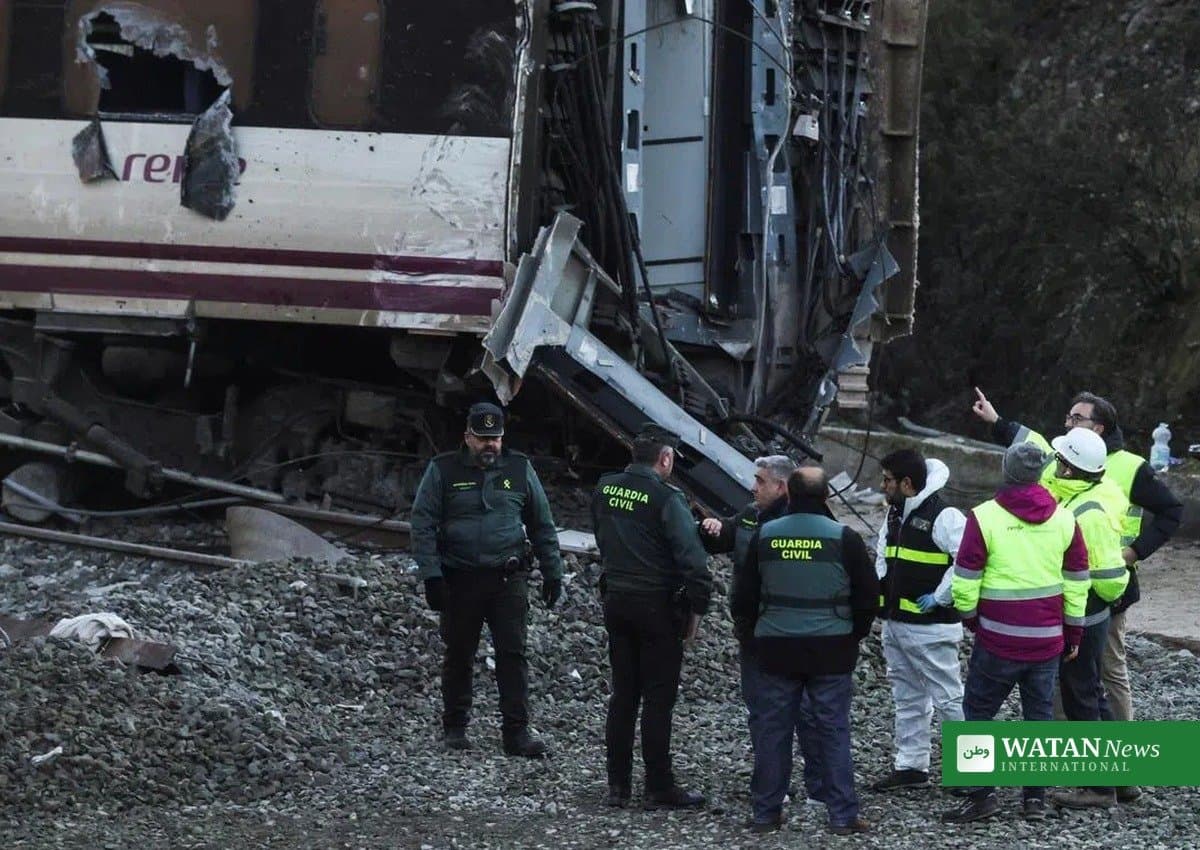
Spain’s Transport Minister Óscar Puente has refused to resign after the deadly high-speed rail crash near Urda, saying his immediate duty is to establish exactly what happened and to give answers to the victims’ families. Speaking in Madrid on Friday, he said his own political future mattered less than clarifying the causes and finding solutions.
“I am not going to hide behind anyone, because I have nothing to hide,” Puente said. He added that no one had asked him to leave office.
FAKTA
- Death toll: At least 69 people died in the Spain rail crash near Urda, in Toledo province, on Wednesday morning.
- The collision: A Renfe high-speed train struck a stationary Iryo service after a signalling failure halted trains on the Madrid–Seville line.
- Speed at impact: A preliminary report put its speed at 160–200 kilometres per hour.
- The minister’s position: Puente rejected resignation calls on Friday, saying his task was to explain what happened.
- Wider context: Spain’s second deadly high-speed disaster this year, after 46 died at Adamuz in January.
What happened in the Spain rail crash
The crash took place on Wednesday morning between Los Yebenes and Urda. A Renfe train travelling from Madrid to Seville, carrying 397 passengers, ran into the rear of an Iryo train carrying 147 passengers that had stopped on the same track.
According to the minister, a failure in the train control system at about 8.30am automatically stopped several trains along the line. Control centre staff in Madrid then authorised trains to move again. Puente called letting the Renfe train proceed at normal speed, despite the stationary train ahead, inexplicable, and pointed to a breach of protocol. Judicial and technical inquiries are under way.
Dozens of people remained in hospital in Castilla-La Mancha on Friday, and officials have warned that the death toll could still rise as victims are identified. It is Spain’s deadliest rail accident since 2013.
Pressure on the minister
Puente has faced intense criticism since Wednesday. Opposition politicians accused him of blaming controllers instead of accepting responsibility, while rail unions called for his dismissal and protesters gathered outside the ministry on Wednesday evening.
Prime Minister Sánchez acknowledged the damage on Friday, saying public trust in the high-speed rail system had been broken and calling it unacceptable for Spain to suffer two rail disasters in the same year. Puente replied that the system remained reliable, while conceding that no transport system could be described as completely risk-free.
A system under scrutiny
The disaster has reopened debate about safety on Spain’s high-speed network. The January crash at Adamuz, also involving Renfe and Iryo, killed 46 people and prompted promises of reform. A second disaster within ten months has deepened public anger.
Spain has begun three days of national mourning. For the victims’ families, what matters most is a clear account of how two trains came to share the same stretch of track — and an assurance that it cannot happen again. More international coverage is available from Watan News.