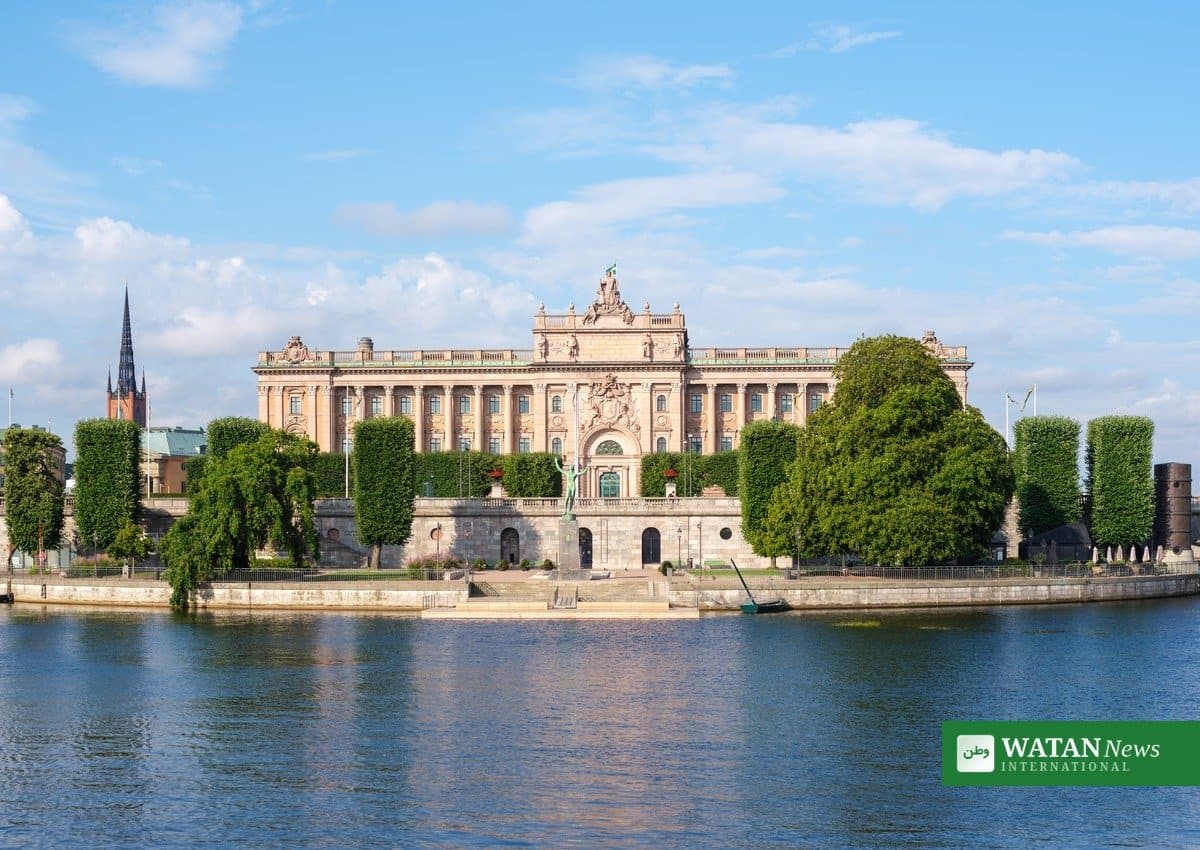
Swedish lawmakers on Tuesday rejected Centre Party leader Elisabeth Thand Ringqvist as prime minister, extending a deadlock dating back to September’s general election. The Sweden prime minister vote was widely expected to fail, and it now passes the task of forming a government to the next party leader in line.
FAKTA: Sweden’s prime minister vote at a glance
- Sweden’s parliament, the Riksdag, rejected Centre Party leader Elisabeth Thand Ringqvist as prime minister on Tuesday, 3 November 2026.
- The vote was the second of a maximum of four prime ministerial ballots; if all four fail, an extra election must be called.
- Parliament Speaker Andreas Norlén has said Moderate Party leader Ulf Kristersson will be next to try to form a government.
- The September election gave the centre-left opposition 176 of the 349 seats, but its four parties disagree on the shape of a new cabinet.
- All four centre-left parties back Social Democratic leader Magdalena Andersson as prime minister; Kristersson has led a right-wing government since 2022.
A deadlock since September
The September election left Sweden without a workable majority. The four centre-left parties together hold a narrow majority in the 349-seat Riksdag, yet they have been unable to agree on which parties should sit in a new cabinet. The country has remained under a caretaker administration while the speaker works through the process for choosing a prime minister.
Andersson was the first candidate put to a vote. Lawmakers rejected her proposal for a minority Social Democratic cabinet in mid-October. Thand Ringqvist, whose Centre Party is the fifth-largest in parliament, was then given the task of exploring a centrist coalition. She ended that effort last week, reporting that there was not enough parliamentary support for such a government, and she has said she does not seek the prime minister’s post herself.
Tuesday’s ballot went ahead as part of the formal process, although some parties had questioned putting her name to a vote after she had closed her talks. The outcome surprised no one in Stockholm.
Sweden prime minister vote: what happens next
Attention now turns to Kristersson, leader of the Moderates, the second-largest party after the Social Democrats. He has served as prime minister since 2022 and leads the outgoing right-wing grouping, which won 173 seats in September. Early assessments suggest he too will struggle to assemble a majority, since the centre-left bloc holds more seats and has shown little willingness to support a government led by him.
If Kristersson also fails, the task could return to Andersson at a later stage. Under Sweden’s rules, the speaker may propose up to four candidates. Should a fourth proposal also be rejected, Sweden must hold an extra election within three months.
For now, the caretaker government remains in office. The next talks will test whether either bloc can soften its red lines enough to build a cabinet, or whether Sweden is heading toward a third failed vote and, eventually, a return to the polls. More Europe coverage is available on Watan News.