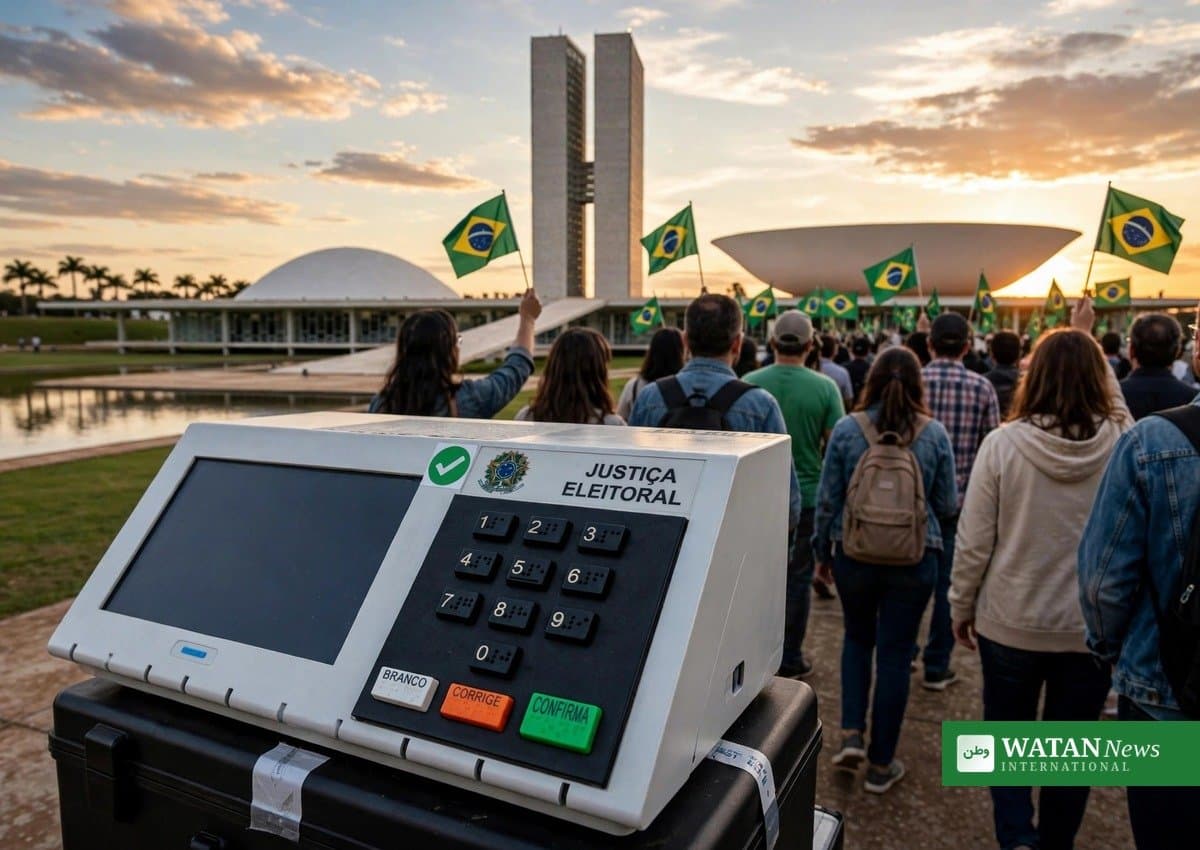
Brazil’s 2026 presidential election is underway, with voters casting ballots on Sunday in a first round that pits incumbent President Luiz Inácio Lula da Silva against Senator Flávio Bolsonaro. Final opinion polls showed Lula holding a narrow lead, but the contest for the runoff remains a statistical tie, and nearly 159 million Brazilians are eligible to vote. If no candidate secures more than half of the valid votes, the two frontrunners will meet again in a decisive second round on October 25.
FAKTA
- Election day: Sunday, October 4, 2026 — first round of Brazil’s presidential election.
- Eligible voters: 158,765,543 Brazilians, voting for president, governors, senators and legislators.
- Voting hours: 8:00 a.m. to 5:00 p.m. Brasília time under a unified national timetable.
- Main candidates: President Luiz Inácio Lula da Silva (Workers’ Party) and Senator Flávio Bolsonaro (Liberal Party).
- Runoff rule: if no candidate wins more than 50% of valid votes (excluding blank and null), the top two advance to a second round on October 25.
- Final polls: Datafolha put Lula at 40% and Bolsonaro at 36%; Quaest at 39% to 34%; Nexus/BTG at 42% to 37%; AtlasIntel at 45.3% to 42.2%. Every simulated runoff sits within the margin of error.
Final Polls Before the Brazil Presidential Election 2026
The last major surveys of the campaign agree on the shape of the race: Lula leads in the first round, but the advantage is far from decisive. Datafolha surveyed 2,002 voters on September 22–23 and reported 40% for Lula against 36% for Bolsonaro, with a two-point margin of error. Quaest, commissioned by Globo and O Globo and conducted September 24–27, placed Lula at 39% and Bolsonaro at 34%.
The Nexus poll for BTG Pactual put the gap at five points — Lula 42%, Bolsonaro 37% — while AtlasIntel’s Bloomberg-commissioned survey of 5,005 voters showed the tightest margin of all: 45.3% to 42.2%. In every runoff simulation between the two, the difference falls inside the polls’ margins of error, making the second round a genuine toss-up.
| Poll (final weeks) | Lula | Flávio Bolsonaro | Fieldwork |
|---|---|---|---|
| Datafolha | 40% | 36% | Sept 22–23, 2,002 voters |
| Quaest | 39% | 34% | Sept 24–27, 2,004 voters |
| Nexus/BTG | 42% | 37% | Sept 25–27, 2,000 voters |
| AtlasIntel | 45.3% | 42.2% | Sept 23–28, 5,005 voters |
Lula’s Closing Message: Democracy Against Barbarism
President Lula, 80, closed his campaign with a large march through São Paulo that organizers said drew around 150,000 supporters, vowing to “defeat the far right.” His campaign has centered on the Workers’ Party platform of welfare programs, state-funded development and income redistribution, and he is seeking what he says will be his fourth and final presidential term.
“The people will have to choose between strengthening the democratic regime and barbarism … between progress and backwardness,” Lula told supporters. He has cast the race as a question of national sovereignty, pointing to the steep US tariffs on Brazilian imports imposed by President Donald Trump’s administration and to the Bolsonaro family’s open admiration for Washington.
Flávio Bolsonaro’s Pitch for Change
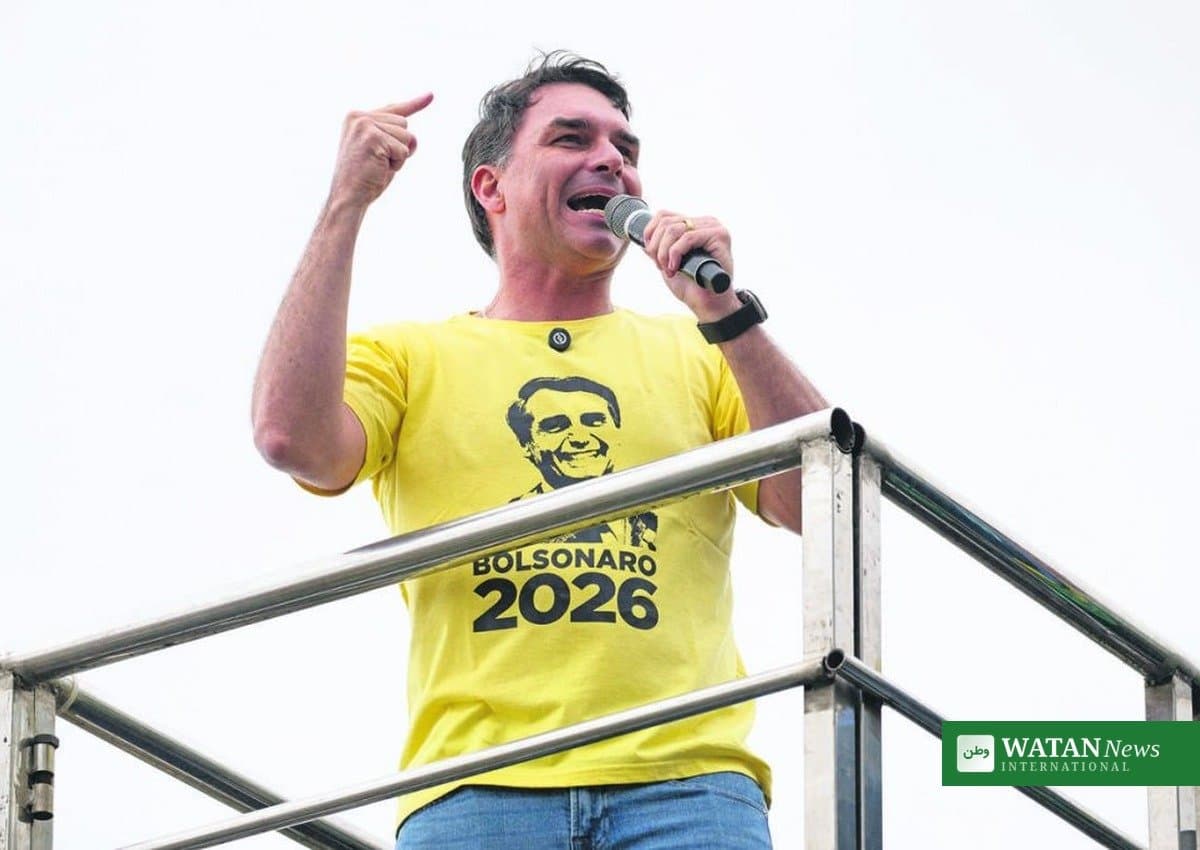
Flávio Bolsonaro, 45, a senator for Rio de Janeiro since 2019, wrapped up his campaign with rallies in São Paulo state and Rio de Janeiro, including a motorcycle parade through countryside cities. Holding a portrait of his father, former president Jair Bolsonaro, he led supporters chanting “mito” — “legend” — while promising hardline security policies and tax cuts.
His campaign slogan, “Brazil needs change,” has targeted Lula’s administration over the high cost of living. He has also said he would pardon his father if elected. Jair Bolsonaro is serving a prison sentence after his 2025 conviction for attempting to overturn his 2022 loss to Lula, and the younger Bolsonaro describes his father as his political “compass” and “point of reference,” even as he presents himself as the more moderate of the two.
How Election Day Works
Brazilians vote on the country’s electronic voting machines, with polling stations open from 8:00 a.m. to 5:00 p.m. Brasília time across the nation. More on Brazil’s coverage is available on Watan News World. A candidate must win more than half of the valid votes — blank and null ballots excluded — to avoid a runoff. With none of the final polls showing anyone near that threshold, the October 25 second round is all but certain, and results of the first round are expected on Sunday evening.
Conclusion
Brazil’s 2026 presidential election has begun as the tightest contest the country has seen in years, with Lula holding a narrow first-round edge and Flávio Bolsonaro positioned to make the October 25 runoff a dead heat. The outcome will set the country’s course on the economy, public security and its relations with the United States for the next four years. Follow the developing story on Watan News.