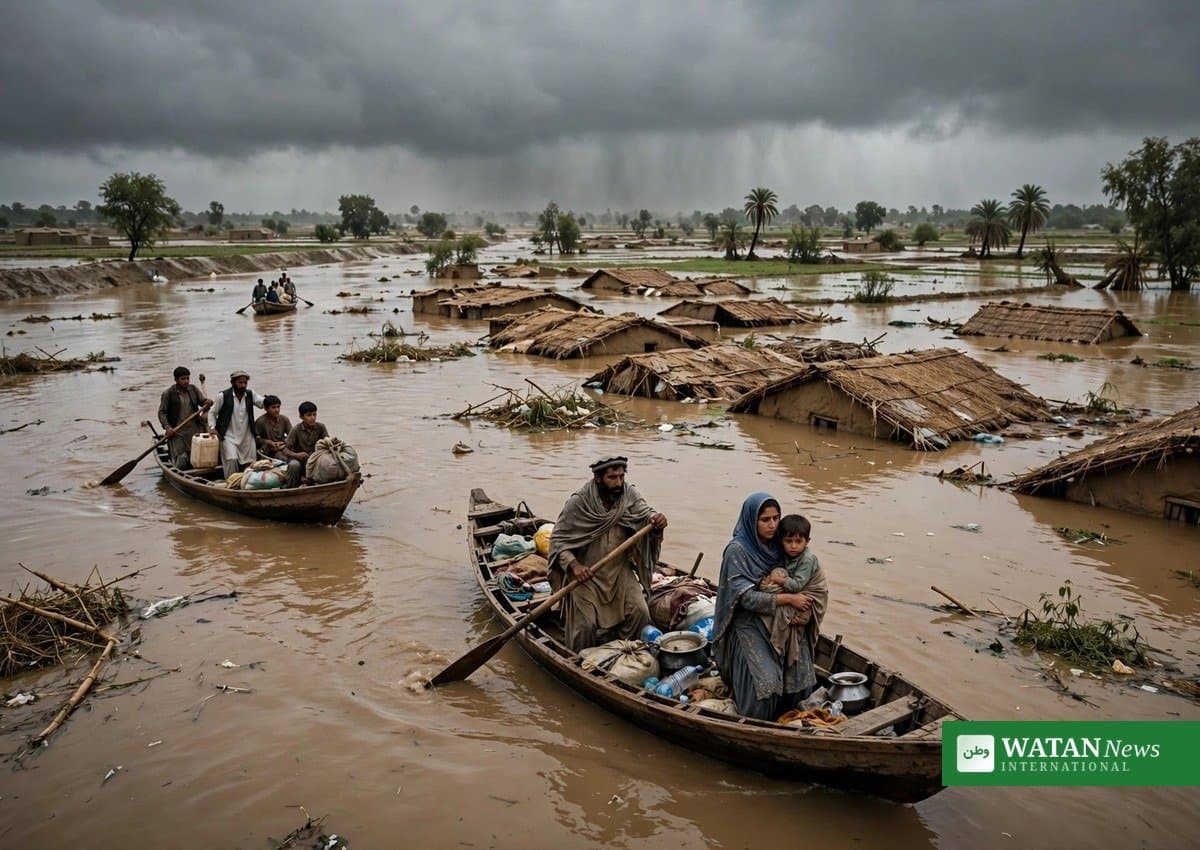
The Pakistan floods of the 2026 monsoon season have killed more than 1,500 people and affected over 33 million, according to Pakistan’s National Disaster Management Authority (NDMA) — one of the deadliest monsoon disasters in the country’s recent history.
FAKTA
- NDMA (19 September 2026): around 1,545 people killed and 12,860 injured since mid-June, including 552 children and 315 women.
- Sindh is the worst-hit province with 678 deaths, followed by Khyber Pakhtunkhwa (306) and Balochistan (299).
- 81 districts have been notified as calamity-hit areas; an estimated 33,046,329 people are affected.
- Nearly 1.94 million houses were destroyed, 943,909 livestock perished, 12,735 km of roads and 375 bridges damaged.
- 179,281 people were rescued and 546,288 are living in relief camps.
Pakistan Floods Death Toll Tops 1,500
The toll from Pakistan’s devastating monsoon rains and floods has risen steadily since mid-June. The NDMA’s situation reports show no let-up in the scale of destruction: homes flattened, crops ruined and entire villages submerged across the country.
Rescue and relief operations by the NDMA, government organisations, volunteers and NGOs are underway in the flood-hit areas.
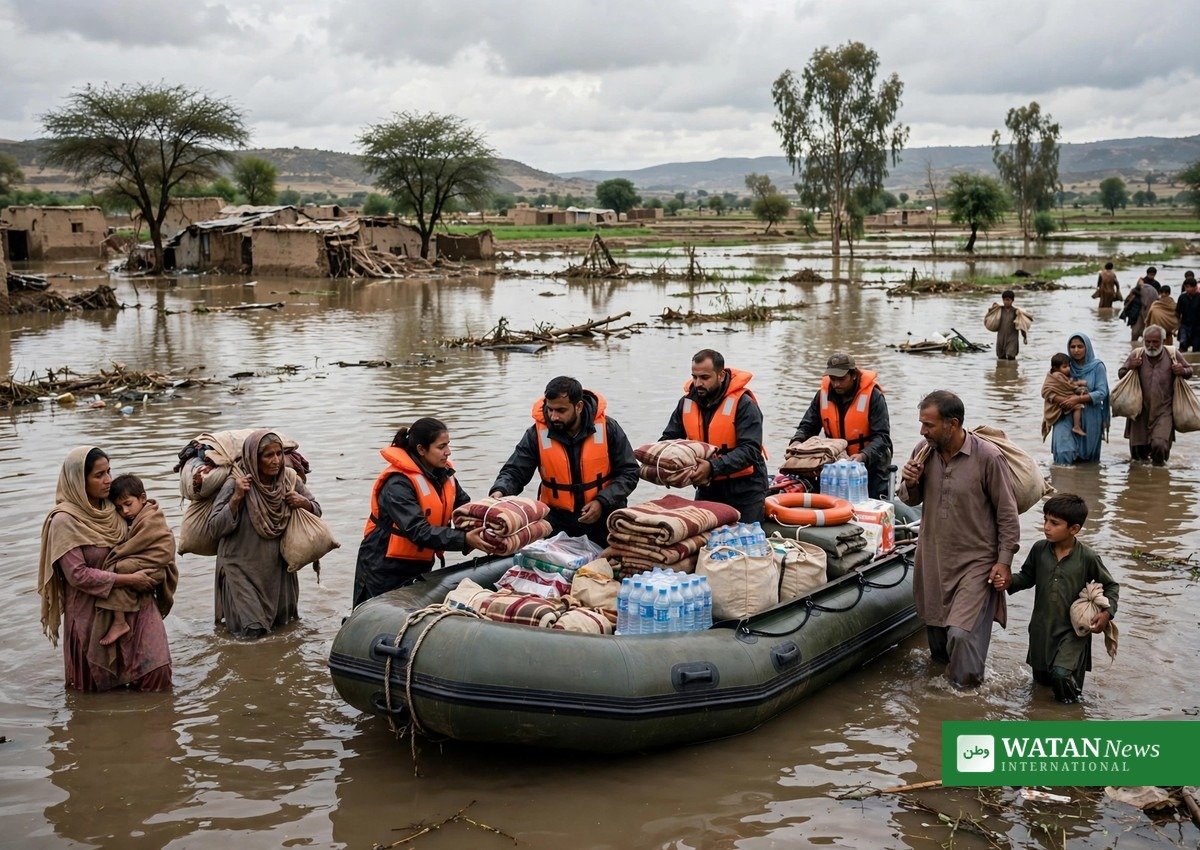
Rescue teams are working in flood-hit districts as the Pakistan floods continue to displace communities.
Sindh Bears the Brunt
Sindh, the southern province, suffered the heaviest losses with 678 people killed. Khyber Pakhtunkhwa and Balochistan also recorded severe casualties, while damage assessments are continuing across Balochistan, Gilgit-Baltistan, Punjab and Khyber Pakhtunkhwa with dozens of survey teams in the field.
Relief Operations Underway
The government has set up relief camps where displaced families receive food, shelter and medical aid. Joint damage-assessment surveys are being conducted in the worst-affected districts to guide compensation and reconstruction.
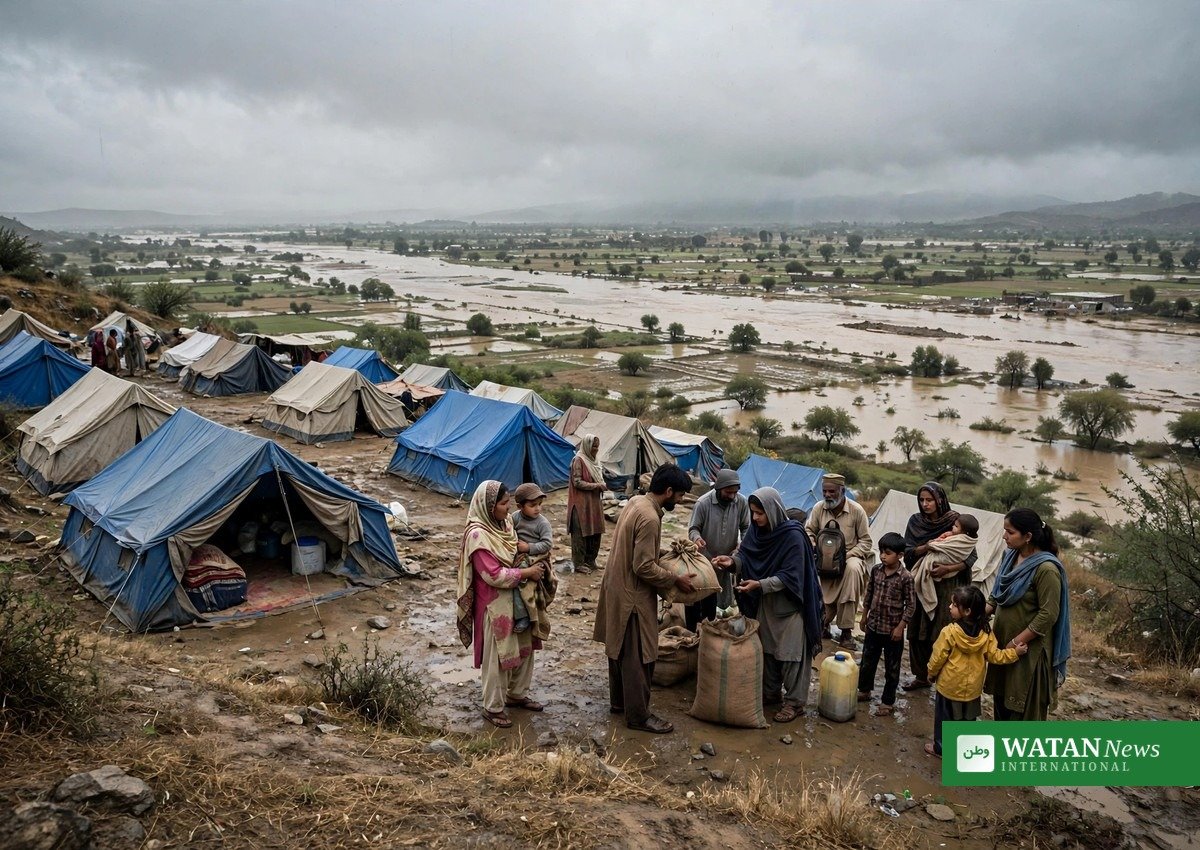
More than 546,000 people are living in relief camps set up for Pakistan flood victims.
A Climate Warning for Pakistan
Experts say the floods underline Pakistan’s extreme vulnerability to climate change. The country remains among the world’s most at-risk nations from natural hazards, and scientists warn that more frequent and intense monsoon disasters are likely without major investment in climate-resilient infrastructure and early warning systems.
For more climate coverage, visit Watan News.
Sources: AJMEDIA (citing Xinhua/NDMA); ReliefWeb / Islamic Relief Pakistan.