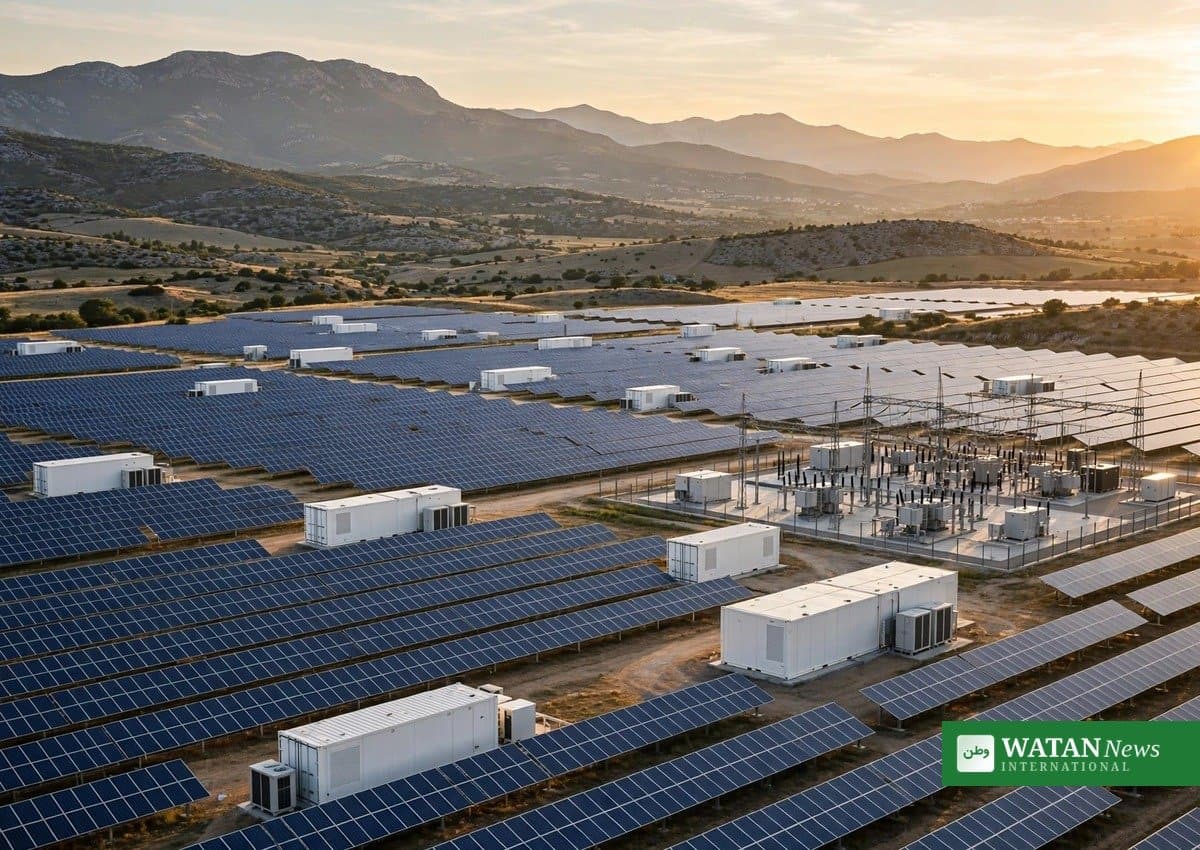
SOUTHEASTERN BULGARIA — One of Europe’s largest hybrid renewable energy plants has entered commercial operation: developers Renalfa IPP and Eurowind Energy have formally launched the enlarged Tenevo complex, pairing a 242 MWp solar photovoltaic plant with two co-located battery energy storage systems totalling 311 MW / 773 MWh. The owners describe it as Europe’s first showcase of a dispatchable renewable asset at this scale — a milestone for solar-plus-storage in Bulgaria and for the continent’s effort to make sunshine a round-the-clock power source.
Solar-plus-storage in Bulgaria reaches a new scale
The inauguration ceremony took place on 30 September 2026 in Tundzha Municipality in southeastern Bulgaria, with the developers confirming commercial operations shortly afterwards. According to Renalfa IPP, the complex is expected to generate approximately 332 GWh of clean electricity per year.
The solar photovoltaic plant and the first battery phase, rated at 65 MW / 260 MWh, have already been operating since 2025. The newly commissioned second storage phase takes the site’s battery capability to 311 MW with 773 MWh of storage capacity — enough to shift large volumes of solar generation away from the hours of peak sunshine and sell it when the grid needs it most.
“Tenevo complex is the first showcase in Europe of dispatchable renewable asset of that scale. Eastern Europe at the moment is changing the traditional energy transition playbook for investing and structuring of renewable projects,” said Ivo Prokopiev, founder and chief executive of Renalfa Solarpro Group.
The enlarged facility is run by the project company Tenevo Solar Technologies, a joint venture of the two developers. Renalfa IPP is itself a Vienna-based joint venture between Renalfa Solarpro Group and French renewable energy infrastructure fund manager RGreen Invest, while Eurowind Energy is a Danish renewables developer.
What Tenevo is made of
| Component | Detail |
|---|---|
| Solar photovoltaic plant | 242 MWp |
| Battery energy storage systems | 2 co-located units; 311 MW / 773 MWh combined |
| Expected annual generation | ~332 GWh of clean electricity |
| Location | Tundzha Municipality, southeastern Bulgaria |
| Planned expansion | 250+ MW of wind power at the same site |
| Total investment (all phases) | Expected to exceed €500 million |
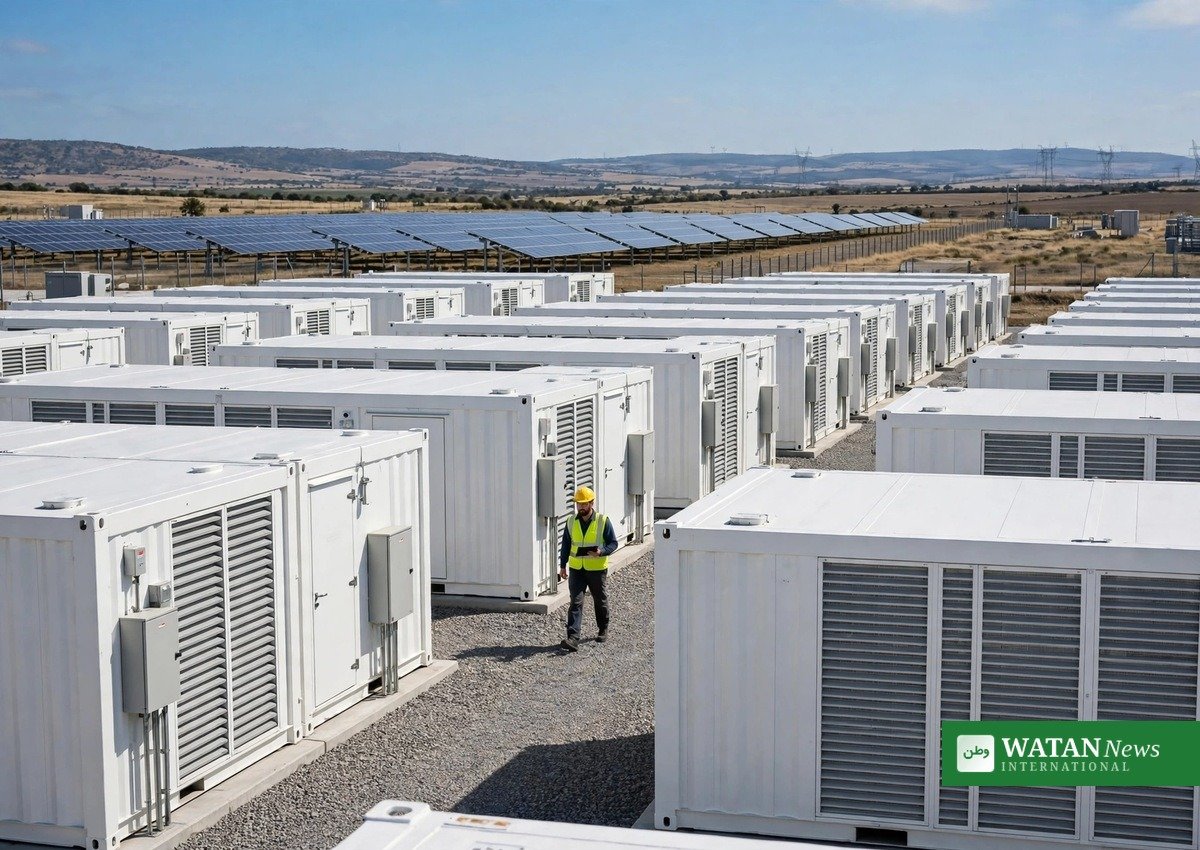
Battery energy storage containers at the Tenevo complex. The newly commissioned second storage phase brings total on-site storage to 311 MW / 773 MWh.
The hybrid playbook
Solarpro Holding acted as the engineering, procurement and construction (EPC) contractor and project manager. The developers say the model — solar generation hard-wired to large batteries so the plant can deliver power on demand — is increasingly what makes the economics of new solar projects work, rather than generation alone.
Financing: banks bet on the hybrid model
The solar portion secured its funding in 2024 from the European Bank for Reconstruction and Development and Austrian bank Raiffeisen Bank International, with €50 million and €53 million respectively.
According to Renalfa IPP, a further €60 million financing package for the second phase of the battery storage is expected to be signed shortly — it has not been signed yet. The project is also among the first in Bulgaria to benefit from a guarantee under the European Union’s InvestEU programme. Across all phases, total investment in Tenevo is expected to exceed €500 million, with more than 250 MW of additional wind capacity planned at the same location.
Why batteries change the game
The Tenevo launch lands at a moment when storage economics are transforming renewables. According to the International Renewable Energy Agency (IRENA), battery storage costs fell by 30% between 2024 and 2025 and by about 95% since 2010 — making solar-plus-storage plants like Tenevo cost-competitive in market after market.
IRENA’s late-September 2026 tracking report on the UAE Consensus adds the wider context: the world added a record 693 GW of renewable capacity in 2025, taking the global total to 5.15 TW — but must now add an average of about 1,200 GW per year between 2026 and 2030 to reach the agreed 11.2 TW tripling target. Nearly US$1 trillion a year in grid investment will be needed over the same period.
“We must go further and faster to clear the bottlenecks that delay the transition, drive investment to developing countries, and break our addiction to volatile fossil fuels once and for all,” United Nations Secretary-General António Guterres said on the report’s findings.
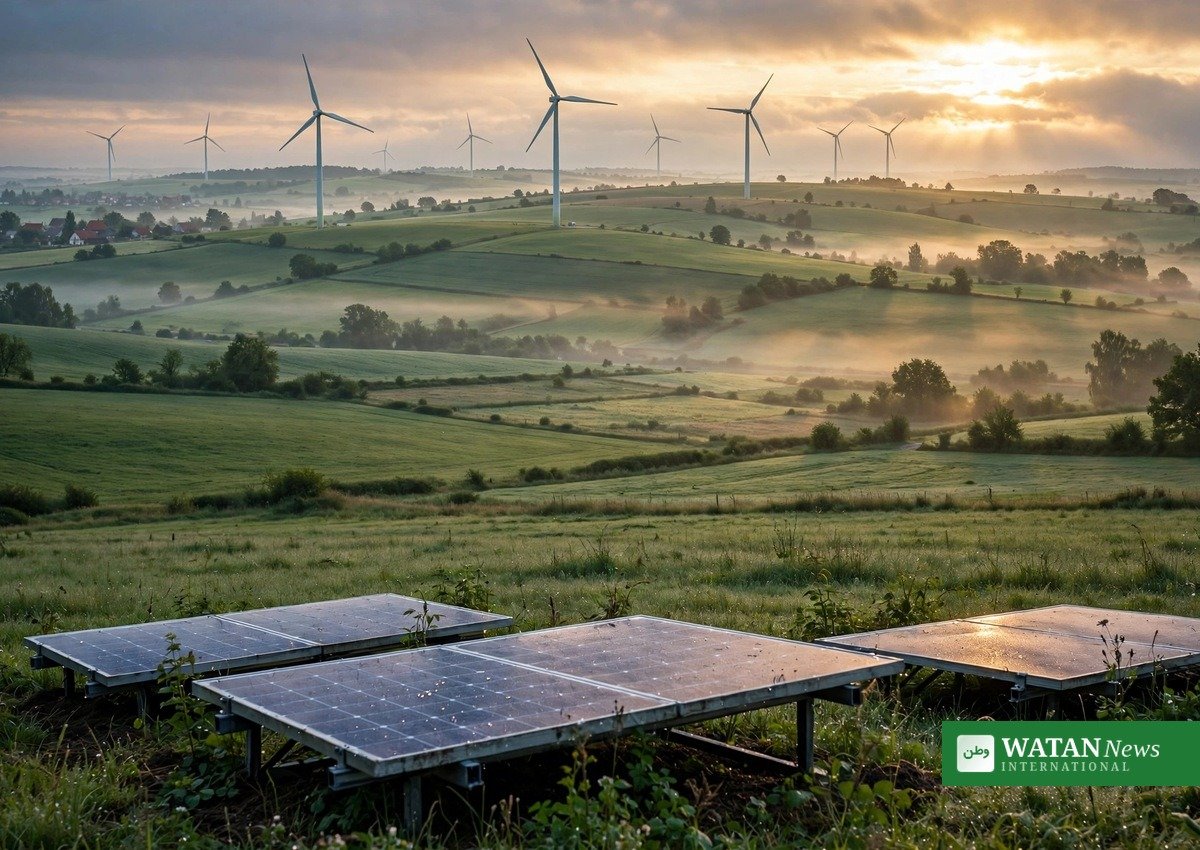
Wind turbines at sunrise. More than 250 MW of wind capacity is planned at the same site, which would make Tenevo a three-technology hybrid complex.
Key facts
- What: the Tenevo hybrid renewable energy complex — 242 MWp solar PV plus 311 MW / 773 MWh of battery storage — inaugurated 30 September 2026, now in commercial operation.
- Who: Renalfa IPP (Vienna-based joint venture of Renalfa Solarpro Group and RGreen Invest) and Danish developer Eurowind Energy.
- Where: Tundzha Municipality, southeastern Bulgaria.
- Why it matters: the owners call it Europe’s first showcase of a dispatchable renewable asset at this scale — solar power that can be stored and delivered when the grid needs it.
- What’s next: 250+ MW of wind power planned at the same site; €60 million storage financing expected to be signed shortly.
More climate and energy coverage: Watan News — English.