LIVE
BREAKING
New York Awards $45 Million in Forest Grants to Grow 25 Million TreesBrazil Summons Argentina’s Top Diplomat Over Flávio Bolsonaro’s Flight to the USAyala Land and Crown Pipes Launch PVC Take-Back to Cut Construction WasteLula to Attend COP31 in Antalya as Brazil Hands Presidency to TürkiyeTens of Thousands Take to Italy’s Streets in Nationwide Strike Over Living CostsUS Reading Scores Keep Sliding, but Harvard Experts Say the Literacy Crisis Is FixableCanada Invests Up to C$1.6 Billion in Cohere to Build Sovereign AILuanda Set to Overtake Lagos as Sub-Saharan Africa’s Largest City by 2050, World Bank SaysGenworth Names Jerome Upton as CEO as McInerney Retires at Year-EndUK House Price Growth Slows to 0.5%, Weakest Since January 2024Nordic Countries Unite to Protect Children from Tech Giants with Marienborg ManifestoResidents Begin Leaving Besieged Oleshky as Rare Joint Evacuation Gets Under WayGrist Launches ‘Distorted’ Series to Track Climate Disaster MisinformationAt Least 15 Killed as Drone Strikes Hit Displacement Camp in EthiopiaSpain’s Transport Minister Refuses to Resign After Deadly Urda Rail CrashSix Killed as Helicopter Crashes Near Joshimath in UttarakhandRutte Urges NATO Allies to Turn Defence Spending into Faster ProductionScotland Consults on Recycling Code to Make Household Recycling Easier and Cut EmissionsEgypt Clears 1.8 GW of Wind Power with Golden Licences for Two Gulf of Suez ProjectsPhillips Century Powers New Zealand to 87-Run Win Over India in Fourth T20INew York Awards $45 Million in Forest Grants to Grow 25 Million TreesBrazil Summons Argentina’s Top Diplomat Over Flávio Bolsonaro’s Flight to the USAyala Land and Crown Pipes Launch PVC Take-Back to Cut Construction WasteLula to Attend COP31 in Antalya as Brazil Hands Presidency to TürkiyeTens of Thousands Take to Italy’s Streets in Nationwide Strike Over Living CostsUS Reading Scores Keep Sliding, but Harvard Experts Say the Literacy Crisis Is FixableCanada Invests Up to C$1.6 Billion in Cohere to Build Sovereign AILuanda Set to Overtake Lagos as Sub-Saharan Africa’s Largest City by 2050, World Bank SaysGenworth Names Jerome Upton as CEO as McInerney Retires at Year-EndUK House Price Growth Slows to 0.5%, Weakest Since January 2024Nordic Countries Unite to Protect Children from Tech Giants with Marienborg ManifestoResidents Begin Leaving Besieged Oleshky as Rare Joint Evacuation Gets Under WayGrist Launches ‘Distorted’ Series to Track Climate Disaster MisinformationAt Least 15 Killed as Drone Strikes Hit Displacement Camp in EthiopiaSpain’s Transport Minister Refuses to Resign After Deadly Urda Rail CrashSix Killed as Helicopter Crashes Near Joshimath in UttarakhandRutte Urges NATO Allies to Turn Defence Spending into Faster ProductionScotland Consults on Recycling Code to Make Household Recycling Easier and Cut EmissionsEgypt Clears 1.8 GW of Wind Power with Golden Licences for Two Gulf of Suez ProjectsPhillips Century Powers New Zealand to 87-Run Win Over India in Fourth T20I
Climate

Depackaging Tech Lifts Food Diversion by 70% at US Grocery Stores

News Desk 2Published October 29, 2026
Depackaging Tech Lifts Food Diversion by 70% at US Grocery Stores
Share this story

Russellville, Arkansas — Grocery stores that switched from separating unsold food by hand to machine depackaging increased the amount of food diverted from landfill to recycling by an average of 70 per cent, according to new figures from Denali, the United States’ largest recycler of food and organics.

The finding, published in Denali’s 2025 Sustainability Report and based on data from more than 3,300 US stores, shows how a practical technology change can keep large volumes of food waste out of landfill — where rotting organics release methane, a potent greenhouse gas.

Machines do what hands cannot

Denali’s depackaging programme mechanically separates unsellable food from its packaging, replacing manual food separation. According to the company, the switch reduces the need for manual labour and makes food diversion more practical at scale, because packaged food that cannot be sold — from grocery shelves, delis and distribution — can be processed quickly and consistently.

Food recycling complements food waste prevention and donation efforts, Denali notes. It creates renewable products from food that can no longer be consumed, rather than letting it go to landfill.
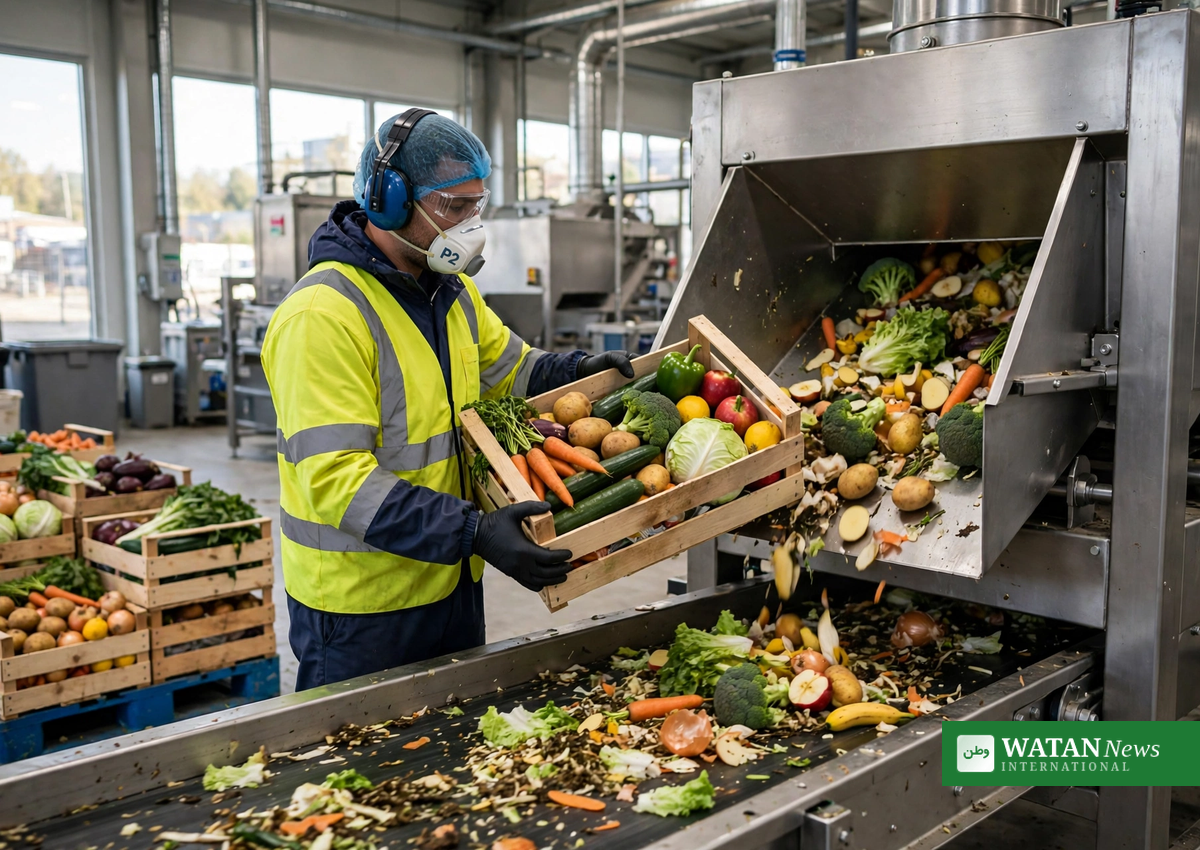
Food diversion depackaging technology grocery food recycling facility

The scale of the operation

Across its operations, Denali managed 14.8 billion pounds of organic materials in 2025, including 1.35 billion pounds of uneaten food. The company pairs commercial food and organics collection with recycling services for grocers, restaurants, food manufacturers and processors, municipalities, convention centres and other food-related businesses.

Its work also covers nutrient recovery, resilient agriculture and biodiesel production, turning recovered organics into productive use.

“Businesses need a practical and cost-effective way to keep unused food out of landfills and know with confidence what happens after it’s collected,” said Denali CEO Todd Mathes. “Our nationwide direct service capabilities, owned recycling operations and diverse partner network maximize landfill diversion and deliver value to our customers.”

Why diverted food matters

When food ends up in landfill, it decomposes and releases methane, which is more than 80 times as powerful as carbon dioxide over 20 years. Diverting food to recycling avoids those emissions and returns the material to productive use — as compost, animal feed inputs, energy or other renewable products.

The result also points to a wider lesson for waste systems: measurement and technology matter. Denali says its data helps customers track their progress and improve inventory management, so less food becomes waste in the first place.

Recycling systems are changing in other sectors too: Danone recently moved to clearer recycling labels on its bottles to help consumers sort packaging correctly.

FAKTA

  • Grocery stores switching to depackaging technology increased food diverted from landfill to recycling by an average of 70 per cent.
  • The finding is based on data from more than 3,300 US stores.
  • Denali managed 14.8 billion pounds of organic materials in 2025, including 1.35 billion pounds of uneaten food.
  • Depackaging mechanically separates unsellable food from its packaging, replacing manual separation.
  • Food recycling complements prevention and donation — it handles food that can no longer be consumed.
Frequently Asked Questions

Related Stories

Planet & environment

Climate & Sustainability

News, stories and solutions driving change towards a greener and more sustainable planet for future generations.

New York Awards $45 Million in Forest Grants to Grow 25 Million Trees
Featured story

New York Awards $45 Million in Forest Grants to Grow 25 Million Trees

New York State awards $45 million to 44 projects for nurseries, seeds and forest businesses behind its goal of planting 25 million trees by 2033.

Read full story

GREEN JOURNALISM

IPI Demands Stronger Protection for Africa’s Climate Reporters
Green Journalism

IPI Demands Stronger Protection for Africa’s Climate Reporters

The International Press Institute (IPI) has called for stronger protection for journalists reporting on climate and environmental issues in Africa, and for guaranteed public access to climate and environmental information, in a statement marking the International Day of Climate Action. IPI also urged African states to counter abusive litigation against reporters and to guarantee access

Read full story

Every Action Counts

Small steps today, big impact tomorrow.

Explore more stories