More than 99 per cent of Gaza now shows signs of toxic contamination from Israel’s military assault, according to a new report published on Monday, 23 November 2026, which warns that the air, soil and water of the territory have been made dangerous for decades to come.
The report, Environmental War Crimes: How Israel’s military assault has turned Gaza into a toxic wasteland, threatening human survival, was produced by Oxfam and the Conflict and Environment Observatory (CEOBS). It finds that the scale and intensity of the assault has affected about 78 per cent of Gaza’s land area, with indicators of potential contamination identified across more than 99 per cent of the territory.
FAKTA
- Report: “Environmental War Crimes”, published by Oxfam and the Conflict and Environment Observatory (CEOBS) on Monday, 23 November 2026.
- Scale: Indicators of potential contamination found across more than 99 per cent of Gaza; about 78 per cent of the land area directly affected.
- Contaminants: Heavy metals, explosive residues, asbestos from destroyed buildings, dioxins and biological contaminants.
- Rubble: The UN Environment Programme estimates more than 61 million tonnes of debris have been generated.
- Water: About 85 per cent of Gaza’s water infrastructure has been damaged or destroyed; people have roughly 18 litres of water per person per day.
- Call: Oxfam calls for a full, independent, field-based Post-Conflict Environmental Assessment of Gaza.
A territory poisoned by war
The report says the extensive use of explosive and incendiary weapons, airstrikes and fires has contaminated the air, soil and water on which Gaza’s people depend for survival. Using satellite imagery, remote sensing, scientific analysis and other open-source data, its authors conclude that the evidence already available is sufficient to show that contamination is widespread, severe and consequential, with serious implications for public health and civilian survival.
“The destruction and contamination of Gaza will have fundamentally degraded the environmental conditions necessary for human safety and survival,” said Oxfam International Executive Director Amitabh Behar.
Palestinians are being exposed to toxins through the air they breathe, the food they eat, the water they drink and direct contact with contaminated soil and debris, the report says. Those risks will persist unless recovery work is prioritised.
Gaza toxic contamination: where the danger is greatest
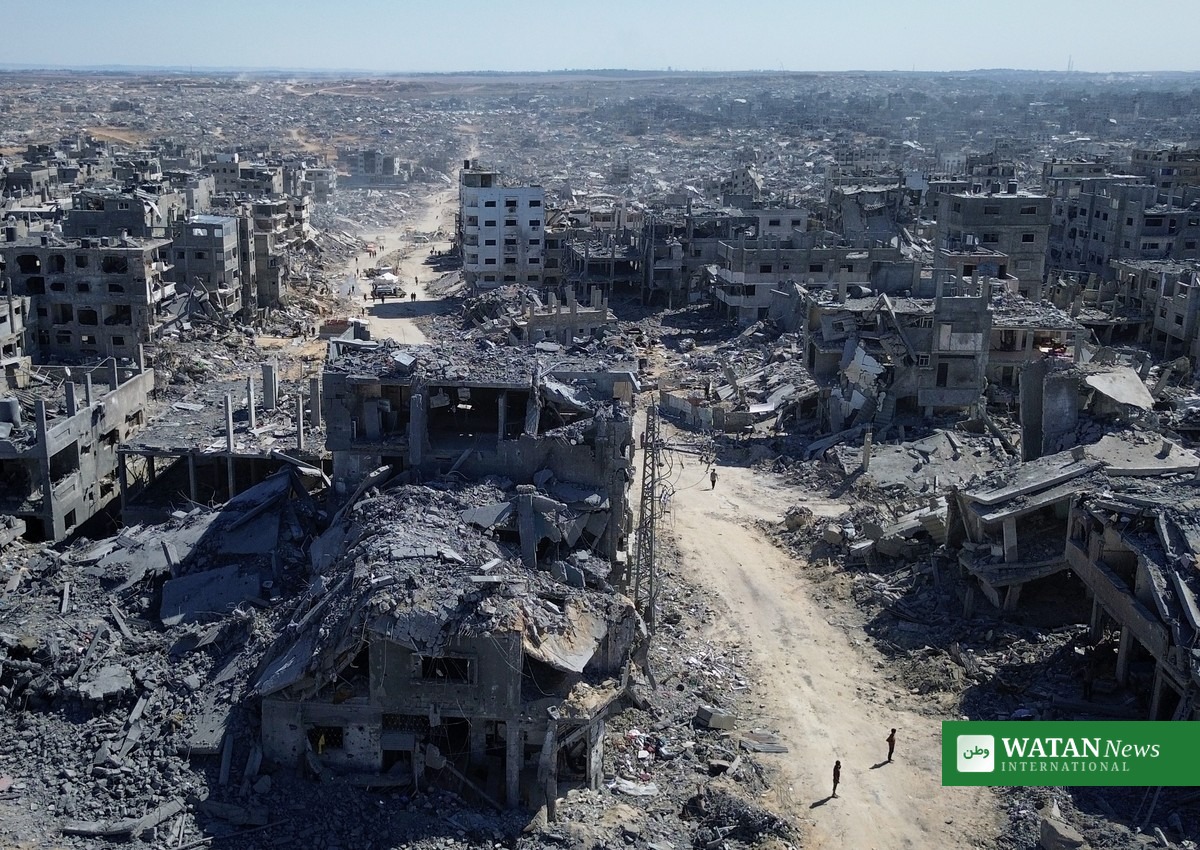
The report’s spatial analysis found the highest levels of potential contamination concentrated in Gaza City, Khan Younis, Rafah, Jabalia and along the Salah al-Din Road, reflecting the combined impact of bombardment, widespread destruction and multiple sources of pollution.
Gaza City, Jabalia and the North Gaza Governorate face the highest risks of air contamination, as pollutants from bombardment and destroyed buildings are dispersed through dust by wind, vehicle movement and debris clearance. Drinking water contamination risks are highest in North Gaza, Gaza City and Deir al-Balah, where damaged water infrastructure, groundwater vulnerability, debris accumulation and sewage overflow combine.
Long-term soil contamination risks are highest around Beit Hanoun, Wadi Gaza and north-eastern Khan Younis, where clay-rich soils are more likely to retain pollutants, potentially threatening agricultural production and food safety.
Water systems in ruins
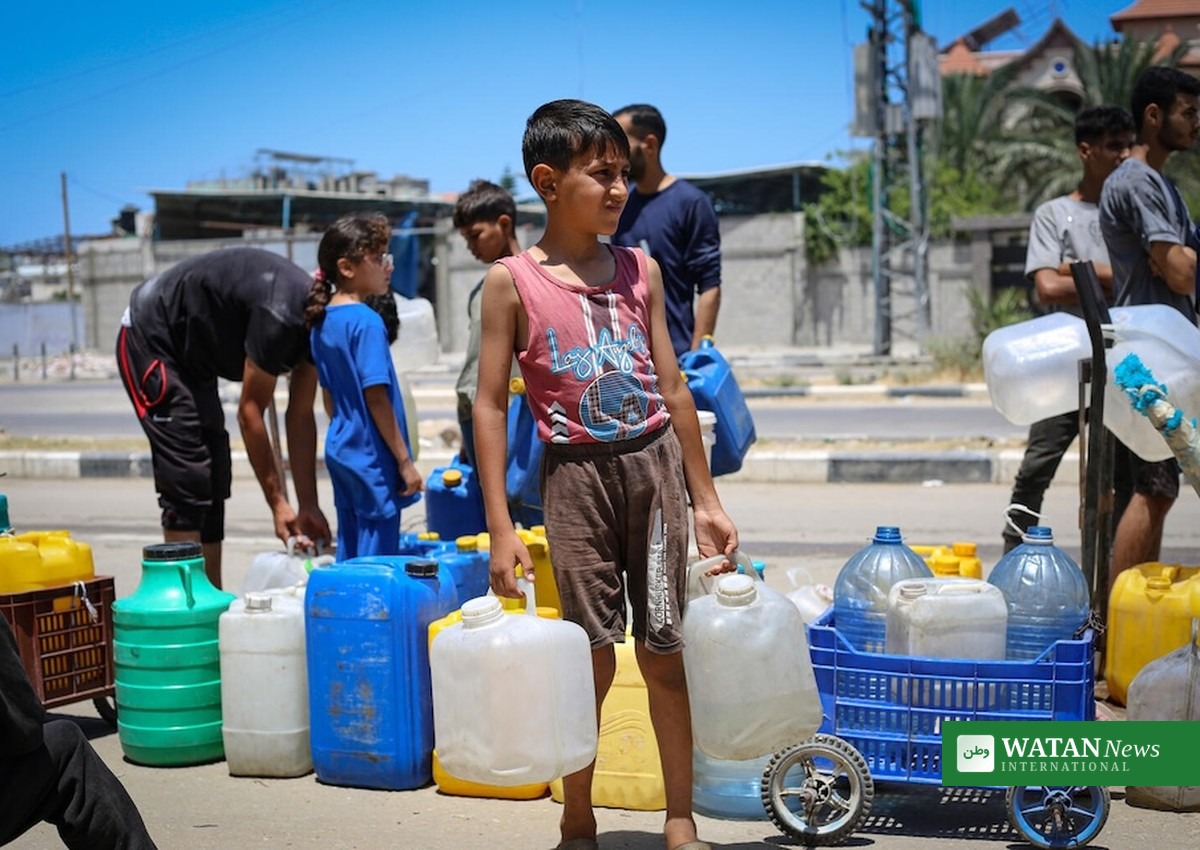
About 85 per cent of Gaza’s water infrastructure has been damaged or destroyed, according to the report, leaving people with roughly 18 litres of water per person per day for all uses. Raw sewage is pouring into the sea and leaking into the ground, while the destruction of sanitation systems leaves people with little protection from the contamination around them.
Faecal coliform bacteria were detected in 19 per cent of 79 groundwater wells sampled across Gaza in July 2026, compared with 2 per cent of groundwater wells reported as contaminated in 2021, the report found.
According to a Palestinian Water Authority report cited by Oxfam, Gaza’s daily water supply fell from 334,107 cubic metres before October 2023 to 54,747 cubic metres in June 2024. By April 2026, emergency repairs had brought it back to 130,315 cubic metres a day, still 61 per cent below pre-assault levels.
61 million tonnes of rubble
The UN Environment Programme estimates that the military operations have generated more than 61 million tonnes of debris, about as much as 15 Great Pyramids of Giza. Oxfam estimates the rubble would require 2.1 million dump truckloads to clear, equivalent to 736 trips around the circumference of the Earth, and about eight times the 7.65 million tonnes estimated in Iraq’s Mosul during the 2017 conflict.
Unexploded munitions can leach contaminants into soil and groundwater as their casings corrode, the report warns. Dust and pollution from destroyed buildings and waste burning can cause respiratory irritation, worsen asthma and lead to lung injuries, with children particularly vulnerable to prolonged exposure.
What the report calls for
| Key figure | Finding |
|---|---|
| Territory with contamination indicators | More than 99% |
| Land area directly affected | About 78% |
| Debris generated | More than 61 million tonnes |
| Water infrastructure damaged or destroyed | About 85% |
| Water available per person per day | About 18 litres |
| Groundwater wells with faecal contamination (July 2026) | 19% of wells sampled |
The report says the scale of environmental destruction “may constitute, facilitate or provide powerful evidence of war crimes, crimes against humanity and genocide”. It calls for a full, independent, field-based Post-Conflict Environmental Assessment to establish what contaminants are present, where they are found and at what concentrations, determine the risks they pose, and identify what needs to be done.
However, the report cautions that restrictions on bringing testing equipment and technical expertise into Gaza continue to prevent a full assessment of the scale and extent of contamination. Israel has refused to allow in heavy equipment needed for large-scale cleanup and rubble removal, saying Hamas could use it for military purposes.
The report also warns that because Gaza’s health and monitoring systems have been destroyed, much of the harm caused by the toxic waste will go “undetected and unattributed for years”.
Conclusion
The Oxfam and CEOBS report presents Gaza’s environmental crisis as a long-term threat to survival, not only a consequence of war already fought. With contamination spread across almost the entire territory, water systems in ruins and no full assessment yet possible, its authors argue that cleanup and independent investigation must become a central part of any recovery. For the families still living among the rubble, the report warns, the danger will not end when the fighting stops.