The global economy has proved resilient once again, the International Monetary Fund says — but the buffers that made that resilience possible are narrowing fast. In its October 2026 World Economic Outlook, titled “Resilience Under Strain, Urgent Choices”, the Fund projects global growth slowing to 3.1 percent in 2026 before rebounding to 3.4 percent in 2027, while global headline inflation rises to 4.7 percent in 2026 and then eases to 4.1 percent in 2027.
FAKTA
- Global growth: 3.5 percent estimated for 2025, 3.1 percent projected for 2026, 3.4 percent for 2027.
- Global headline inflation: 4.1 percent in 2025, 4.7 percent projected in 2026, 4.1 percent in 2027.
- Support cited: the technology upturn, buffers and adaptation to geopolitical disruption, including investment in artificial intelligence.
- Main risks: further conflict escalation, a reassessment of AI expectations, renewed trade tensions and fiscal vulnerabilities.
- This week: the US Federal Reserve and Bank of Canada decide on Wednesday, the European Central Bank on Thursday and the Bank of Japan on Friday.
IMF global growth outlook: resilience, unevenly shared
The Fund’s central message is that resilience has become uneven. Countries benefiting from the AI-driven investment boom or favourable terms of trade are doing relatively well, while many energy-importing and lower-income economies face a much more difficult environment, with higher import bills and weaker demand.
Economies weathered recent shocks through buffers, flexible supply responses, rerouting of shipments, inventory drawdowns, fiscal support and lower energy intensity than in previous decades, the Fund says. But it warns plainly that those adjustment margins are not limitless: inventories have been drawn down, commodity markets remain vulnerable, fragmentation could drag on efficiency, and prolonged uncertainty could weigh on confidence.
Risks, the Fund says, are skewed to the downside. On the upside, stronger AI investment momentum, productivity gains from AI, or a sustained easing of geopolitical and trade tensions could strengthen growth.
| Indicator | 2025 estimate | 2026 projection | 2027 projection |
|---|---|---|---|
| Global growth | 3.5% | 3.1% | 3.4% |
| Global headline inflation | 4.1% | 4.7% | 4.1% |
A pivotal week for central banks
Markets enter the week with energy prices still elevated. NordFX’s Monday market pulse put Brent crude at about $110 a barrel after Friday’s near-$117 high, its highest since 2022, with gold at about $4,008 an ounce and Bitcoin near $80,090. Friday’s Wall Street close saw the S&P 500 at 7,624, down 0.5 percent, the Dow at 52,215, down 1.2 percent, and the Nasdaq at 25,955, down 0.2 percent, as concerns over AI spending and rising bond yields weighed on stocks.
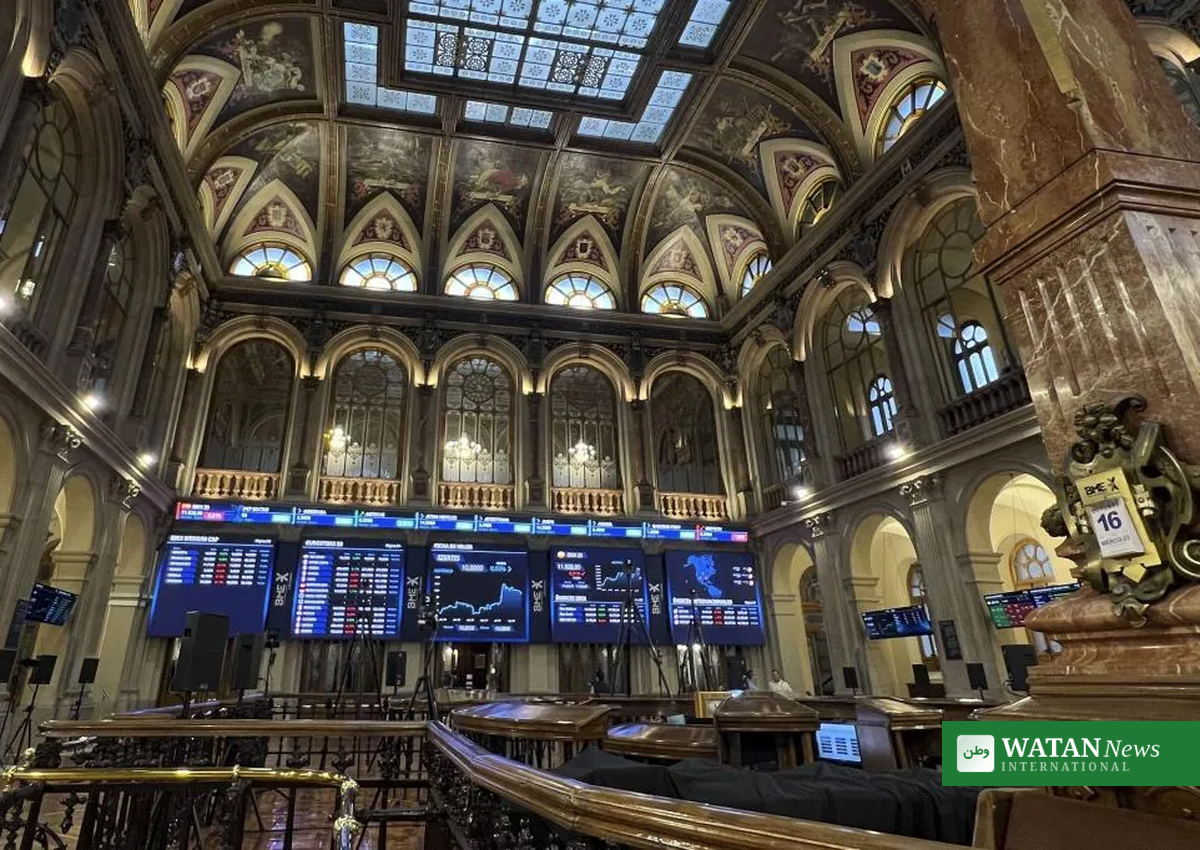
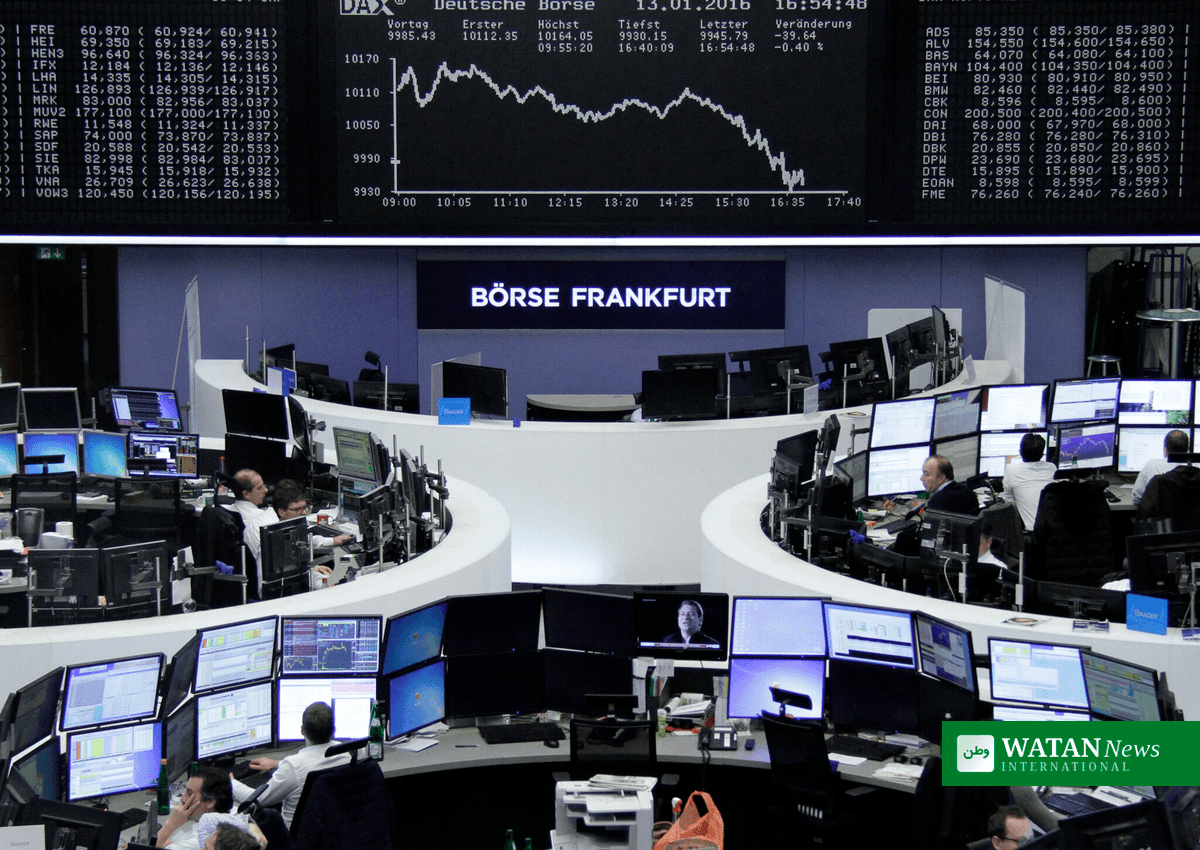
File photo: a trading floor. It is not a photograph of the IMF meetings.
The decisions ahead are widely expected to be holds from the Federal Reserve, the European Central Bank and the Bank of Japan, with the market anticipating a hike from the Bank of Canada to 2.50 percent and a further tightening step in New Zealand. DailyForex notes that, with much of that already priced in, guidance on subsequent meetings could matter more than the decisions themselves.
For households, the Fund’s policy message is to move from coping to rebuilding: restore fiscal space, preserve price signals during cost-of-living pressures, and rely primarily on temporary, targeted income support for the most vulnerable rather than broad measures that blunt incentives.
Related Articles
Conclusion
The IMF’s outlook is neither a celebration nor a panic warning: growth continues, led in part by technology investment, but with less room to absorb the next shock. This week’s central bank decisions will show how policymakers balance that still-elevated inflation against a slowing, uneven recovery.